Monetization Strategies for Food Bloggers
This episode explains how YouTube functions as a central authority signal that influences Google and AI answer engines. Listeners will learn demand-driven topic selection, practical optimization steps, repurposing tactics, and monetization options like YouTube shop.
Listen on the player in this post or on Apple Podcasts, Spotify, YouTube or your favorite podcast player. Or scroll down to read a full transcript.
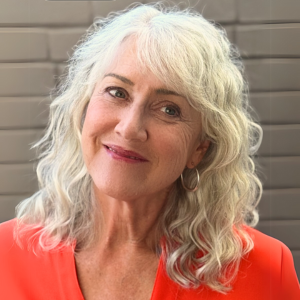
Mary Ann Bautista is the co-founder of TurboRank, where she helps brands build the authority footprint they need to be trusted, discovered, and recommended across today’s search ecosystem. At the center of that flywheel is YouTube, a powerful engine for building authority that extends far beyond the platform itself. TurboRank combines strategic YouTube content with an off-page authority strategy designed to strengthen a brand’s presence within YouTube, across Google, AI answers, and the third-party sources consumers rely on for validation. Mary Ann’s approach is rooted in nearly two decades of organic search and video experience, beginning with an e-commerce program she built across more than 60 YouTube channels when paid media alone was no longer enough. Today, she works with brands to turn that same principle into a durable growth asset: answer what customers are searching for, build credible signals around those answers, and create an authority footprint that compounds over time.
Takeaways
- Use YouTube to build off-page authority that boosts Google visibility.
- Start YouTube content by answering existing audience search demand.
- Optimize titles, tags, and descriptions so algorithms understand your content.
- Publish consistently to earn recommendations and algorithm trust.
- Produce a weekly long video and repurpose multiple shorts from it.
- Prioritize decent audio and lighting before high-end production.
- Use YouTube shop with Shopify to tag products and drive sales.
Resources Mentioned
TurboRank diagnostic: A diagnostic service TurboRank uses to gather data and recommend a tailored YouTube strategy.
TurboRank recommended starter kit: An equipment and setup recommendation list TurboRank offers to help creators start filming.
Transcript
Click for full script.
EBT 823 – Losing Blog Traffic? Rethink Your YouTube Strategy
Megan Porta (00:00.802)
Hello Mary Ann, welcome. How are you?
Mary Ann Bautista (00:03.583)
Hi, I’m great. Thank you. Thanks for having me.
Megan Porta (00:06.668)
Yeah, so great to have you on the podcast. And I’m very excited about this topic, YouTube, and just using it as off-page authority as a new strategy for food bloggers because a lot of us are losing traffic in the traditional sense. So I think this will be a highly relevant conversation today. So thanks for joining us. For those who don’t know anything about you or TurboRank, do you just want to give us a little bit of a background?
Mary Ann Bautista (00:33.357)
Sure, sure. So I have been working in YouTube since I like to say since it was a little baby in 2006. And the way we came into developing our deep expertise within YouTube is that we had an account in a challenging restricted category, totally legal, but just a restricted category. And so they hit the wall pretty hard, pretty fast with paid media.
And they were aggressive and wanted to grow. And YouTube was a new thing. And they said, Marianne, what do you know about YouTube? And I said, Not a lot, but if you give me a little leash, I will go and learn. And so basically, on with the approval and a little bit of money, went to mess around in YouTube. And over the course of approximately the next 20 years, that particular account.
For that particular account, I should say, we set up about 60 channels, non-branded channels, and learned really by being scrappy and testing and curious, we learned how to generate revenue for them from their YouTube that was directly attributable to their YouTube channels. So we just basically learned it from the ground up. And so we know how to get content within YouTube organically elevated to the point where you get ranking and a lot more views. So that’s a little bit of a nutshell.
Megan Porta (02:01.294)
Okay, so you know you Yeah, no, I love how long you’ve known YouTube and that you really dug into it many, many years, like decade literally decades ago. Yes. Yeah, that’s great. Okay, so as you know, our audience my audience is food bloggers and you know the landscape right now. Things are changing a lot with Google search and all of that. so yeah.
Mary Ann Bautista (02:11.313)
Many years ago. Yeah, the click is dead. Yeah. Yeah.
Megan Porta (02:28.78)
Right. So talk about that a little bit ’cause I know you know a bit about that.
Mary Ann Bautista (02:33.337)
Well, yeah, things have really changed in the world of search. And the advent of the LLMs and you know the answer engines has really had a major impact in addition to other things. So what is now happening is there is a new world of authority, all right? And that new world of authority means that your content has to be
visible, discoverable in multiple different places. So SEO is not enough anymore. And what I mean by that is that you have to have YouTube content that relates to your site and your offering and what you’re doing there. And most ideally, exposure and visibility across other high-authority sites like Reddit, Quora.
Substack forums communities that are having conversations about your category of food blogging or whatever it is, frankly. you need to be in all the different places in order to get picked up by the LLMs. So that’s how it works these days. SEO is not enough. You have to do
AEO, answer engine optimization. And a lot of people also relate that to, let me throw another acronym at you, GEO, which is generative engine optimization. There’s a slight difference, but they’re very related.
Megan Porta (04:09.64)
And YouTube falls into that, correct? I mean it’s always been a good idea to branch out into the YouTube space, but I think now more than ever it’s a good idea, correct?
Mary Ann Bautista (04:20.305)
Across the board, YouTube is the number one citation source for the LLMs. But in addition to that, and this is not changed, this has been the way it’s been for a long time. YouTube is the number two search engine in the world and owned, most of us know, by Google. And so Google gives very, very heavy preference, high authority to well-optimized YouTube content.
But it does need to be well optimized. It needs to be set up in such a way that the YouTube algorithm really understands who you are and what you do. And then Google will use that information to provide the results. Because a lot of people think that AI is just that’s the only kind of searches that are happening these days. And that is just actually not true by a long shot. About five or six percent of all searches are happening through.
You know, the AI platforms, the vast majority is still on Google, but the reason that everyone’s making such a big deal about the LLMs is that it is moving very fast and multiplying very quickly. So we definitely anticipate that it will be the majority of the searches in a few years.
Megan Porta (05:33.272)
Yeah, it is.
Megan Porta (05:38.926)
So you said that it’s really important that we kind of set establish ourselves on YouTube kind of in the right way. What does that look like?
Mary Ann Bautista (05:49.628)
So the right way means you start with the right question. And the right questions come from the demand that exists. So it’s not what you want to talk about. It’s not what your internal priorities are. Most ideally, you are working from a standpoint of what is the demand? What are the questions that are happening out there across all the search vehicles that I have an answer for?
That I provide a solution for. So once you know that, then you can absolutely put together a content calendar that grabs that demand that exists because that’s going to make be much, much easier than trying to develop the demand on your own. Grab that demand that exists. So that’s the number one step we take and what we recommend to people.
Megan Porta (06:45.398)
Okay. and for food creators, I mean there are as you know, like many, many niches. So how do we find that first question, I guess?
Mary Ann Bautista (06:57.125)
Well, we’re we’re a business and we know how to do that. We have many, many tools to do that. But the simple way, the DIY way of doing it, is to look at the questions that are being asked up in your customer base. So take a look at what the comments and questions are in your blogs, in the other places where you’re posting, and see what those questions are. And then there are some Google tools that you can use as well that are free that will help you to understand where the search demand is.
Megan Porta (07:27.406)
And then once you start creating YouTube videos, I think you can look at your data, right? I feel like YouTube has really good analytics that you can dig into and kind of see what works, what didn’t work, and let that lead you from there.
Mary Ann Bautista (07:39.184)
Yes. Well, and let me add on getting the right content is incredibly important, but optimizing that content is equally as important. And that is it, there’s tons of YouTube videos out there about it. What that effectively means is titling, tagging, and describing your video in such a way that the algorithm
understands who you are and who you are wanting to speak to so that it can serve your content appropriately. So having a let’s say you decide as a blogger, as a food blogger that you’re going to start a podcast. Okay. And this is just a classic example. Instead of titling your number 18 blog episode, number 18 of the best food blog podcast ever, you need to title it what it’s actually about.
And you need to use those keywords. Nobody can Google couldn’t care less and nobody searches on episode 18, right? So you need to make sure that you’re optimizing properly so that the algorithm understands who you are and who to serve it to, what you’re talking about.
Megan Porta (08:53.922)
Yeah, that makes sense. And the same goes for food. I mean, you can’t be generic. You’ve got kind of like we write blog posts in the same way we need to think about what keywords need to go into the titles. And I love this about YouTube. You can do the A B C testing with titles and you can also do testing with thumbnails, which is great.
Mary Ann Bautista (09:08.389)A hundred percent. Yes, they’re they have unfurled more and more testing capabilities within YouTube Studio. And that’s been really great and helpful, for sure.
Megan Porta (09:21.912)
Yeah. Yeah. And YouTube is a search engine, right? It’s I think a lot of people think it’s just a repository for dumping videos in which you then put them on your blog and like it’s it’s actually people go there to search for the topics. Yeah. Yeah.
Mary Ann Bautista (09:36.998)
Yeah. Embed them. my goodness. It’s the number two search engine in the world. It’s a huge search entity. And because Google favors YouTube so much, if you have great YouTube content, you’re gonna show up in Google as well. Google searches. That’s ninety-five percent of the searches right there. I mean at the moment it will change, but at the moment. So yeah, no, it I think that the reason that a lot of individuals and small business owners and bigger business owners don’t really understand YouTube is that it is very complex. I like to say it serves many masters. It’s a social media. It’s a search engine. It’s an entertainment source. It’s a library, right? I mean it’s all these things. So weaving your way through and figuring out how to utilize it best for your business is you know, it’s complex. It is. And that’s how why we have a business is because we we help to simplify it for our clients.
Megan Porta (10:35.34)
Yeah, I love that perspective shift of just seeing it as a search engine and understanding why people go there for many different reasons. is there kind of a quick and easy way to so what I’m thinking is the way we generate content for Pinterest, for example, is we a lot of people go to Pinterest and they’ll start typing in like chili recipe without beans or whatever. And then it kind of populates what people actually search for. Is it the same for YouTube? And is that a good strategy for figuring out how to title and which direction we should go with creating our content there?
Mary Ann Bautista (11:17.103)
Yes, yes. That’s not a bad way to go. Go take a look at what exists for that category of inquiry. But like I said, probably better to start with the keyword tools that are available to people out there. It’s probably start there because, you know, what if you’re in a gap area? What if it’s, you know, chili without beans is probably a pretty common search, but maybe it’s something different, you know. I don’t know why. I can’t even think of a good example right now. But
You know, there may not be a lot of content available for what you want to post about. And we call that low-hanging fruit. That’s sometimes the best. You can grab something that no one else has already been working in, a category and with a set of keywords that other people are not already ranking with, and that can get you a nice little foothold.
Megan Porta (12:06.744)
This here’s a question I’ve always had about YouTube. So obviously you want to capture some of those big search terms because people do use it as a search engine, but also there’s content that YouTube shows in different places. Like they’ll put it, what is it even called? It’s like the it’s not a home feed, but you know what I’m talking about? Yeah, recommendation, yeah.
MaryAnn Bautista (12:27.185)
Okay, so are you talking about the recommendation? Yes. So yes, yes. So there are actually several different algorithms within YouTube. And many, many people know the shorts algorithm now because it was YouTube’s answer to TikTok. Runs on a completely different algorithm. Once you have mastered the regular search algorithm, they actually have a couple of different ways that they recommend your content to people.
without them searching. And it’s kind of like a match thing. They take a look at the search behavior of that person and see how closely it identifies it relates, I should say, to what your content is. And they’ll do it in a couple of different ways. They’ll do it on your channel page. They’ll cue it up after a video that you’ve completed. And it is, I have to say, we it is coveted and prime real estate. it doesn’t generally happen until you get your organic
Megan Porta (13:20.962)
Yeah.
MaryAnn Bautista (13:25.615)
foundation and act together. And that means a lot of different things. It means publishing well, consistently publishing. The algorithm hates it when you publish four videos and wait three months and publish two videos and wait four months. It’s really not that’s a not a great scenario. It likes consistency.
Megan Porta (13:49.132)
Yeah. That’s really interesting. I’ve never thought about that. It’s almost like you have to establish your relationship. And then once it sees like, okay, she’s trustworthy, she’s showing up, she’s delivering good content. Let’s move on to the next phase. And then they’ll start surfacing your content in other areas.
Mary Ann Bautista (14:01.841)
Yes.
MaryAnn Bautista (14:09.361)
And the yeah, it’ll gift you with that. That’s the great reward. That’s the that’s the icing on the cake. Yeah, it’s great. It’s really great when you get into the recommendation algorithm. And that’s all trackable within your YouTube studio as well. You can see when that starts to happen. But you know, just like your blog, you wouldn’t post one blog every four months, right? I mean, you have to be consistent. You’ve got to feed the client, the
Megan Porta (14:12.33)
Gift you, yeah. Right. that’s so cool.
Mary Ann Bautista (14:34.927)
your audience and in in the case of YouTube as well, you’ve got to feed the algorithm.
Megan Porta (14:40.364)
Right. No, that all makes sense. And it is such a long game. People I think get into it as a way to monetize outside of, you know, ads on their blog, and then they get frustrated because it’s like, wait, I have to I’ve been doing this for a year or whatever, like two years. But it’s so it just requires so much patience and time. Just like blogging does, I feel like, but it’s no different. You just have to keep putting in the work.
MaryAnn Bautista (15:00.784)
Yes.
Well, and I have a a little talking about monetization, I have a little good news, bad news situation to share. as of the recording of this, which is late September 2026, YouTube has announced that it is changing its criteria for AdSense monetization. So you have to get to YouTube partner. Yeah, yeah. You have to get to YouTube partner status. And currently that criteria is 1,000 subscribers.
Megan Porta (15:24.224)
I did hear that, yeah.
Mary Ann Bautista (15:33.976)
subscribers and 4,000 watch hours within a 365 day period, the most recent 365 day period. Effective February 1, 2027, it’s going to go to 8,000 watch hours. So ouch, if you can get it’s a big ouch. If you can get there before February 1, you’ve got it. They’re not gonna make you, they’re not gonna make you step back.
Megan Porta (15:51.106)
Yeah, I heard that that was that’s a big ouch for a lot of people. Yeah.
Megan Porta (15:59.597)
Yeah.
Mary Ann Bautista (16:02.021)
But if you wait till after February one, then you then then you will have to qualify at that higher watch hour rate, which it’s double. It’s it’s a lot more.
Megan Porta (16:10.872)
Yeah.
I know, that is a lot more. I slid in in July. I was like, ooh, thank goodness. Made that by the yep. Yeah.
Mary Ann Bautista (16:17.727)
good. Good. Now it’s just all about growing those views. Now it’s all about getting really good at YouTube and growing those views. So you can get more and more and more income from it. So you’ve gotten your first check.
Megan Porta (16:26.753)
Exactly.
Megan Porta (16:33.064)
yes. And I mean it’s I didn’t expect it to be like super overwhelmingly, you know, it’s but it’s such a treat to be able to get money outside of my blog and it’s passive. I mean, yes, I keep producing videos, so it’s not like I’m not working, but it’s so it’s so nice. I I’m so grateful that I got that. I’ve been working really hard for it, so it just feels so good. Yes.
Mary Ann Bautista (16:54.779)
To get there, yeah. Well, Megan, let me tell you there is a another way to monetize YouTube, and that is by selling stuff. So once you are at YouTube partner level, you can connect the shop app to your Shopify website, and it will it is an automatic integration and then you can tag product in your video and that
Mary Ann Bautista (17:24.337)
creates an immediate direct funnel. And here’s the best news of all. If you if you are already down the path on selling stuff, the best news of all is the fact that there is no platform fee. So if you are in the e-commerce business, in addition to your blog and you’re trying to find multiple ways to monetize your work, your your authority, right, and your expertise, having a Shopify site with connected through YouTube allows you to
Mary Ann Bautista (17:53.894)
get immediate direct sales from YouTube and TikTok, Amazon, Walmart, all you know, Albertson’s, all the other marketplaces charge in the range of like 18 to like 22% for every single sale. YouTube charges zero.
Megan Porta (18:14.638)
That’s amazing. And that is I I’m pretty sure I’m doing that. It’s really streamlined on the back end, right? So you can go back and just like for example, I do a lot of instant pot cooking. So I use very specialized pan, like special size pans. So I just will note when I’m before I’m publishing of like, yes, I use this six this six-inch pan from blah blah blah. And then it just shows up. I’ve noticed as the video is playing, it’ll be like recommended products. And that’s what you’re talking about, right?
Mary Ann Bautista (18:43.675)
So probably not. If you have not connected YouTube shop and you do have a Shopify website?
Megan Porta (18:46.484)
okay.
Megan Porta (18:51.187)
I do, but I don’t really use it for anything. okay, so that’s different.
Mary Ann Bautista (18:53.989)
Okay, it’s probably their affiliate program. It’s probably the affiliate. You’ve probably signed up as an affiliate and that is a different thing, which means you are going to get paid for every person that clicks that link, watches your video, clicks the link. You as a creator are going to get a commission based on, you know, usually it’s 10 or 15% or something like that, right? But the idea here would be that you put those products or some products, it could be your own branded products.
It could be information education. It could be recipes. It could be how to set up the chef’s cook kitchen. You know what I mean? It could be a lot of different things, but it does need your own stuff. Or I mean, you can do dropship. I mean, you know, you you can put other people’s products and set up a dropship relationship. You don’t have to take the inventory in necessarily. But it really is ideal if it’s on a Shopify site.
Megan Porta (19:32.47)
Okay, I see what you’re saying. So your own stuff. Yeah, I get it. Yep.
Mary Ann Bautista (19:49.357)
as opposed to any of the other platforms because that’s where the natural easiest integration takes place.
Megan Porta (19:54.722)
Yeah. Okay, that’s really cool. That is something that people might not know too. So a little nugget thrown in there. What else do you have about YouTube? Any other just strategies or little tips that might be helpful?
Mary Ann Bautista (20:04.357)
Good.
Mary Ann Bautista (20:13.465)
I would say get started sooner rather than later. It’s much better to make a few mistakes, have you know, have a few embarrassing videos, get over your bad self, you know, go ahead and put out some stuff because getting started and learning sooner rather than waiting until for perfection is a really I would strongly recommend that. I think that there are two things that are very important.
Megan Porta (20:34.102)
Yeah.
Mary Ann Bautista (20:40.817)
One is your audio quality needs to be decent. Nobody’s gonna listen to a crackly, scratchy audio. So make sure your audio is good. Get yourself a little mic. And then the second thing is make sure that your lighting is decent. You do not want to be in, you know, with a lot of shadow or dark or whatever, that kind of thing. And then I would say honestly, in terms of production quality, for under $1,000, you can get a decent camera.
A lot of people shoot right off of this little iPhone. So you’d be pretty surprised with a few little implements and stuff. And we actually do have a kit that we can recommend. And if any of your listeners are interested to know what that kit is, happy to just if they connect with me, I’m happy just to send it out to them if they want to see what we recommend in terms of you know the equipment to get started.
Megan Porta (21:32.515)
Yeah.
Mary Ann Bautista (21:35.013)
But it doesn’t take a lot and I think the biggest thing is just get started so that you can start building your expertise and your knowledge and your quality is gonna get better and better. We all have embarrassing videos. Everybody does.
Megan Porta (21:51.37)
My gosh. Yeah, and speaking of those embarrassing videos, what do we do with those? I was looking back at my archive the other day and I was like, Whoo, these are wow, really, really old. And do I just leave them there? What do with them?
Mary Ann Bautista (22:04.465)
So what you can do is you can delist them. I would not take them down because YouTube is a compounding snowballing media. And you don’t want to actually remove anything that has views. So the one thing you can do, of course, is go back and recut it. You can cut a new version of that. You know, you I I’m just making stuff up here. You did a lemon pound cake, right?
And maybe you want to show how you did it and you don’t like the quality of it, or maybe you change the recipe just a little bit or have some new nuance to it, you can recut it. There’s nothing wrong with doing pretty close duplicative content. And then make sure you’re, you know, optimizing right and so you can do that. But if it’s something that is inaccurate, or if it is something that you just can’t stand behind anymore, you can actually delist it from public view.
So it does without taking it down. You don’t have to take it down. You just take it away from people’s ability to be able to see it.
Megan Porta (23:05.217)
Yeah. Okay. And then what is what are your thoughts on playlists? I don’t know how much time to put into those. Okay. I ha I mean I have a bunch. Like I always look at them and I think, you know, I could probably just tweak these a little bit and make them better, but I never take the time to do it.
Mary Ann Bautista (23:12.055)
Use them.
Mary Ann Bautista (23:22.981)
Yeah. Yeah. Yeah. with for the people who are gonna be big subscribers and big fans of yours, your kind of your P one or A one people, when they go to your channel page, it’ll make life much easier for them if things are organized well. And you’ll get more click-throughs and more views as a result of it. So this is part of the work that we do.
Megan Porta (23:44.824)
Good point. Yep.
Mary Ann Bautista (23:48.846)
We recommend basically when we do our upfront diagnostics for our clients, we specifically recommend pillars of content based on our research about what people are looking for you to grab that low-hanging fruit, to grab that existing demand. And that naturally tends to fall into playlist categories. So yeah, just don’t make it a big mishmash of everything you’ve ever done and not use any playlists.
Megan Porta (24:08.876)
Okay.
Megan Porta (24:13.955)
Yeah.
Mary Ann Bautista (24:15.845)
Just make sure you have your playlists and that they are logical and make sense and titled well and use them because you will get more views as a result of it.
Megan Porta (24:24.46)
Yeah, that’s the nudge I needed. And it’s not like it would take that long. It’s just finding a little bit of time to sit down and do it. So I needed that. Thank you. what are we yeah. What are we missing in this conversation? What else is really important for food bloggers to know about just the way things are changing or YouTube or anything that
Mary Ann Bautista (24:31.249)
That’s right. That’s right. You’re welcome. Happy to help.
Mary Ann Bautista (24:46.959)
I think that people need to understand the importance of YouTube in the overall authority footprint. So, as I spoke, I think in the very early part of the show, I talked about AEO and YouTube is very, very important in that equation. And that is why what we really offer to our clients and talk about.
Is we’re building out an authority footprint that includes YouTube, but YouTube is a critical piece of it. So it tends to be the center of the flywheel. It is more important what other people say about you than it is about what you say about yourself. So that is just kind of an overriding little rule of thumb. Really important to get those conversations going, make sure that you’re showing up in the conversations important to
you know, the relevance of whatever your category is. So I just cannot, you can’t just do YouTube, you need to do other things too. If you’re really searching for bigger, a bigger presence, you know, to be an expert, to be, you know, acknowledged as a trusted source in a specific category.
Megan Porta (25:45.922)
Okay.
Megan Porta (26:01.57)
Yeah. Okay, that makes sense. And then something that has come up in a few of the circles I’m in is a hang up for people because people know they need to start YouTube, but they hesitate because it’s an investment of time, honestly. But I always say to them, it’s not just about getting onto YouTube and getting monetized on YouTube. It’s how this bigger system works that you alluded to with like Google. And when once you gain
Mary Ann Bautista (26:29.36)
Right.
Megan Porta (26:31.374)
Trust with YouTube, it is incredible how quickly my content gets shown on Google under the video tab and like within a day usually. And I’m like, my gosh. But I it took me a long time to get there because I had to build up that trust. So it’s not all about I need to get on YouTube and I need to make more money. It’s so much more than that. And I think it’s so important right now just to put in the time and energy to do it.
Mary Ann Bautista (26:59.461)
You stated it beautifully. I mean I applaud you for understanding that. It really is so powerful. And one thing people don’t realize as well is that shorts also can show up. We don’t we recommend a combination of shorts and long, and you can clip shorts directly out of your longer form content and then you can connect them so that a short feeds into the long form.
Mary Ann Bautista (27:25.957)
So really and also you can once you get to YouTube shop and monetization status, you will also get paid on your shorts and you can also have tags for shop in your shorts. So really important to use both of those elements of YouTube. Yeah.
Megan Porta (27:42.094)
okay. That’s cool. Okay, I’m excited to check out shop. what do you recommend for long for form versus short form, like quantity wise?
Mary Ann Bautista (27:53.148)
So what we recommend is a minimum of one long form video per week. And by the way, really important to understand, a long form simply means it’s shot in this aspect ratio, not this aspect ratio. Does that make sense? So it doesn’t have to be long. It could be 30 seconds. It could most likely it’s gonna be a couple of minutes, right? And then pull five or six, whatever you can pull down from that, clip out of that.
Mary Ann Bautista (28:22.331)
For your shorts. So if you can regularly produce one long form and then four or five, maybe six shorts that you spread throughout the week, that’s what we really strongly recommend. And let me just say one more thing about cadence. More almost more important than weekly, if weekly is just out of the question for you, do it. Do bi weekly, do every other week, but do it consistently.
Megan Porta (28:47.875)
Yeah.
Mary Ann Bautista (28:50.477)
It really helps your audience. It helps the algorithm. Just be consistent with whatever you choose to do. Try not to go off the rails and do something and not come back for three months. That’s never good.
Megan Porta (28:55.394)
Yeah, right.
Megan Porta (29:02.434)
Yeah, that’s not good. And then something I haven’t checked out is YouTube Live. Is that something that we should invest time in and energy?
Mary Ann Bautista (29:11.971)
I mean, I would say it is sort of the natural next evolution. Once you get your YouTube channel all set, you can absolutely do lives. And most lives, the purpose of them is to sell something, whether it’s sell a subscription to your channel, you’re offering something, right? Whether it’s a product you have, whatever it is, whether it’s sharing education to get people come and take an education course from you, whatever it is. Most people are actually there is a goal for it. It’s just not getting on for, you know. no good reason. And so then you really want to reverse engineer that into it.
Megan Porta (29:42.456)
Okay.
Got it. Okay, that’s interesting. so people who watch lives kind of know that? Are they trained to know that if you watch a live you’re going to be given an opportunity to purchase something?
Mary Ann Bautista (29:58.61)
I think most people do. I think most people do. I mean, there are certainly lives that are just educational in nature, but there’s probably a longer funnel for that. There’s a reason for that. But also, you know, maybe the whole point is just to get more people to come to your YouTube channel and subscribe. You know, for a food blogger, maybe they are I don’t know exactly what the content, making something or reviewing something, reviewing a cookbook or you know, along that kind of line.
Mary Ann Bautista (30:27.811)
And then building up that authority, becoming and then you can use that live content in your on your channel, by the way. You can have a playlist of recorded lives, you can take that content and chop it up and create other content out of it. Big, big, big fan of repurposing your content.
Megan Porta (30:45.996)
Yeah. Okay, that’s great. So tell us about TurboRank and how that could potentially help food bloggers on YouTube.
Mary Ann Bautista (30:52.771)
Sure, sure, sure. So we are a authority engine business. The flywheel, the center of the flywheel is absolutely YouTube. So we are here to help and happy. We normally start with a diagnostic so that we make sure we have all of the data correct and then recommend a specific path forward for you. And whether we implement that path or then you just take your diagnostic and implement it for yourself, it can get people started off on the right foot.
So we strongly recommend that. You can reach us a couple of bunch of different ways. You can find me on LinkedIn at Mary Ann Bautista, very active on LinkedIn. You can go to our YouTube channel, which is turborank.co. So subscribe, please. Take a listen. My business partner Matthew Pierce is hilarious.
Megan Porta (31:22.198)
All right.
Mary Ann Bautista (31:46.671)
He he it’s very, very fun to watch them. They’re usually little five, six minute videos and they’re all about the different angles on YouTube and the authority footprint. And then of course you can email us at hello at turborank.co. We’re a.co, not a dot com. So turb hello at turborank.co.
Megan Porta (32:10.25)
Okay, amazing. Well, thank you for all of this, Mary Ann. This was amazing. And like we said a few times, just something that we need to dig into more as an industry. YouTube is so important. So this will be the nudge I know for a few people listening. Yes. Yes.
Mary Ann Bautista (32:13.445)
Thank you.
Mary Ann Bautista (32:23.077)
Yes. Good, good. Happy to help. And ring me up if I can ever offer any advice or get you know, help you over a hump.
Megan Porta (32:33.07)
Great. Well thank you for that. And yeah, just thanks for being here today. Thank you for listening, food bloggers. I will see you next time.
Are you a passionate food blogger craving the perfect recipe for accountability, focus and connection? Click here to learn about the Inner Circle!