Monetization Strategies for Food Bloggers
Pat shares how to stop drowning in advice and start acting. From his “lean learning” method to daily experiments and micromastery, Pat teaches creators to swap perfectionism for progress. This episode is packed with energy, clarity, and practical strategies for focused, sustainable growth.
Listen on the player in this post or on Apple Podcasts, Spotify, YouTube or your favorite podcast player. Or scroll down to read a full transcript.
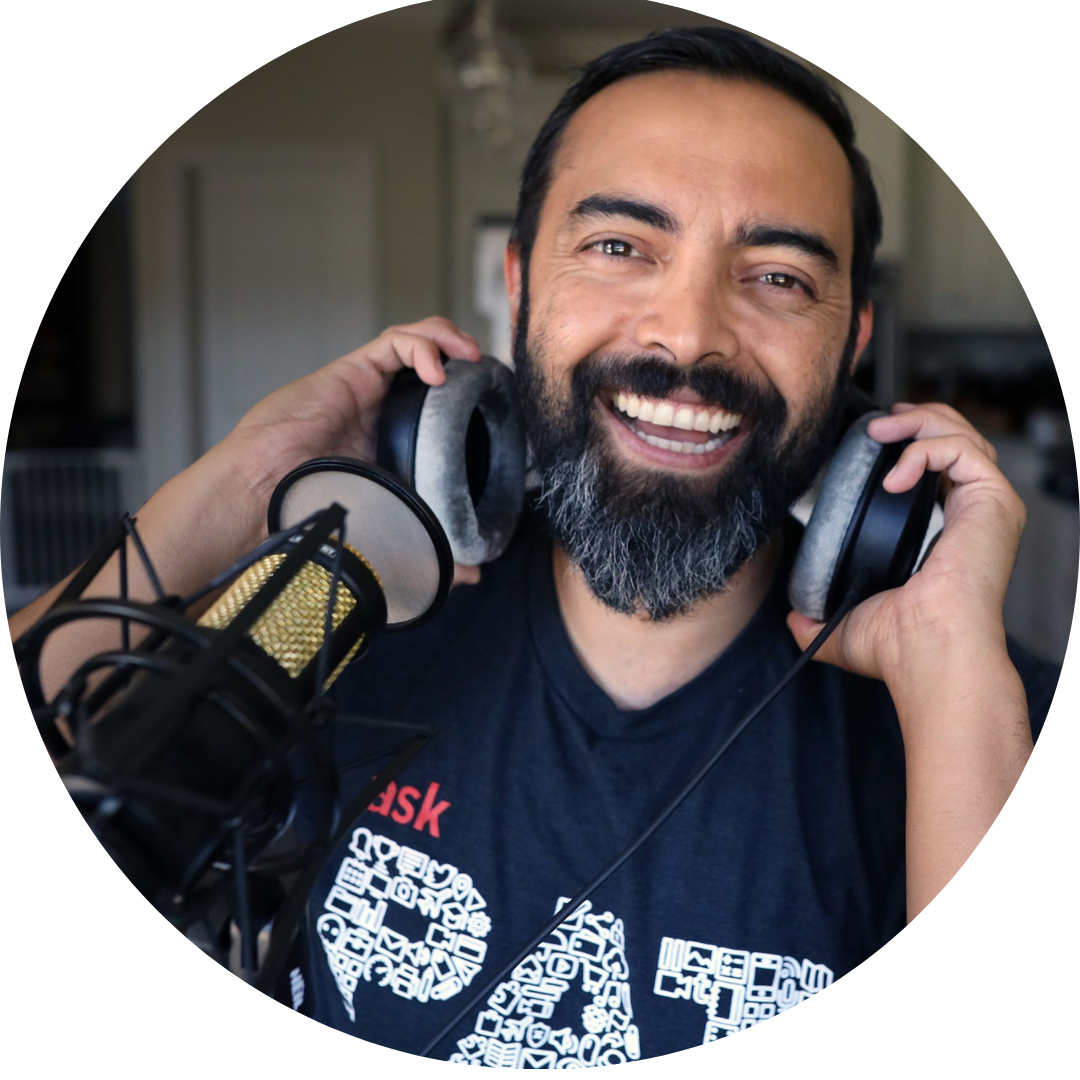
Pat Flynn is a father, husband, and lifelong learner from San Diego who
has built a reputation as one of the most influential voices in digital
entrepreneurship. Through his diverse portfolio of businesses, award-winning
podcasts, newsletters, YouTube channels, and thriving online communities, Pat
reaches and inspires millions of people each month. He is the founder of Smart Passive Income, an online community for digital entrepreneurs, co-inventor of the SwitchPod, and
host of the Deep Pocket Monster YouTube channel as well as founder of Card
Party, a large-scale live event for the community of Pokémon collectors. Pat also
serves as an advisor to dozens of companies and is a sought-after keynote speaker.
In his free time, he enjoys fishing, collecting Pokémon cards, and rewatching the
Back to the Future trilogy.
Takeaways
- Information isn’t progress: Learn only what you need right now.
- Start small and act fast: Progress comes from experiments, not overthinking.
- Embrace micromastery: Focus on tiny skills that compound over time.
- Repurpose smart: Use your content in multiple formats to reach more people.
- Count actions, not likes: Measure consistency, not vanity metrics.
- Lean out distractions: Say no joyfully to everything that isn’t aligned.
- Failure is feedback: Each attempt gets you closer to mastery.
- Discipline creates freedom: Systems and batching unlock creative space.
Resources Mentioned
Join the email list for Take The Exit – Be the first to step inside the story!
Transcript
Click for full script.
EBT762 – Pat Flynn
[00:00:00] Supercut
You are going to want to download our bonus supercut that gives you all the information you need to master Pinterest. Head to eatblogtalk.com/masterpinterest to download today.
[00:00:14] Megan Porta
This episode is a pinch me moment. Pat Flynn, one of the most influential voices in entrepreneurship, joins me to talk about his newest book, Lean Learning. And I still can’t believe I got to hit record on this one. We dive into how just in time, learning can change everything, the power of micromastery, and why experimenting on platforms like YouTube is essential to real growth. I even flipped the script on Pat and threw a few of his own interview questions back at him, straight from a talk he gave in 2021 that shaped how I run this podcast. This one is packed with wisdom and heart. I know you’re going to love it.
[00:00:58] Intro
Hi food bloggers. I’m Megan Porta and this is eBlog Talk, your space for support, inspiration, and strategies to grow your blog and your freedom. Whether that’s personal, professional, or financial, you are not alone on this journey.
[00:01:15] Sponsor
Not every corner of our industry feels encouraging, unfortunately, but the Eat Blog Talk mastermind does. Madison shares why this group feels so different from other spaces she has been in. In a lot of other spaces in the industry, it is a lot more negative or just like, not even complaining in a negative way, but just like, sharing. Like, this isn’t working. What can I do differently? And I feel like there is that in this group, but it just has a different vibe to it.
Like, it just, it doesn’t feel like people are complaining or just like sitting in negativity. Like, people are maybe sharing something that’s not working. And it’s so quick for everyone to jump in and be like, you’re doing great. This is what you could try. Like, it just, it’s just very different than some of the other spaces that I’ve been in.
And I think it all comes down to, like, we’re all trying to find the positive and trying to, like, keep our perspectives on, like, where can we go? That’s upward from here type of thing.
Come be part of a space that lifts you higher. Join the 2026 Eat Blog Talk mastermind group and experience it for yourself. Head to eatblogtalk.com/mastermind to apply today.
[00:02:19] Megan Porta
Pat, welcome to Eat Blog Talk. So excited to have you here. How’s it going?
[00:02:24] Pat Flynn
Thank you so much. Even preparing for this talk, I was like, I’m getting hungry now because it’s about food. I spoke at the Food Blogger conference once. Everything Food Blogger And I was just like, how do you guys control yourself? There’s so much amazingness in this space and what people create and bring, and it’s just like I wouldn’t be able to control myself.
[00:02:42] Megan Porta
Yeah, it’s a real issue, I have to say. I mean, a lot of self control is required on cooking days and video days, so. Yeah. And I learned from your book this summer as I listened to it, that you’re a foodie. I didn’t know that.
[00:02:56] Pat Flynn
I am. I love food. My wife and I love restaurants here in San Diego or wherever we travel. Our latest sort of love is food, actually in Japan that we’ve found in different restaurants and cuisine there. But I am the chef in the house. I love to cook. Cooked ever since I was a young kid and never went to school for any of it.
[00:03:14]
But I learned as I went. Made a lot of mistakes along the way, which I know is what kind of the theme is for the book and maybe today’s conversation.
[00:03:20] Megan Porta
Yeah. Have you ever considered starting a food blog?
[00:03:23] Pat Flynn
You know, I have. However, I’ve always tried to pull myself back from taking super passions that I have and turning them into something like a blog or business. I’ve done that a couple times and I. I have done that recently with like Pokemon and stuff. But I’ve. I’ve also wanted to sort of just like protect those things that are hobbies that I love and not turn them into something that could turn into a job or work.
[00:03:45]
And again, that’s not a bad thing. But with fishing and with cooking, I’m just going to. It’s just for me and my family, basically.
[00:03:52] Megan Porta
Yeah, no, I get that. Well, let’s start off. I like to ask all my guests if they have a fun fact about themselves to share. Do you have anything fun sharing?
[00:04:03] Pat Flynn
Yeah. So I, in addition to being a foodie, I’m a musician. I played the trumpet for a very long time. My son now plays that exact same trumpet that I grew up with, which is kind of cool. So I’m like a booster parent now. And that’s always fun with. With marching band. He’s in high school.
[00:04:18]
But I was so obsessed with music and band. I went to University of California at Berkeley. Go Bears. And I was in the marching band there. I lost a vote to become student director my senior year by two votes, which means if one person switched their vote, it would have been the other way around.
[00:04:33]
I was devastated because I just wanted to give so much to this band. And I knew that this was something that I had to do. I took one additional class, a landscape architecture course, my fifth year, just so I can qualify to be in the band. And leading up to that year, I won by a landslide.
[00:04:51]
It changed my life. It allowed me to have the architecture job that I had through a connection in the band that fifth year, which led me to getting laid off in 2008, which led me to becoming an entrepreneur and going down this whole route of being a creator and my own boss. So, yeah, that’s kind of the origin of a lot of where I am is thanks to the marching band, thanks to the trumpet.
[00:05:12] Megan Porta
It all started with the humble trumpet.
[00:05:15] Pat Flynn
Most. Most trumpet players are not humble, just so you know. Most are like, I can play higher than you. I can play louder than you. So to hear those two words together is pretty interesting.
[00:05:22] Megan Porta
The humble trumpet doesn’t go together.
[00:05:25] Pat Flynn
No.
[00:05:25] Megan Porta
Well, let’s talk about your book, your recent book, Lean Learning. I absolutely tore through it this summer. I think I listen. I mean, it’s a fairly short read. I think I listened to it in maybe two sittings in our RV this. And I am in a season currently where I’m trying to do less.
[00:05:42]
I’m trying to not consume as much. There’s so much information being thrown at us as entrepreneurs, as you know. So it just came at me at the right time. So thank you. And I would love to just talk through it a little bit today. What inspired you to write the book?
[00:05:59] Pat Flynn
A few things. Mainly my kids, actually. My son is now turning 16. Very soon, my daughter just turned 13. They are sort of becoming young adults very soon, and they’re living in a world that’s very different than the one that I grew up in where information was valuable. If you knew something, you had some power, you had some leverage, because you just knew stuff.
[00:06:19]
In fact, you might remember Encyclopedia Britannicas that people had in their house. It’s like you could pay for additional information. And that was more for like, a higher class, if you will. And it’s interesting cause our brains aren’t really evolved to absorb and consume these. The amount of information that’s coming our way.
[00:06:34]
We’ve almost continued to treat information like it’s a scarce food source. If we were living in like, cave people days, right, if you found a food source, you would hoard it because it’s survival. You might not come across another one in a little bit. And that’s what we’re doing with information. However, we no longer live in this scarce information society.
[00:06:51]
We live at a buffet of information and we’re filling our plates full because we think we need it all and we are just trained that way. Especially if you’re like a millennial like me, and you are meant to read the entire textbook before taking the test, that sort of thing. Um, the trouble is, not only are we stuffing our plates full with as much as we can, we’re also getting force fed by all these algorithms.
[00:07:11]
You know, when you search on something, if you search for information about something on YouTube, what happens the next time you log into YouTube, you get 12 additional videos about that with the perfect thumbnail, the perfect title, and then you kind of go down this rabbit hole, and all of a sudden the things that you once said yes to are getting put aside for the new things that you said yes to.
[00:07:27]
So there’s actually this thing called over inspiration. We think inspiration is always good, but it’s not if you have a focus and a job to do or responsibilities. Yet. What we’re doing is we’re allowing ourselves for opportunity for what I like to call junk sparks come into play. And that kind of removes us from the things that we’ve already said yes to.
[00:07:45]
So what we’re really trying to do here and what this the purpose of this book, not just for my kids, but a lot of us who are living in this world now, especially creators and educators, learners of all types. Whether you’re acquiring sort of a skill to be an entrepreneur or just any skill in general learning a new language, we have to learn how to navigate the world we live in today.
[00:08:02]
And it’s about training, just in case, learning for what I like to call just in time learning. Just in time learning is knowing what your next step is. Maybe not knowing all the next steps after or how you’re going to do that, but you know what the next step is. And you focus on learning just about that and everything else kind of gets pushed aside.
[00:08:21]
And you have to kind of trust yourself that when you find the right resource for the right thing at the right time, that by the time you get to the next steps, there will be resources available for that as well, and likely more updated, more relevant by the time you need them. And there’s story after story, as you know, in the book of different things that I’ve done in my life, across many different spectrums of business, and not just business, but, you know, everything from cooking to entrepreneurship, that uses this sort of lean learning approach that’s so different.
[00:08:47]
I mean, it’s not revolutionary. This is kind of how we used to learn back in the day. Right. If you were a blacksmith or something and you wanted to learn, you would.
[00:08:53] Megan Porta
Right.
[00:08:54] Pat Flynn
Find an apprentice and they would teach you and you would, you know, feel the heat of the forge and go, oh, my gosh, that’s kind of, you know, and you make mistakes and all this kind of stuff. You learn as you go. But we’ve been trained to kind of learn everything before taking any action, and we go nowhere.
[00:09:08]
And so that’s what this book is about and hopefully helps people navigate through.
[00:09:13] Megan Porta
Yeah, I think it’s a good time to write this book. I don’t know if you anticipated that, but there’s a lot going on with AI and so many things that I think we need to take a step back and just focus on what we need to. I’m wondering, okay, so I know a lot of people listening.
[00:09:30]
My audience feels that over inspiration. How do we wade through that? Like, if we’re just taking in too much, we have five courses we have to get through. We have 12 podcast episodes we want to get through this week. How do we. I mean, it’s like, do we just delete it all and start fresh or where do we start?
[00:09:51] Pat Flynn
So some people may have to do that. I mean, there’s this idea of unsubscribing from everything that I talk about in the book so that you can kind of resubscribe to the things that matter. I mean, imagine doing that with all the things that come into your inbox, from Netflix to all these subscriptions that you have.
[00:10:06]
Like, imagine just going, okay, I’m going to start Clean Slate and then resubscribe to just the things that I need today. I mean, not only are you going to save a lot of money, but you’re going to not have all this kind of stuff happen without you knowing it and getting these recurring payments.
[00:10:18]
So we can do the same thing with our lives, with what it is that we’re learning. And it really first starts with understanding, well, what do we want? Where should our focus be? Because a lot of us go through life in a more automated fashion. We kind of just are going through the motions and every once in a while it’s great.
[00:10:32]
I do this once a quarter to, kind of have sort of a self reflection on, okay, where am I going? What do I want? And how do I want my life to be? And then I can back check that with the things that I’m doing are the actions that I’m taking today. In alignment with that are the resources that I’m learning from actually in alignment with that.
[00:10:52]
And a Lot of times, and most of the time you’ll find that there’s a lot of extra stuff in there. There’s these junk sparks, things that once took your interest, but you were kind of just dabbling on the surface and then you found another thing to dabble with and you’re just doubt, you’re just a professional dabbler.
[00:11:04]
I think a lot of us can relate to that versus the discipline to go, okay, there’s a lot here that we could do. But here’s the one thing that aligns best that I’m actually going to at least dedicate a certain amount of time to, to then assess afterwards whether or not it’s worth continuing or not.
[00:11:20]
And that’s the big idea here. It’s kind of what. There’s a book called Tiny Experiments by Anne Lecomph, who, who’s French, and she talks about the idea of like putting yourself in situations for X number of days or X number of months to test something and then see what happens. And that’s what lean learning is great for.
[00:11:38]
For example, I recently did this with TikTok reels and shorts. I never really understood how short form video works. I always did long form video, but I knew people were doing it and I wanted to crack that code. So I decided to just hyper focus for 60 days and create one video every day.
[00:11:54]
And I knew that a few things would happen if I did that. I’d get a lot of more practice. I would only have so much time to sort of over edit like we often do. And so trying to get something out daily, I would probably create some sort of workflow and standard operating procedure.
[00:12:07]
And that’s exactly what happened. By 30 days, I wasn’t getting a lot of views. But that wasn’t the goal. The goal was to get to day 60. As my buddy Alex says, count uploads, not likes, because that’s what you can control. You can control hitting record, you can control hitting publish. You can’t necessarily always control the views.
[00:12:24]
But what was interesting is even though the views weren’t there by day 30, some things did happen. I cut my editing time of these videos because I was doing it all myself, from 45 minutes to 12 minutes. I mean, that’s huge. And so even if this experiment, quote unquote, failed because I didn’t get a lot of views, I could take that skill and place it, place it elsewhere, bring it back to the business that I was doing with the other stuff I was doing.
[00:12:45]
I also had 30 points of data, 30 opportunities of learning. If you’re coming out with a video every week. You only have 52 weeks of learning or 52 moments of learning. However, if you’re coming out with a video every day, that’s six times more opportunities to learn and get better. Daily isn’t always the answer.
[00:13:00]
But again, the 60 day experiment, I knew I could go daily for at least 60 just to see what happened. Well, by day 35, one of those videos hit 750,000 views. It was kind of like it felt like out of nowhere. But it wasn’t because I had learned from the previous videos and something finally hit.
[00:13:16]
And maybe there was a little stroke of luck, but luck is where preparation meets opportunity. And so the entire channel started to rise from then. We are currently on day 410 straight of these daily videos. This is a Pokemon. I’m opening packs. You don’t even see my face. And I’m just talking about the cards that I’m opening.
[00:13:34]
I created a jingle that kind of is my podcast DNA put into this. It’s called should I open it or Should I keep it sealed? If you’ve seen those videos, that. That’s me. And it’s gone viral. We are seeing now across all the platforms. TikTok reels, shorts, also now Facebook. Over 10 million views a day.
[00:13:53] Megan Porta
That, which is awesome.
[00:13:55] Pat Flynn
Same. That is insane. And I’m getting recognized for my voice now. I’ll order something at Starbucks and a person will go, where are you? Are you the should I open it guy? And I’m like, that’s me. And they’re like, can I see your thumbs? Because my thumbs kind of look weird. I have club thumbs like Megan Fox.
[00:14:10]
And they’re like, it is you. Oh my gosh. It’s just crazy. And again, I didn’t know it was going to do this, but I gave it a chance. And that’s the big idea here. When you kind of experiment and try with these things for a period of time, you can hyperfocus and give it at least a shot to do something for you.
[00:14:28]
Whereas normally we get so over inspired and want to do everything and then nothing ever gets the chance.
[00:14:34] Megan Porta
I didn’t know you had famous thumbs, but that’s really funny.
[00:14:36] Pat Flynn
I do. It’s. I call them diglett thumbs, which is a Pokemon that kind of looks like my thumbs.
[00:14:42] Megan Porta
Oh my gosh. Uh, how did you decide? Video? Why did you decide that was the experiment you were going to do?
[00:14:47] Pat Flynn
I’ve seen the reach that videos can have and the opportunity to connect with people. In fact, I remember going to Social Media Marketing World in San Diego. I did a keynote there and I was asked to do a keynote about long form videos because I was a big long form video guy. I was almost like, almost anti shorts because I was like, you can’t build a relationship with people in 60 seconds.
[00:15:08]
But you know what, now that I’ve done this experiment, I’ve realized that I was actually wrong. I still love long form and I still think that’s king. I, however, I feel like short form video is great because these are the, this is the medium by which most of these platforms are pushing things out, right?
[00:15:21]
TikTok, Shorts, Reels. I mean, these platforms are putting a lot of resources into it. And I found that if you show up daily, sure it’s 60 seconds a day, but imagine that over 400 days or even 30 days. That’s 30 minutes now that you’ve been in front of somebody. And I’ve now baked my show, if you want to call it that, into a person’s, you know, nightly bedtime routine, right?
[00:15:45]
They go to bed and they’re kind of doom scrolling and they’re like, oh, Pat’s got another video. Should I open it or should I keep it sealed? It’s gotten to a point where if I’m just like a few minutes late, people think I’ve like died or something. They’re like, are you okay? Like what’s happening?
[00:15:58]
So I’ve learned to actually batch process these. Now I can create a whole week’s worth. This is another sort of time saving tip for creators. I batch process now. So I create an entire week’s worth of these episodes and in one day on Sunday, and then I’m, I’m scheduling them and then, you know, I’m good for the rest of the week, which is kind of cool.
[00:16:13] Megan Porta
That’s so cool. So short form only. Is this your experiment? You aren’t doing any long form for this experiment?
[00:16:20] Pat Flynn
For this experiment there it’s 98% short form because that’s the algorithm and the style of video. However, I have taken those videos because I started noticing that people were doing compilations of them. Long form videos that were like 20 of my videos put together. And I got those videos taken down. You know, it’s my ip and that is just a natural part of this game that we play, unfortunately.
[00:16:43]
So I said, you know what, I’m gonna do those instead. So I created my own compilation videos that are long forms where I’ll have like episode one to 50 in a 30 minute, you know, in a 50 minute episode, just like literally the same videos. And it’s now horizontal. There’s like black like vertical lines on the right and left hand side.
[00:17:01]
It’s just still vertical in the middle. And those have seen hundreds of thousands of views and get a lot more revenue on YouTube because long form video has higher RPMs or revenue per thousand. So that’s where I’m seeing some long form stuff. I do have a separate long form channel and there’s always this question like Pat, should I do short form on my long form channel?
[00:17:20]
In many cases, yes. If especially it’s the same audience. If it’s the same audience, same channel, that’s a general rule and that comes from YouTube. In fact, however, if it’s a different audience, it may usually should be on a different channel. So even though I have a Pokemon YouTube channel that is a long form channel, I decided to create a short one because it is a different audience.
[00:17:38]
The kind of video that I’m doing is not the hour long challenge, which is more family friendly. It’s like episodic versus these really quick hit, a little bit of an endorphin hit for people in the evening for these short form videos. Some do overlap, but it is a different audience and a different behavior.
[00:17:53]
So in general, same audience, same channel, same. And a lot of, I know podcasters, for example, take little clips from their podcast, put them on their same channel, and that does a couple of things. Number one, it can promote the longer form, which is what we wanted to do, what we’ve always thought we wanted it to do.
[00:18:08]
But what I found is that the short versions, like the 1 to 5 minute clips or the 3 minute clips from the longer version is a great way to get segments of your episode in front of people who would never ever watch that long form or listen to that long form. And that was a huge mindset shift for me.
[00:18:25]
I was like, oh, I can still get this content in front of people in the way that they want to consume it. You cannot change a person’s behavior on where they want to consume. They’re, you know, we all have our favorite platforms to consume content. It’s just a matter of can you show up in that format for them.
[00:18:41]
And so the short versions of your longer form content are great for still seeding your brand and seeding your ideas, but in a different format to people who would never consume it otherwise.
[00:18:51] Megan Porta
Okay, yeah, that’s cool to hear you talk about that. So I mean, as you know, food bloggers create all kinds of video content. A lot of it, long form for YouTube. But I’ve never thought of that in the way that you can go back and take pieces of it and repurpose it in short form.
[00:19:10]
And then I imagine it’s just a matter of experimentation. Like, you see what works. You go into analytics, you see where people are dropping off, you see what people are liking, and then you just keep tweaking from there.
[00:19:20] Pat Flynn
Oh, 100%. I love that you said the analytics because the data is information and some people just don’t even look at it, which is kind of. It’s just like, why wouldn’t you? On my long form channel, for example, just to show you the power of data, I started this channel again because of my kids in 2021.
[00:19:35]
We got into Pokemon during COVID and started to kind of fall in love with it. So I decided to create a YouTube channel. And the first videos that I did were buying mystery boxes on ebay. So I’d buy like a $500 box on eBay. You wouldn’t know what’s inside. And it was kind of an interesting sort of retention tools, like, oh, let’s see what’s inside.
[00:19:51]
And a few things happened. Number one, I noticed that there were huge drop offs in certain parts of those videos. So I looked at the graphs and I said, okay, well, what am I doing during those moments where people are leaving? And I found out that that’s when my face was on camera.
[00:20:03]
Oh, no. That was a humbling moment. Yeah. And I was like, okay, cool. I guess people don’t want to see me. And they don’t. Why, like, why would they. They want to see the mystery box and everything that’s inside. Cool. So we cut all the parts where I was off in future videos and we started to see better retention graphs.
[00:20:18]
There was another mystery box that we did where there was a flat line for about five minutes. And when you see a flat line in any retention graph, you have to go and see what did you do there to hold people’s attention. And in this particular mystery mystery box, it was a binder.
[00:20:33]
It was a. It was a folder with Pokemon cards in it. And people were just so interested in what cards were in there. Every page was new. Why did that person collect it and organize it in that way? There was just so much interest in it. And I said, oh, that’s interesting. What if in the next one I just purchase a person’s binder and that’s the video, not just a mystery box with a bunch of stuff, but I just purchased the binder that video, the binder video hit 3 million views.
[00:20:55]
That was one of our biggest videos. And I wouldn’t have known to do that if it wasn’t for the retention graph. I always also include, and this is important for creators, 20% of my content is used for purely experimentation. If I have a curiosity or a hypothesis on a certain kind of video, and I’m like, I don’t know if this is going to work.
[00:21:15]
I do it in 20% of my content. So for every four to five videos, I will do an experimental video just to kind of, you know, see what happens. And sometimes they flop. And you know what? That’s okay because I’m trying and I’m learning and the other stuff is still fine, right? I have my, my main buckets of my channel or my content or my blog that still are reliable.
[00:21:33]
But this new thing could work out, and if it doesn’t, that’s okay. I did an experimental video that was very much inspired by Dude Perfect, which is this channel of guys who like do these trick shots with all this kind of stuff. So I did a video with my son where we were competing doing trick shots with Pokemon cards and it blew up.
[00:21:50]
It was actually really surprising because it actually didn’t have anything to do with Pokemon cards. It was just his father son battle. And then I said, okay, that’s interesting. This is the best retention graph we’ve ever had because it was a challenge. What if we combine that with a binder? If we do a challenge around maybe completing a binder within a certain amount of time.
[00:22:09]
So I had a half full binder and I said, I’m going to give myself 24 hours to just float around the city and try to finish this thing. And that video within a month had over a million views. Today has over 11 million views and is accounted itself just that one video for over a hundred thousand subscribers and over $60,000 in revenue over.
[00:22:30]
Over the last four years. One video became a silver play button. But again, I wouldn’t have like, there was nothing in my head that was like, ooh, I’m gonna do binder challenge. Like, it all came from information that was real, from just trying. That’s lean learning in action, right?
[00:22:46] Megan Porta
And taking one step at a time and seeing what worked and then what worked and then what worked and then following those little clues, right?
[00:22:54] Pat Flynn
Yeah, yeah, exactly.
[00:22:55] Megan Porta
That’s so cool. I know a lot of food bloggers are really leaning into video right now, especially with just AI coming into the picture. Blog posts aren’t getting as much traction because of changes in search and all of that. So this is a huge focus for a lot of us. So thank you for inspiring. I’m sure this will be very inspirational.
[00:23:17] Megan Porta
Food bloggers, do you want to see the conversations behind the microphone? Eat Blog Talk is now on YouTube, featuring edited interviews with expert guests. Head over to YouTube and search Eat Blog Talk, hit subscribe and join the conversation in the comments. Let’s connect and grow together.
[00:23:34] Pat Flynn
I feel like if you’re not doing video, you’re definitely missing out on the opportunity to connect with where people. That’s where people are. And that’s not to say blogs can’t still work, but like you said, I mean, we felt it on our end on the entrepreneurial side of things, our search engine traffic has just plummeted.
[00:23:48]
And you look on Google, when you search for something, what do you see? You see, first of all, Google’s AI answer, which, like, I’m just like, oh, my gosh, like, what? What is even the purpose of trying to rank when Google’s giving you the answer already? Because most people are looking for questions.
[00:24:02]
I don’t know if recipes are shared in a Google AI, but if they are, that’s sometimes. That’s terrible. Yeah, sometimes. Really?
[00:24:08] Megan Porta
Yep.
[00:24:09] Pat Flynn
That’s bad. And then of course, you go down and it’s like ads and sponsorships.
[00:24:12] Megan Porta
I know.
[00:24:13] Pat Flynn
And then you go down and you see the first spots, which are usually Reddit conversations.
[00:24:17] Megan Porta
Yeah.
[00:24:18] Pat Flynn
Like where. Where do we get to play?
[00:24:20] Megan Porta
I know.
[00:24:21] Pat Flynn
Video, again, is where I think people should be.
[00:24:23] Megan Porta
Yeah, I agree. I think video is the way to go. And not just YouTube, but you mentioned TikTok and other platforms as well. Just getting as much content out as we can and experimenting. Back to Lean Learning. I was going to ask you about this concept of micro mastery. Can you talk about that a little bit?
[00:24:44] Pat Flynn
Yeah, I love micromastery. In fact, in all the conversations I’ve had on podcasts about lean learning, micromastery is sort of people’s favorite concept. And I’ll start with a story. I have a friend who’s an ultra marathon runner and he runs like 50 miles a day. I don’t. He’s crazy, first of all. But second of all, he is crazy.
[00:25:02]
He understands the power of micromastery. It just might seem like he’s just running, but he’s trying to optimize and be the best runner. Right. And the most efficient runner. So I called him up one day and I was like, hey, what are you doing? Can you want to go out for lunch and he was like, I can’t, because I have a film crew over my house.
[00:25:18]
And I said, okay, cool. Are you filming a documentary or something? He’s like, no, I hired this crew who has this ultra slow motion camera, like, I don’t know how many frames per second, but it was. It was ridiculous. And what he was doing is he was recording the way that his heel hit the ground.
[00:25:32]
And he was just like, we’re studying the angle of attack and the transfer of power. Like all this sciency stuff, that’s way beyond me. And when you. I was like, dude, that’s crazy that you’re focusing on these little micro improvements. And he was like, Pat, dude, I take like 50,000 steps. Imagine a micro improvement, but over 50,000 steps.
[00:25:51]
Like, that is huge. And so I’ve learned that a great way to get better faster at certain things is not to just do the thing over and over and over and over again, but find the components that this thing is made up of and hyper focus on mastering those components one at a time.
[00:26:07]
It’s similar to how, you know, I was in band, a big musician, how a band conductor works to improve a song that they might be learning, right? They don’t just play the song over and over again. They play until maybe there’s a part where the trombones are messing up and then everybody stops.
[00:26:22]
All right, all right. Trombones, just play measures 25 to 36. Go. Okay, stop. Jenny, you play that run until we get it right. Okay, Gary, go. And Jonah, go. And then. And that kind of gets worked out. The whole band’s just chilling, and then they bring the whole band back, and then that part’s fine, and then you move on to the next thing.
[00:26:40]
So this is micro mastery, right? You are the conductor of your own learning. So hyper focus on those things that need help, right? If you’re practicing piano and my daughter practices piano, so I know this. It’s like when we tell her to practice piano, and if she’s playing the song and it sounds great, I’m like, that’s not practicing, right?
[00:26:58]
You’re not working on things. You’re just doing the things that you already know how to do. What are the hard parts that you need to do over and over again that are kind of a little bit of a struggle that you can hyper focus on for a while. We can do that in our learning as well.
[00:27:10]
I did this when I learned how to become a public speaker. I was deathly afraid of speaking. I spoke for the first time in 2011 and started to fall in love with it, but I wanted to get really good at it. So the way that I got good at it were two way, two ways.
[00:27:22]
Number one, I hired a coach. So I found a mentor to help me and kind of guide me, which is really important. Having other people around you to support you and hold you accountable is really key to growth. But secondly, I approached every new talk with something small that I wanted to master.
[00:27:38]
So in the beginning it was I want to master just my first 60 seconds. And I started to watch TED Talks, but I didn’t watch the full TED Talks. I just watched the first 60 seconds of all of them. I got help from my coach just about how to open and how to make that good first impression.
[00:27:52]
Later on, I did talks where I remember I was focusing on just what do I do with my hands. So I’d watch a whole bunch of presentations, but I wouldn’t care about what they were talking necessarily, but I would watch their hands just for know, a two week period leading up to the event.
[00:28:04]
And I still did the talk the way that I did, but I hyper focused on what my hands did. And I learned that if you make big grand gestures like this, it kind of emphasizes the point. But if you’re speaking and talking about maybe a more vulnerable story, you can kind of bring your hands together like this to emphasize sort of the things that, that you want to say and kind of like support that vulnerability.
[00:28:23]
And these things I wouldn’t have learned if I just kept doing the same thing over and over again. I hyper focused and micromastered these things and stacked them onto the next one. And now I’ve become sort of a world class speaker. I’ve gotten paid over half million dollars in speaking fees since then and continue to speak and enjoy it.
[00:28:40]
And although I still get nervous before it, I can trust myself now because I’ve practiced and I, and I have understood these skills that are required to do it.
[00:28:46] Megan Porta
Where do you think people can start with that? In the world of food blogging? There’s so many things that we could do this with. I mean, there’s writing blog posts, there’s doing video, there’s showing up for podcasts interviews. I mean, the world is your oyster really. So where, like, where do we even begin?
[00:29:03] Pat Flynn
I’m so glad you asked this. In fact, I have a friend of mine who, he is a entrepreneur. He talks about business a lot. He has a marriage blog and all this other stuff. In fact, now he cut everything out to focus on the importance of being a guest on a person’s podcast, that is the number one growth strategy that he’s found.
[00:29:20]
I found that to be the case as well. And here I am being a guest on your show, Megan, which is pretty cool and very ironic now that we’re talking about this, but for a period of time, again, having some level of time. Time is a tool here. Take two months and say, you know what, of all the strategies, maybe, maybe the first step is in fact to just kind of audit all the things you’re doing.
[00:29:40]
Take some post it notes and write down all the. All the tasks, all the things. First of all, you’re going to get very overwhelmed and you might even cry over the amount of things that you have going on. Right? That should be your first sign that there’s maybe too much here. Some of those things you could probably just kind of crumple up and throw away already.
[00:29:55]
Like, why am I doing this? This is not helping me at all. And it’s taking most of my time. Why just again, taking an audit, kind of going back and zooming out a little bit can help, but then picking something that you believe could give you a chance to get to that next level, maybe it’s podcast guesting and you say, you know what, for the next two months, I’m just going to hyper focus and lean into podcast guesting.
[00:30:16]
Right? Lean learning is about leaning out the things that don’t matter, but then leaning into and getting deeper with the things that do. And it just might be because you heard somebody say that this was a good idea. Maybe it’s just an inkling and a feeling that you have. Maybe you literally throw a dart to decide which I’ve done with my students.
[00:30:35]
Sometimes I’m like, you keep going back and forth between all these different strategies and you just keep scratching the surface. You have to dedicate some time to allow for something to bloom. Right? You have to nurture these things in order for them to kind of grow. And you’re kind of just like letting them bake.
[00:30:50]
So let’s, let’s just put them all on the wall and throw a dart and pick one. Like that’s the best strategy because you have to make a decision. Exactly. And it’s like, okay, you go through that, and even if it were to fail after your X number of day experiment, great, you can put it away now forever.
[00:31:07]
Open up more brain space to try the next thing. And likely you learned something and picked up a few things that you can apply to this new thing as well. So again, it’s very counterintuitive very hard to do. We have this, this FOMO in our work, right? We see other people and you’re probably connected and networked with other bloggers who are doing this thing and others are doing that.
[00:31:26]
And you’re like, oh, I could do all of these things. No, you can’t do all of them at the same time. You can do all of them, but you have to pick one to start with and lean in on that and maybe you become the food blogger that just crushes it on LinkedIn and you go, I’m going to go all in on LinkedIn.
[00:31:41]
I’m going to. That’s the, that’s the one course I’m going to consume. I find the one book on LinkedIn. I get mentorship from a person who’s teaching LinkedIn on LinkedIn and I just bring the food blogger space on there because I hypothesize that there’s not very many. And I can kind of utilize that space and create recipes for busy entrepreneurs because that’s where they live on LinkedIn.
[00:32:00]
I don’t know, I’m just kind of making this up. But again, that’s a hypothesis. You give it a shot. Right? Thank you. And then you kind of go from there and then, and then you can learn as you go. The FOMO is the hardest thing. I mean, really what we’re battling is ourselves, our urge to kind of continue to try other things.
[00:32:15]
And so again, the time based thing is important. There is a strategy called Jomo that once was kind of well known. The joy of missing out to kind of counter that. But I don’t like that because it’s kind of just like you’re kind of pretending it’s false to just be like, yeah, I’m joyful that all these other people get to do these other things.
[00:32:31]
And I don’t know. What you need to do is you need to be like Elle from Legally Blonde. And if you remember that movie Legally Blonde or the Broadway musical, really great. Highly recommended, by the way. Elle studies for her bar exam to get into law school so that she can go to Harvard to see her boyfriend who dumped her.
[00:32:48]
And while she was studying, all of her sorority friends and frat friends were having these parties. And she was disciplined enough for that moment in time to focus on studying for the bar exam and creating like an interesting videotape for the people who are going to let her in. That’s what we need to do.
[00:33:06]
We need to stay disciplined. So here is the strategy to battle fomo. It’s J O O O the joy of opting out, realizing that there are those other things there, like just being aware of that and kind of acknowledging that, but then going, you know what? I am going to say no, which will then recommit my yes that I have already made.
[00:33:25]
And that’s where the sort of being proud of those decisions and that discipline comes into play. So the joy of opting out, you can always go back and save. Maybe you save the things that come across your feed for later that may or may not be applicable right now. Only absorb the things that you need help with right now.
[00:33:43]
That’s what just in time learning is. Only absorb resources that are about the next step. Everything else can get put into a folder just so that your brain knows that it’s there. And 99% of the time, you’re not even going to go back to it because there’s going to be a better, more relevant resource by the time you need it.
[00:33:57] Megan Porta
I think of all the messages today, this is what we need the most from you. Speaking for myself, talk to a lot of people on this podcast, and they bring different levels of expertise, different skills, different platforms, different fill in the blank. And every time I hear someone talk, I’m like, oh, my gosh, I need to be doing that.
[00:34:18]
I could grow my business focusing on this platform and this tool. So I’ve had to get really good over the years about exactly what you’re saying and joyfully opting out and saying no for now. But it’s been hard. It’s so hard as a creative individual who loves her business so much. And I just.I want to do all the things and grow in all the ways.
[00:34:41] Pat Flynn
Yeah, no, I get you. That’s. It’s the human in us. Right. We want to do what everybody else is doing, and it’s those who stay disciplined enough and stay long enough who will succeed. And what helps me is realizing that once I figure something out, I can build a system or automate parts of it or hand off parts of it.
[00:35:05]
To get time back. Yeah, to then try another thing. Right. That almost becomes my reward for finding a thing that works and then automating it or creating a system or, you know, cutting the editing time from 45 minutes to 12 minutes and now batch processing. Now I have time to experiment and try other things.
[00:35:22] Megan Porta
Yeah, absolutely. If there’s one thing you hope readers take away from your book, Lean Learning, what would it be?
[00:35:28] Pat Flynn
Action over information. That’s really what it is. It’s being okay with failure. Failure is just a first attempt in learning F A I L as I once heard. And this is something that is really important that I and my wife April have taught our kids because we grew up where failing is bad.
[00:35:45]
And that completely messed with the brain chemistry in our lives. I mean, it was really hard for me to be an entrepreneur because I was like, this isn’t perfect yet. I’m not going to put the website up because the line isn’t where it needs to be. And like, all this kind of. All these kind of excuses that are really just perfectionism.
[00:36:00]
And I remember coming home when I was a kid in high school with like a 95% of my math test and my dad would drill me for the next few hours on the 5% that I got wrong. Oh. And it’s like, oh, my gosh, I have PTSD with legal pads because of this.
[00:36:16]
Legal pads and government issued black pens. It’s just like, I see those and I’m like, I freeze. And then, so, of course, what did I do? I worked so hard to be perfect because I hated doing that, because I didn’t want the lecture. So therefore, everything had to be perfect or else I would go through this pain, which again, made it very difficult for me to get anywhere as an entrepreneur.And it was only when I understood that failure is progress that things started to happen.
[00:36:44] Megan Porta
Oh, love that so much. Okay, I have a surprise for you. So I remember listening to a talk you gave in 2021 about. I think it was about podcasting. I don’t remember if it was something more specific, but this came to me before the interview last week, and I was thinking, oh, my gosh, I bet I have those notes somewhere.
[00:37:04]
So I dug them up.
[00:37:05] Pat Flynn
Okay.
[00:37:06] Megan Porta
Because you provided some questions to give to guests to create a more engaging and awesome conversation. So I’m going to give you a few of your own questions.
[00:37:18] Pat Flynn
Back to you. Oh, a taste of my own medicine.
[00:37:20] Megan Porta
Yes, a taste of your own medicine. This is from January 1st or no, January 26th, I believe. 2021. If you could give yourself one piece of advice back when you were starting out as an entrepreneur, what would it be?
[00:37:31] Pat Flynn
I would tell myself, number one, put the Jinko jeans away. They don’t look good on you. Number two, it would be. And for real, it would be, you gotta get out of your comfort zone. You gotta meet new people. I was such a shy person. I was always avoiding meeting people, even at events.
[00:37:48]
When I first started out as an entrepreneur, I would always, like, hide in my hotel room. I was not into the world of networking and getting to know people because I was just scared. What would people think of me? I would have nothing to say. I have no value to add. But when I think about all the most amazing moments that have happened really in my life, not just as an entrepreneur, but.
[00:38:07]
But in my life, it’s always been a result of the people that I’ve been blessed to surround myself with, who I had to take some courage to get to meet them, to build a relationship with them. And I’ve been in, for example, mastermind groups that have been together for over a decade, each meeting weekly, diligently, every single week.
[00:38:23]
And these people have become like family to me and know me sometimes better than I know myself. You know, you can’t succeed often alone because you can’t read the label when you are inside the bottle. So you have to have other people there who you know. And the best kind of people are the people who, when you share a win with them, they will applaud.
[00:38:43]
They will be so stoked for you not feeling like, oh, like, why not me? But more like, yes, you deserve that. And when I found people like that and I could be the same with them, it has just provided so much joy and excitement and accountability in my life that has definitely helped me get to where I am today.
[00:39:01]
So the advice would be, go out there, meet people. What’s the worst that can happen? But what’s the best that can happen?
[00:39:08] Megan Porta
Oh, I love that that was your answer. I think people are everything. It’s so important, especially as entrepreneurs. We do things alone, day in and day out, and yeah, love that. Okay, next question from Pat 2021. Where do you see yourself and your work in the next five to 10 years?
[00:39:28] Pat Flynn
So I have a number of different businesses. I have everything from an invention called the Switchpod, which is like a tripod for, for travel entrepreneurs, which is fun, to Smart, Passive Income. And I have the Superfans brand and now Lean Learning. I do see more books in my future, although I’m taking a break right now.
[00:39:43]
The Lean Learning was difficult for me. It was my first traditionally published book. There was a little bit of creativity that I had to give up for the publisher, but it worked out and it became a New York Times bestseller. I’m very happy with it, and the fact that we’re still talking about it months later is amazing to me.
[00:39:56]
So thank you, Megan, for having me on and, and, and, and, and continuing to help promote it. So I feel like there’s books. However, I will, by the time five years rolls around, start my Way into some fiction writing. It’s always been a goal of mine. And I’ve, you know, world building is, is really fun to me.
[00:40:13]
I do that on, on the Pokemon long form channel, World building. And I just have a joy in doing that. And I love writing. But I also see more live events. You know, I’ve been hosting live events for Card Party, which is my community event for, for Pokemon. We hosted the first one in 2023.
[00:40:30]
We have two this year. We have next. Actually 17 days from now is our fourth one. And we have 6,600 people going to Seattle to nerd out. Yes, it’s a very large event. It’s like a convention, plus like business show. And so I imagine more of those and more travel. And then of course, my kids being a little bit older now, you know, eventually by then they’ll be out of the house, most likely in college or traveling wherever they might go.
[00:40:56]
And my wife and I will have a lot of time together to explore the world and experience new things, hopefully experience new cuisine and food and delicacies all over the world. So we’ll see. But that’s kind of where I see things, see things going.
[00:41:08] Megan Porta
Another amazing answer. Thank you. And the last one from Pat 2021. If you had a time machine and could revisit any moment in your journey as a learner, which one would you go back to and why?
[00:41:20] Pat Flynn
I would go back to the moment I got laid off, June 17, 2008, which was that moment. I celebrate that date every year because it is a memory. It is a milestone in my life where I thought everything was kind of going to hell and was crumbling from under my feet. And I look back and I realized that that was actually the best thing that could ever happen to me.
[00:41:48]
So going back, I would just go back. I wouldn’t even want to interact myself. Plus that messes with the space time continuum and the world might explode if I do that. So I wouldn’t interact with myself, but I would, I would just kind of use that as a, as a reminder today to go back and sort of like witness that moment and kind of how I handled that, because I didn’t handle it well up front, but just kind of like rooting for this person, knowing what was coming would inspire me today to then take the next step into wherever life might want to bring me.
[00:42:17]
So, yeah, it’d be interesting to kind of relive or at least go back to that time because things were crazy. I mean, that was the Great Recession in 2008. I fell into a state of depression. I was, like, in my bed watching Back to the Future, ironically, during this time. So I always had hoped that there would be a time machine one day that I could go back and sort of change things.
[00:42:33]
But now, you know, 17 years later, I don’t think I would change anything. Everything that I went through helped me get to where I am today. And what I’ve realized over time is that you can’t always control what happens to you, but you can control how you react to it. I once heard that, like an egg that’s broken from the outside, an external force, that’s when sort of life dies.But when an egg is broken from an inside force, that’s when life begins.
[00:43:00] Megan Porta
I love that. Great answers to your own questions. Thank you for indulging me there. I want to ask about your book and where people can find it. But first, I have another very important question.
[00:43:11] Megan Porta
I have two boys, ages 18 and 15. When they were younger, they had Pokemon Love, like, huge. We have binders all over our house. They will never touch those binders again. What do I do with these? Pat, I have so many Pokemon cards in my house.
[00:43:27] Pat Flynn
We should talk. I would be more than happy to potentially take them off your hands, but I would also recommend you. I don’t know if you’ve spoken to them about that in a while, but it is something that is huge right now. A lot of these cards are very expensive, by the way, and have gone up in price.
[00:43:41]
There’s, there’s an app that you can scan these cards and kind of get, get a, get a, a price for. Many people have gone into their attics or basements to find their old, old collections to then sell off or, or, or get back into the hobby. And, you know, that could be some income for them potentially.
[00:43:57]
So I’d be happy to take a look. I, I. One thing I love to do on my channel, it’s sort of a flywheel, is another bucket of videos I have is I buy a person’s collection. They might need it because they might need the finances or they just want to get rid of it.
[00:44:09]
They’re not into it anymore. So I, I buy that collection. Then I film a video of me kind of revealing the collection. And that video usually pays for the collection and then some. And then what I do is I just give most of the cards away to my audience, which brings more people in so that I can just kind of repeat the process.
[00:44:25]
The channel grows. Yeah, it’s pretty fun. So, yeah, let me know. Megan, I’d be curious to know what they have.
[00:44:30] Megan Porta
Yeah, I mean, I’ve asked them. They don’t seem interested at all. So I’ll ask them again. But I might be getting in touch with you about that because we have a whole bin of binders and loose cards. It’s crazy. I don’t know why they’re still there.
[00:44:44] Pat Flynn
I’m very excited about that, so let me know.
[00:44:46] Megan Porta
Awesome. Now tell us where we can find your book.
[00:44:50] Pat Flynn
Thank you. Megan. You got the audiobook, so audible is definitely a place you can go get it. I also go quote unquote off script every once in a while in the audiobook, which is super fun. It’s one fun thing I love to do. I liked that the physical book can be found at Amazon, of course, but also Barnes and Noble too.
[00:45:05]
And yeah, I hope that all of you enjoy this conversation and perhaps have an urge to go check out the book. And if you do, I appreciate you so much for that.
[00:45:14] Megan Porta
And is there anywhere else you want to direct people? I know Smart Passive Income. Is your podcast anywhere else?
[00:45:19] Pat Flynn
Yeah, Smart Passive Income is the podcast as well as the website with all of our entrepreneurial related things. We teach entrepreneurs how to maximize the revenue that comes into play by providing the best service for their audience. And so everything from affiliate marketing webinars to how to create courses, how to create communities, we teach all that stuff in our community.
[00:45:38]
So we’d love to see you there or at least have you explored and check it out if that sounds like a right fit. And either way, I just appreciate you, Megan, for having me on the show in this fun conversation today and for everybody for listening through.
[00:45:50] Megan Porta
Thank you so much. We appreciate you. And thank you for all that you do too, just in our entrepreneurial space. We appreciate everything. Thanks Pat.
[00:45:58] Pat Flynn
My pleasure. Thanks Megan.
[00:46:02] Outro
Thank you so much for listening to this episode of Eat Blog Talk. Please share this episode with a friend who would benefit from tuning in. I will see you next time.
💥 Join the free EBT community, where you will connect with food bloggers, and gain confidence and clarity as a food blogger so you don’t feel so overwhelmed by ALL THE THINGS!
Want to achieve your goals faster than you ever thought possible? Stop by Eat Blog Talk to get the details on our Mastermind program. This transformative 12-month experience will help you accomplish more than you would be able to in 5+ years when forging ahead alone.
Click the button below to learn what a mastermind program is, what your commitment is, and what Eat Blog Talk’s commitment to you is. Learn More About The Mastermind Program
✍️ Reach out to connect with Heather Eberle, a copywriter for food bloggers. As much as you enjoy your business, maybe writing or marketing isn’t your cup of tea. Maybe you’d rather spend more time in the kitchen and less time on your laptop. Heather is here to clear your plate! Let Heather help you share your content with the world.