Monetization Strategies for Food Bloggers
Burnout is not a badge of honor. In this episode, Chanda breaks down what sustainable success actually looks like and why systems, boundaries, and self trust matter more than working harder. This conversation is a reset for anyone who feels overwhelmed, reactive, or constantly behind.
Listen on the player in this post or on Apple Podcasts, Spotify, YouTube or your favorite podcast player. Or scroll down to read a full transcript.

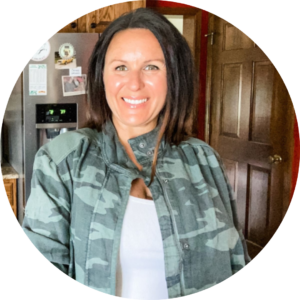
Chanda Coston is a U.S. Navy Veteran, Business Strategist, and Founder of Chanda Co., where she helps entrepreneurs build profitable, purpose-driven businesses without sacrificing peace or passion. With over 20 years of leadership experience and a background in project management, she teaches systems, mindset, and strategy that empower creative professionals—such as food bloggers—to grow sustainably, delegate effectively, and avoid burnout. Her coaching blends structure and soul, because clarity and calm are the ultimate success tools.
Takeaways
- Burnout is a warning, not a requirement: If your business only works when you are exhausted, something is broken and it is not you.
- Mindset comes before strategy: No system will stick if you believe rest equals failure or productivity defines your worth.
- Self awareness changes everything: Learning your personal burnout cues helps you intervene before things spiral.
- CEO themed days create clarity: Structuring your week around focus areas removes daily decision fatigue.
- Boundaries protect your energy: Time blocks only work when you are willing to turn things off and say no.
- Delegation is not optional for growth: If you are the single point of failure, your business cannot scale.
- Guilt is not a good decision maker: Especially for moms, choosing yourself now creates a better future for everyone.
Resources Mentioned
Get Megan’s Memoir – Take the Exit – Step inside the story!
Ready to crush your biggest goals? Get Chanda’s free ebook!
If You Loved This Episode…
Transcript
Click for full script.
EBT782 – Chanda Coston
[00:00:00] Megan Porta
Welcome to the last episode of 2025 here on Eat Blog Talk. And in this episode we’re talking about a very important topic. Burnout. Burnout is not failure, it is a signal. And Chanda Coston is here to help us realign. In this episode she is going to share powerful mindset shifts, systems and boundaries that help creators like you build sustainable soul led businesses. From micro breaks to CEO energy, this conversation is the reset your creative brain needs going into 2026.
[00:00:35] Intro
Hi food bloggers, I’m Megan Porta and this is Eat Blog Talk. Your space for support, inspiration and strategies to grow your blog and your freedom. Whether that’s personal, professional or financial, you are not alone on this journey.
[00:00:52] Megan Porta
Hello, Chanda, how are you today? So good to see you.
[00:00:56] Chanda Coston
Likewise. Glad to be here. I am doing fabulous, won’t complain at all.
[00:01:00] Megan Porta
Great. Well, we appreciate you taking the time for this very important conversation. Today we’re going to talk about building success as an entrepreneur, as a human, without doing the burnout, which a lot of us have grown accustomed to. It’s just one of those things that kind of is a quote given. Right. But we’re going to talk about how to not really accept that and it doesn’t need to be part of our lives.
[00:01:26]
Before we get into all of that, we’re going to talk about so much good stuff today. We would love to know what is the pain point that this conversation is going to solve?
[00:01:36] Chanda Coston
Absolutely. It’s going to solve building success that is sustainable without the burnout.
[00:01:42] Megan Porta
So people who are maybe teetering on burnout or have felt it before and have felt it repeatedly, and then this episode is going live, the last episode of 2025, which I absolutely love. We didn’t plan it that way, but let’s do it. Let’s make sure that we are not going to burn out in 2026.I absolutely love that.
[00:02:03] Chanda Coston
I think that’s an amazing.
[00:02:04] Megan Porta
Yeah, yeah, I love it. I. I personally have dealt with burnout a lot and it’s one of my goals not to burn out in 2026.
[00:02:14] Chanda Coston
So.
[00:02:14] Megan Porta
So give us a little background on your business. Chanda Co.
[00:02:17] Chanda Coston
Sure. Chanda Co. came to be because I realized that one, that I had a passion for coaching and prior to that I was a consultant and I faced some of the similar things that we’re going to talk about today. Being at capacity, not honoring the season of my life that I’m in, and also not doing something that made me feel warm and fuzzy.
[00:02:38]
Right. It didn’t feel like it was purposeful, just because I was good at it. I had the education, I had the experience, I had the certifications. But at the end of the day, I was just like, glad that the day was over. Right. And I went into the coaching space pretty much by mistake.
[00:02:52]
I ended up starting a non profit because I had a loss. And in that space, I was blessed enough to mentor and to teach. And I realized, like, there’s something to this. And in taking coaching myself, a lot of my peers in the coaching programs, like, hey, how you get this stuff done?
[00:03:08]
Like, I need you to help me. Can you coach me? Can you mentor me? And I was like, hmm, not really set up for that, but it planted the seed for me to kind of consider it, and which I did. So as a adult, a mom of adult children, once the kids kind of all went off on their own, I was like, let me see what this looks like.
[00:03:25]
And so I walked away from government contracting, which is what I did as a consultant. I was an entrepreneur in that space. But I dwelt into Chanda Co., which is what I do now as a business coach and a strategist.
[00:03:37] Megan Porta
Wow. Amazing. I love hearing everyone’s story. I love how everything just came together for you. And obviously, obviously, you’re good at it if you, you know, you’re serving people and showing up in that way. And do you have some background with burnout? Can you talk about that a little bit? Like, what that looked like for you?
[00:03:56] Chanda Coston
Sure. Burnout was just that, not having enough time, not enough hours. Always in hustle mode. It seemed like there was always a fire to put out. Constantly being reactive and constantly trying to play catch up. Like, it was always that. And I was like, okay, how, like, how can I regain my life and regain my balance and make it fit in my life versus me trying to fit my life around all of the things.
[00:04:22]
Right. And so it’s. It’s pretty much the same for most of my clients. They all say, oh, my God, I’m so overwhelmed. Like, I don’t have enough time. I don’t know how to get all these things done. And I can totally relate because before I started on my journey, it was the same way.
[00:04:37]
Absolutely same way.
[00:04:38] Megan Porta
Yeah, yeah. What you said a few things there that I can really relate to. Like the overwhelm, the reactive mode. You’re always feeling like you’re behind and that you can never. You never feel caught up. And that is such a terrible feeling, isn’t it? Especially if you’re a mom and you have a family and a Home and, and a business you’re trying to run.
[00:04:56]
It just feels impossible. Yeah.
[00:04:58] Chanda Coston
Not impossible.
[00:05:00] Megan Porta
I know it’s not it. But in the moment it feels impossible.
[00:05:03] Chanda Coston
Definitely in the moment. Definitely in the moment.
[00:05:05] Megan Porta
So we’re going to talk about how to make that not feel impossible and how avoid that. So talk about why. So achieving that point where you are feeling, you know, overwhelmed and like you’re reacting to everything in the moment, it feels like you’ve failed. Like you have let yourself down, you’ve let your business down and you let maybe your family down and whoever else.
[00:05:31]
What are your thoughts on that?
[00:05:33] Chanda Coston
So for me, my program is two parts, right. There’s the coaching piece, but there’s also the strategy piece. And I think that if the mindset isn’t, then you’ll never quite achieve the success that you desire. Right. Because a lot of it is built around knowing that you are enough and reframing those thoughts on if you don’t get everything done on your list and you failed.
[00:05:54]
It is if I can’t get everything done, let me hit my top 1, 2 or 3. And then if I need to take a moment for myself, then the success is that I’m honoring myself in that. And so it’s changing that mindset to know that you’re worth it. Like you’re absolutely worth it.
[00:06:10]
Whether you need to take a moment, take a day, take an hour, take a week. Right. Because if you’re not in a good place, then you’re not better for your family, you’re not better for yourself, you’re definitely not better for your business. And so you have to show up as your best self.
[00:06:25]
And so it’s giving yourself permission to change that mindset around what success looks like for you. Right. So yeah.
[00:06:34] Megan Porta
And that it feels like it’s not easy to do that because for me, I would get into a groove where I would just like, you can push through this, you have to do this, you have to show up. So retraining yourself feels really hard when you’re, when you’ve created this habit. So is it a matter of just like doing little pieces of it at a time, like training yourself for a day or.
[00:06:59]
I don’t know, how do we go about doing that if we’ve never done it before?
[00:07:02] Chanda Coston
Well, I think that’s the importance of a coach, accountability partner, someone you trust, a community. Right. Is that you get around people who are like minded, like right here in this platform. Like minded community of people who are on a similar journey, who can understand what you’re going through who can support you in the wins, but it also can support you in what seems like a loss in the moment, or it could be a lesson learned.
[00:07:23]
Right. And so that redirection to say, hey, I had this great book that I read that helped me in this way, or to a coach or accountability partner say, hey, don’t be so hard on yourself. Have you done your journaling today? Like, did you try breathing today? Did you look at those affirmations?
[00:07:38]
Different things like that. And so one part of it is acknowledging that there is a need for change. The other part is being willing to show up and then to trust the people that you have around you to support you in those moments that you can share that so they can encourage you.
[00:07:53]
Right. And I think a lot of times that’s where we get stuck, is because we feel like we have to do it all by ourselves, like, oh, my God, I got to do this by myself. I’m going to get it together. It takes more time to call somebody to vent. Right. Than it does for me to just keep pushing through it.
[00:08:07]
But if you just take that moment and walk away, and then even if you’re someone that’s just listening to you, it helps to hear yourself go through the motions sometimes you get clear, you definitely get a reprieve, but then you go back to it and it just doesn’t feel as bad as it was when you were stuck in it.
[00:08:22] Megan Porta
Right? Yeah. Yeah. The accountability community piece is huge because we can’t all do it on our own. We need the support of other people around us, lifting us up. And so when we. When you are in a good place, I feel like everything is more clear. Right. Like, you can look back and say, okay, I should have maybe done this, or I should have pivoted here.
[00:08:44]
So when we’re in a good spot, is it a good idea to kind of not plan for burnout, but, like, make a. Make a. A roadmap? Like, if I feel this, then I’m going to do this so that I don’t get to that place. Do you know what I’m saying?
[00:09:00] Chanda Coston
I do. I think for me, I like things structured, so I’m kind of always knowing what to expect, if that makes any sense. But in those moments where you’re realizing maybe if that’s not your strong suit or we’re all human, so. And things come up, paying attention to the cues. Learning yourself, self awareness, I think is key to a lot of different things.
[00:09:18]
But learning yourself in those moments so that you can identify, self, identify in this moment, this is what I’m feeling. If. And give yourself, I would say give yourself permission, but I feel like a lot of times we don’t give ourselves permission. If we put something down, then it has to happen that way.
[00:09:34]
And it’s like, no, give yourself the permission and the freedom as a business owner or as a person, not even as a business owner, as a person to change your mind whenever you like. Because we get so hard on ourselves, it has to happen this way. And then we get so frustrated when it doesn’t.
[00:09:49]
And I think that is a part of us becoming more reactive. Get into that burnout mode. So, yeah, if you find that things are going swell and they’re moving in synergy and it’s like everything just seems perfectly aligned and you want to veer away from that, you know, pay attention to what you veer away from and why, and also always make it a priority to get back to it.
[00:10:10]
Because you made it like a goal for a reason. Right? You put it there for a reason. But life happens and we’re human and sometimes you just want to take advantage of moments and that’s the reality of it. And so, yeah.
[00:10:25] Megan Porta
So you talked about cues. What are some cues that you notice if you’re kind of teetering on maybe a little bit of burnout that tell you to back. Backpedal a little bit and take care of yourself?
[00:10:38] Chanda Coston
Absolutely. Telltale signs physically, of course, is going to be to sleep. The mind is racing. The frustration. You may be a little. I had to stop. I have young children and I almost use one of their, their words. I was gonna say if you’re a little aggie, right. But if you find yourself becoming a little cranky, then in short, with your family, things like that, like, you know, yourself, you know, like, I know for me, if I’m finding myself a little short with people, I’ll go back and apologize and like, hey, I’m sorry, I shouldn’t have said that like that.
[00:11:10]
I didn’t mean to say it like that. I’m just having a day. But if you find it consistently happening right, then you’re like, okay, what’s going on here? If you find in your business or in your, your day to day job, whatever you know, you’re aspired to, if you find the thing that you used to do bring you passion, is no longer bringing you passion, then it’s like, okay, what changed here?
[00:11:30]
Is it that I no longer like this thing because we do change, we evolve? Or is it because there’s just. It’s too much. It’s overwhelming because I’m trying to cram too much into a day and it’s like, take a step back and say, okay, how can I manage this better? How can I recoup some of my time or my capacity or increase my capacity?
[00:11:48]
Can I leverage this? Right? I always say delegate, automate and eliminate. And it’s like, is there something that I can pass off to somebody else and I can just, you know, review it later so that I can recoup those hours? Is it something that I can automate? Because it’s repetitive and it’s taken away from my creativity and, you know, my innovation as a thought leader or entrepreneur or depending on what you do and just evaluating those things.
[00:12:11]
A lot of it has to do with being in tune with yourself. And if you’re not in tune with yourself, having the people that you can kind of go to for that insight that you trust, because trust is the big part there.
[00:12:21] Megan Porta
That’s a big one too. Because we can ignore ourselves, I feel like. But having loved ones that we trust say, ooh, that’s not how you would normally respond. Then you’re like, oh, that’s a huge one for me when I respond maybe sharply or with anger or something. And then I’ll be like, whoa, I.
[00:12:41]
That is not a normal reaction for me. And that is usually a sign that I’m anxious. I haven’t gotten enough sleep, that something is going on. And then sleep, honestly for me is like the first thing I’ll do. I’ll go to bed early that night or I’ll go take a nap. And then I can kind of have that clarity to refocus and okay, like, get a handle on it a little bit.
[00:13:03]
I feel like sleep is such a. An answer for me for so many things.
[00:13:10] Chanda Coston
And that’s okay. Yeah.
[00:13:11] Megan Porta
Yeah. No, I think sleep is always good.
[00:13:13] Chanda Coston
Right.
[00:13:14] Megan Porta
When we do have that clarity, there are things that we can actually put intentional thought into instead of being reactive to. Like you mentioned automating, delegating, eliminating. Putting systems together in our businesses so that we can be more efficient with our energy. What are some systems that you’ve put into your business, your life that just support you?
[00:13:37] Chanda Coston
Oh, my goodness. I see everything as a system. I love it. Yeah. My week is designed a CEO theme days. Right. So Monday is my personal development days. Tuesday through Thursday is when I work with clients and I work directly in and on my business. And then Fridays are chanda days that self care days.
[00:13:55]
I do whatever it is that I feel like doing. Saturdays are typically days for family, right? Sundays are reset. And so the reason that works perfectly for me as a system is because it gives me a focal and it gives me direction. And so on reset days, every Sunday, I look at my calendar for the week and look at what I have coming up and what I have space for and if I need to shift anything.
[00:14:17]
And so it keeps me from going into that reactive phase where I’m literally looking every day in the face and like, oh my God, I forgot about this. I got to get this done. Like, it’s due to. You know what I mean? And so it’s allowing me to lean forward in that on my reset days, I also look back at my last week and say, what goals did I set that I didn’t get done?
[00:14:35]
Why didn’t I get done? Right? Because it’s my stuff and is it important enough for me to push it into the next week, or am I going to be honest and say, why am I saving space for this and take it off my plate? Or can I pass it off to somebody else, like having those important conversations with myself?
[00:14:50]
Outside of that, I am big on time management strategies, which of course is time blocking and deciding what’s urgent, right? For me, what’s urgent is something that is going to cost me money, going to cost me a client, right? There’s a timeline on it, or can I shift it like I said? And so it’s not marrying myself to say, I said I was going to get this done today, I’m having a bad day, I have a headache, I have an attitude like, whatever the thing is, then can it wait for tomorrow?
[00:15:17]
And so if I’m looking at it and it’s going to cost me money, then it can’t wait for tomorrow, right? Strap my boots up and get it done. But if it’s something that is just something I wanted to get done, and it’s like, you know what? I’m worth it. I’m gonna put this aside so I’m in a better place and I’ll deal with it tomorrow or later this week.
[00:15:33]
And so things like that for me, other systems, of course, is I like to travel, all of my children are grown and my entire business outside of me, client facing is automated. And so I have contractors in place that manage my system to make sure that it’s operational, is maintained. I know how to go in there and do things because I need to be able to do that as a business owner should things break down so that my clients don’t suffer.
[00:16:02]
But outside of that it is okay designing a life that is aligned to the season that I’m in. I don’t want to go into working 60 hours a week in the office and meetings. I don’t want to do that. And so it’s like, okay, what does that look like for me at this age?
[00:16:18]
Right. What do I have the bandwidth for? I want to have a location, independent business and so I can take my laptop and my cell phone and go anywhere in the world and work. And I did that. I was in Asia a few weeks ago, like a month and a half ago now.
[00:16:34]
But I took my laptop, I took my cell phone, I didn’t work, but I did check my emails and things like that. But it’s, you know, realistically, it’s like, okay, we say we want a measure of success, but we don’t always count the cost and say, does that fit my life and where I am?
[00:16:50]
And so it’s, it’s taking that full view of everything and saying, okay, what can I incorporate here so that I can be successful here? And what does success look like for me? Yeah, so I have lots of systems. Self care is a system. It’s all a system.
[00:17:06] Megan Porta
Yeah, right. Don’t discount the systems.
[00:17:11] Sponsor
Imagine this. 10 Summers of Cross country road trips filled with belly laughs, breakdowns, near disasters, medical emergencies, angelic saves, and magical timing. That is Take the Exit, my new memoir about our decade of RV life and the wild, beautiful transformation that came from choosing a different path.
[00:17:33]
This book is packed with heart, humor and stories that remind you that life is happening for you and not to you. It is a love letter to freedom and to the courage it takes to trust something new. Take the Exit is available now. Go to MeganPorta.com to get all the information and to grab your copy today.
[00:17:52] Megan Porta
And then how do you recommend people add systems if. If somebody’s listening and they’re like, I have absolutely no system in my business or life, do they just start with one little thing like what you talked about, you know, resetting on Sunday or something like that?
[00:18:08] Chanda Coston
Well, I really, I think because people are all unique, you really need to have a clue as to what you’re struggling with. Because a person that has a problem with focus is not the person necessarily has a problem with time management, although they can overlap. And the person that has a problem with low self esteem or lack of self belief or, you know, lack of self worth, things like that, they impact you differently mentally and how you show up, a lack of confidence, you would necessarily have the same systems in place Right.
[00:18:36]
A person for time management. There’s a whole bunch of time management strategies that you can incorporate that will help you show up better and recoup time in your day so that you’re more structured, more disciplined as long as you do the work and that it will relieve so much of the pressure off of you and give you so much direction.
[00:18:53]
So I would say first of all, take a quiz. There are lots of personality quizzes and things like that that you can take that’ll kind of hone you in and include you in on the type of person you are. All of my clients get a 50 question survey that talks about their business, but it also talks about their limiting beliefs.
[00:19:14]
So that when we meet, I know exactly what they’re doing in their business and I know what they’re struggling with. And so I give them a client resource guide that lays out a lot of personal development resources, tools, apps, things to do, like affirmations, strategies that’s geared towards their personal situation. Because I get it, like if I just give you a plan of action, which is your strategy, right.
[00:19:38]
If your mind is not there, you’re not going to get it done. And so the first thing I would tell somebody is self awareness is key. Care enough to do the work about yourself because you’re worth it to find out what you’re struggling with because there’s, there’s so much more on the other side of the piece that comes with that work, that self work.
[00:19:57]
Yeah.
[00:19:58] Megan Porta
Yeah. Oh, that’s so well said.
[00:19:59] Chanda Coston
Thank you.
[00:20:00] Megan Porta
And then how do boundaries play into systems for you and just protecting your time, your peace, your energy, your Fridays, whatever.
[00:20:11] Chanda Coston
Boundaries are everything. Yeah. Like seriously, like your CEO theme days won’t work if you don’t have strong boundaries. Your time blocks and time management strategies won’t work if you don’t have boundaries. And so boundaries are simply turning off your phones during your time blocks. When you set a certain time to work on something, turning your phones off.
[00:20:31]
When I’m working, I send out mass text messages to say, hey, I’m working on this. I’m going to be on D and D for a while if you need me. Only reach out if it’s an emergency because some family members have access outside of D and D. Right. Putting those things in place and loving yourself enough to do that.
[00:20:48]
Boundaries. Part of my self care sometimes is unplugging. As an introvert, I need time to recharge and I know that about me. Right. I’m so much a much more pleasant person when I have those moments. But it’s knowing that. Right. And my family knows it. And so it’s like, okay, I’m gonna turn my phone off.
[00:21:07]
I just need a day to, like, recoup. And they’re like, what are you gonna do? I’m just gonna lay around the house. No phone, no social media. I might watch a romantic comedy. I might sit on the back porch, like, take the dog for a walk. Who knows? But it’s. I know what I need to do to refuel myself.
[00:21:23]
And so it’s honoring that. And I think that is so huge. You have to, I think, associate your why to your goal, to that boundary to understand the importance of it.
[00:21:36] Megan Porta
Yeah, yeah. The boundaries with taking care of yourself. For me, go prioritized higher than boundaries around anything that I do with work, because I’m an introvert as well, and I don’t operate well when I’m not taking care of myself. So I have got to protect that. And I think that it would apply to anyone.
[00:21:57]
Extrovert, introvert, like, you have to know what you’re protecting so that you can operate at your fullest. Right?
[00:22:04] Chanda Coston
Absolutely. Highest capacity.
[00:22:07] Megan Porta
Yeah. What about. Can you talk about guilt a little bit? It feels like mothers, women, I’m sure men, too.
[00:22:17] Chanda Coston
Maternal guilt. Yeah.
[00:22:19] Megan Porta
It’s a real thing.
[00:22:21] Chanda Coston
It absolutely is. So most of my clients are females, and most of them are 40ish. Right. So they’re around 40 or over 40, but they’re at that point where they’ve checked all the blocks, and they typically have children or adult children. And a lot of mothers feel like, oh, my God, I can’t do something for myself because I have these kids.
[00:22:43]
And you can look it up. Maternal guilt is, like, so real that we feel, like, totally guilty if we do anything for ourselves. I have had clients who have had grown children, and they said they wanted to do things in their business, but they could not because they were still paying their adult children’s rent and their car notes.
[00:23:02]
And the challenge there, of course, is getting the person to understand that one, they deserve it. Not to say to cut your child completely off because everybody’s situation is different, but putting things in place so that you can have the life that you deserve, especially if you’ve done the work, you’ve raised the kids.
[00:23:19]
They’re adults. There’s nothing wrong with them, and they’re completely able. And it’s like, okay, well, how do you live out the rest of your life with, you know, that guilt of, oh, my God, I, you know, I did this thing, and now I Can’t help my kid. What are they going to do?
[00:23:35]
They’re going to figure it out. Because you read. Raised them right. Yeah.
[00:23:38] Megan Porta
Yeah.
[00:23:38] Chanda Coston
And it. But it’s very, very common. Like, oh, my God, I do it. I have five adult kids from 31 to 20. And it’s like, oh, my God, I gotta catch them. Oh, my God, I gotta help them. Oh, my. And it’s like, okay, wait a minute. I gotta put some boundaries in place.
[00:23:53]
Because they. I’m always mom to them.
[00:23:55] Megan Porta
Yeah.
[00:23:55] Chanda Coston
If we go on a vacation and they’re adults, the youngest one, I may pay for the.
[00:24:01] Megan Porta
Yeah.
[00:24:01] Chanda Coston
The other four will be like, well, mom, are you paying for it? I’m like, no, you guys make good money. I don’t want to make. What am I talking about right now? So not to say I don’t help them when they need it, and I feel like they really need it, but just day to day.
[00:24:15]
No.
[00:24:16] Megan Porta
Yeah, you’ve got this. Yep. You can do this.
[00:24:20] Chanda Coston
And a lot of it is that mindset again. It is understanding why you’re doing the thing you’re doing. For my clients, most of them are business owners. Right. They’re coming to me because they want to start a business or they have a business, and it’s like, okay, you deserve to have this. And if you are creating something for legacy purposes or because you want to create extra income or, you know, whatever that reason is, your family will be.
[00:24:44]
Be better for it if you actually succeed. And so taking that guilt out of it, it’s like, okay, today you’re feeling away because you didn’t give them the money they asked for, but it’s an investment so that you can have return of return investment on your future. Right. And you just have to change what’s being said to yourself in your mind about that.
[00:25:03] Megan Porta
Right. A little perspective tweak there goes a long way. That is everything the way you just said it. It’s an investment in your future. Wow. Yeah, it really is. I don’t have adult children yet, but I. I anticipate it being really hard because it’s like they’re your babies. You know, they’re. You’re. They’re always going to be that in my mind.
[00:25:24]
So. But it’s really important to eventually just let them fly and let them do their own thing. Oh, that’s a hard one. That’s a hard topic.
[00:25:33] Chanda Coston
For me, it is. No, I think my hardest year was the first year I was at Empty Nester. And when I say this, it is. My kids had already moved out. But we were in the same location, like, the same locale. And so my grandkids would go to school and come home to my house.
[00:25:48]
And I worked 100% remote. And so even though the kids have moved out, they had to drop the kids off. They had to pick the kids up from there. And then I had the green kids all day. And I moved to four hours away to North Carolina, from Maryland to North Carolina to be closer to my mom, whose husband is terminal.
[00:26:02]
So I wanted to support her.
[00:26:04] Megan Porta
Yeah.
[00:26:04] Chanda Coston
And that was a very hard time.
[00:26:07] Megan Porta
Yeah.
[00:26:08] Chanda Coston
I didn’t have to worry about anybody, care for anybody, nurture anybody. Like, I was just me, and my dog was in the house. And I was like, okay, what are we doing? What are we eating? Where am I going? Yeah. And, yeah, so it’s very hard time. And I say that, like, aside from this, I say all women who go through the empty nest syndrome, there should be a support group.
[00:26:28]
There should be. There should be counseling for that, because no one prepared me for what I was going to feel for at all.
[00:26:35] Megan Porta
Yeah, I know. There should be massive amounts of support for this. I already feel it.
[00:26:41] Chanda Coston
Yeah.
[00:26:42] Megan Porta
Yeah. Okay. You mentioned focus a little bit ago and how everybody has different challenges. Like, some people can stay focused all day. Some people struggle with time. What if somebody does have that focus struggle and it’s not like, you know, a severe form of ADHD or anything like that, something that they can manage on their own at home.
[00:27:01]
Do you have ideas for them as far as just focusing a little bit better?
[00:27:07] Chanda Coston
Oh, sure. It’s kind of overlapping with the time management stuff, but when you talk about focusing, it is really allowing yourself to be isolated to work on that thing during the time block. Right. So if you set the goal and say, I’m gonna get this done this week, give yourself a realistic perspective on how long is it gonna take me get it done.
[00:27:25]
Am I giving myself an hour every day for the next five days or giving myself two hours for the next five days? Can I realistically get it done in five days? And for that focus time, removing all distractions. If you know that you’re going to be totally distracted when people are home, try to set some time aside when you’re alone.
[00:27:45]
And during that alone time, turning off all those notifications when I say I unplug. The reason I do is because we’re constantly inundated. Everything is connected. Social media is connected to the. The tv, the email and family. And so it’s just constantly. Everything is going off. And so it’s Making that decision. Like during this time, if I set an alarm from 9 to 10, I’m going to focus at 8:45, I need to had enough alarm to say prep, prep to focus.
[00:28:14]
Right. Because it’s important to me. I meet the goal, I’m going to prep the focus. Why am I focusing? Because I need to get this goal or this task off my plate. And during that time, you may want to send out that text message and say, hey, I’m working during this time, please don’t bother me unless it’s an emergency for family members and then turning everything off again.
[00:28:32]
My DND have exceptions to the people that are closest to me. So that’s why I send that message. It’s like, hey, I’m going on dnd, but if you need me, only reach out for emergencies. I’ll be back available after this time. And the other thing is, don’t time block for too long. Take those breaks.
[00:28:49]
I typically do hour segments. They suggest you do 25 minutes, but every 25 minutes you want to take a 5 or 10 minute break, get up, stretch, walk around, get a sip of water, walk the dog, something I do an hour. I typically take a break at 45 to 50 minutes. And then I get up and do all of those things or any of those things.
[00:29:09]
Look at my phone to make sure that no one has actually sent over something I want to pay attention to. And then I tend to jump back into it. But if you find that you become distracted, even if it is a fleeting thought, pay attention to the thought. If it’s something you feel like is relevant, write it down, put a mark next to it.
[00:29:27]
Right. And then get back into the thing that you dedicated that time to focus on. Right. So that way you can focus and it’s like a muscle, like anything else. The more you use it, the more you’ll do it. And it’ll get to the point where you won’t even have to do all those extras because it’ll.
[00:29:44]
You built up that muscle memory around it.
[00:29:46] Megan Porta
Yeah, that’s all so good. I like the writing it down if it comes to you because otherwise you’ll let it just roll around in your mind and distract you. So just get it somewhere where you don’t get out of there. Yeah. And also the micro breaks that you talked about, I, I struggle with that.
[00:30:02]
I will get to like 45 minutes or whatever I decide and I’ll just think, oh, I can power through, I’m good, I’m feeling good. But if I don’t take those little Breaks. I feel it at the end of the day. Yeah.
[00:30:13] Chanda Coston
So that’s what I teach my clients all the time. I’m like, your brain is like this. You’re working and your brain is pulled tight like a hair tie. Right. At capacity, no bandwidth. And if you don’t take a break, this is you for as long as you’re sitting there, right? Yeah. But if you get up, your brain gets to relax and you get to breathe and you get to reset and you get to relax.
[00:30:33]
So when you go back to work, it doesn’t feel as bad and you’re able to push out just as much, if not more. Right. But you don’t feel so stressed, so tense. And so you feel better when you finish.
[00:30:45] Megan Porta
Definitely. Yeah. They are important. What else do we have? So you mentioned a little bit ago getting tasks off your plate. So if you have a team or a VA or something delegating also automation, I know is huge right now. Just getting whatever you can into automating mode. Can you talk about those things?
[00:31:07]
How do we know when to do it and what maybe what things do we delegate and automate?
[00:31:13] Chanda Coston
Sure. Depending on where you are in life. If you are an entrepreneur, anything that you repeat more than twice, you need to look at it as something that you can put into automations or you can delegate your job as a CEO. Right. Is to innovate and create and to make decisions. And so it is a task doesn’t necessarily have to be done by you if it will free you up your capacity to do more.
[00:31:40]
And it’s being able to make those distinctions around do you need to. You can set up an automation for your email to be filtered. Right. There’s automations now that you can do where it will summarize all of your emails for you, remind you of meetings and things like that. So by the time you begin your day in the morning time, you have something that’s nice and succinct, that tells you all the high things and the things that you may want to follow up on right away.
[00:32:05]
And the same thing with a VA, when you think of hiring a virtual assistant, one you want to make sure that you are positioned to get a return on your investment because you’ll be spending money right. For someone to work in your business and you want to make sure you’re maximizing that. It’s like, okay, how can I properly use this person to help me get further in my business and understand what that looks like?
[00:32:26]
So you just don’t want to hire someone per se. You want to make sure that one, you have the bandwidth capacity and you understand why you’re bringing them in and what it’s going to free you up to do in that regard. Delegating, there’s so much that should be delegated. One of the biggest issues I have with my clients is they’re afraid to let it go and not understanding that if you are the single point of failure in your business, then you will never be able to scale because you can’t, you can’t scale off of one.
[00:32:54]
You can’t. And so in order to increase your capacity, you have to be comfortable with delegating. And so the things that you may want to delegate, delegate in your business or in, in your organization if you have one, would be things that require human touch. And so a lot of times people deal better with humans than they do with machines.
[00:33:15]
Right. I know me personally, I hate when I get an automated phone call. It’s frustrating to me. Or if I call somewhere and it’s an automation, I hate it. And so having someone that you can delegate certain responsibilities to, to take it off your plate because it’s not quite necessary for you to do that, they can report back to you or something like that.
[00:33:36]
My Developer prime example, instead of me constantly in my system and checking for quality control and assurance, he’s in there making sure everything is working as smooth as it should. He’s running certain tests. If I’m doing that, I’m not focusing on what’s going on with my clients or business or emails. Like I have a meeting, am I reviewing their reports and those kind of things.
[00:33:58]
So. But yeah, absolutely, it’s. You need to have a clear idea around what it is you’re trying to accomplish and the different points that are necessary for you to touch versus is this something that can be automated or is this something I can pass off to someone so. And have them report back to me?
[00:34:16]
I look over it before I pass it out the door. Things like that.
[00:34:20] Megan Porta
Great. Yeah, that gives people stuff to think about because yeah, like you said, you can’t do it all alone, especially if you want to scale, which most, most people listening want to scale. So you have to reach out for that support. I was going to ask you, since this is the last episode of E Block Talk for the year, do you have specific 2026, I don’t know, motivation, encouragement for people, like anything along the lines of let’s not burn out this year.
[00:34:49]
That’s kind of the theme. Let’s preserve our sanity, our creativity and try to not get to that bad place?
[00:34:57] Chanda Coston
Absolutely. I think in this economy, in the world that we’re in currently, like, there’s so many unknowns because things are shifting so quickly that I think that it’s important to put us first. And I know it can be kind of overwhelming not to focus on all of the things, but to focus on the things that matter.
[00:35:17]
You, your family and creating moments. And if you feel yourself getting burned out, then absolutely step away. Because not only are you worth it, but you deserve it. And only then can you achieve all the greatness that is yours. There’s no success in burnout.
[00:35:33] Megan Porta
Oh, that was so good. Oh my gosh. We need to plaster that everywhere. Thank you, Chanda. This was an amazing conversation. Is there anything that you wanted to touch on that we haven’t before we say goodbye?
[00:35:45] Chanda Coston
Not at all. If anyone wants to reach out to me, work with me. My name is Chanda__underscores CO on our social media platforms and I have a free ebook that provides lots of strategies around some of the things we just talked about. It’s like a little manual that will like clue you in and all the tools.
[00:36:04]
It is called Barriers to Breakthrough. And you can get that on my webpage chonda-co.com or you can get it on my social media bio on Instagram. So amazing. We’d love to connect with you and help you in your journey.
[00:36:18] Megan Porta
Yeah, everyone go check that out. That sounds super valuable. Thank you for being here. We really appreciate you just showing up with the value and you have. Yeah, you just have a good energy. Great way to end the year. Thank you Chanda so much. We’ll put together a shownotes page for you if anyone wants to go peek at those. We will put those links too that Chanda mentioned. You can head to eatblogtalk.com/chandaco that’s C H-A N D A C O and yeah. Thank you so much and thank you for listening food bloggers. I will see you next time.
[00:36:58] Outro
If you enjoyed this topic, you’ll also love the episode. I recommend the show notes. Click on the episode description to find the link. Thank you and I will see you next time.
💥 Join the free EBT community, where you will connect with food bloggers, and gain confidence and clarity as a food blogger so you don’t feel so overwhelmed by ALL THE THINGS!
Want to achieve your goals faster than you ever thought possible? Stop by Eat Blog Talk to get the details on our Mastermind program. This transformative 12-month experience will help you accomplish more than you would be able to in 5+ years when forging ahead alone.
Click the button below to learn what a mastermind program is, what your commitment is, and what Eat Blog Talk’s commitment to you is. Learn More About The Mastermind Program
✍️ Reach out to connect with Heather Eberle, a copywriter for food bloggers. As much as you enjoy your business, maybe writing or marketing isn’t your cup of tea. Maybe you’d rather spend more time in the kitchen and less time on your laptop. Heather is here to clear your plate! Let Heather help you share your content with the world.