Monetization Strategies for Food Bloggers
Publishing a cookbook does not have to mean chasing a traditional book deal or managing inventory from your garage. Sarah shares how food bloggers can use Lulu’s print-on-demand platform to create beautiful, flexible products without the hassle. From simple PDFs to polished spiral-bound books, this episode will help you see your content in a whole new light.
Listen on the player in this post or on Apple Podcasts, Spotify, YouTube or your favorite podcast player. Or scroll down to read a full transcript.
Write Blog Posts that Rank on Google’s 1st Page
RankIQ is an AI-powered SEO tool built just for bloggers. It tells you what to put inside your post and title, so you can write perfectly optimized content in half the time. RankIQ contains a hand-picked library with the lowest competition, high traffic keywords for every niche.
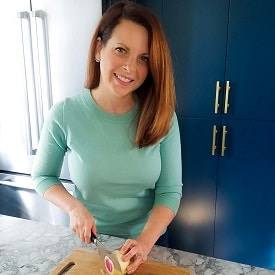
Sarah is the Public Relations Manager for Lulu.com, the publishing and print on demand company started in 2002 by Red Hat Founder Bob Young. Her primary role is to educate creators about the benefits of Lulu.
With over 16 years experience in the publishing industry, Sarah is passionate about helping authors find ways to connect with their audience. In previous roles, she led author public relations campaigns and coached many more in preparation for their book launches. She lives in Raleigh with her family.
Takeaways
- Cookbooks increase your authority: A printed book helps establish your expertise and leaves a lasting impression on your audience.
- Print on demand keeps things simple: Skip the upfront investment and sell only when someone places an order.
- Customize every detail: Choose your format, binding, paper type, and more to match your brand and audience preferences.
- You can start small: A holiday collection, themed mini book, or even a recipe calendar is a great way to begin.
- Revenue stays in your hands: You keep the profits instead of splitting them with publishers or distributors.
- Publishing is easier than you think: All you need is a PDF of your book and cover, and Lulu provides templates to guide the process.
- Marketing starts early: Build momentum before launch with pre-release buzz, giveaways, and local media outreach.
- You are qualified right now: You do not need permission or a giant audience to publish something valuable.
Transcript
Click for full script.
EBT734 – Sarah Franklin
[00:00:00] Megan Porta
What if the key to elevating your brand, building credibility and creating a new revenue stream was sitting right inside of your blog? In today’s episode, I’m joined by Sarah Franklin from Lulu. She is going to talk about the powerful ways publishing a book can transform your business. Whether you have a full idea ready to go or this just sounds like an intriguing option, Sarah shares how turning your content into a book can position you as an expert, generate leads and open unexpected doors. If you’re ready to become the go to authority in your niche through a book, listen to this episode. I hope you love it.
[00:00:43] Intro
Hi food bloggers, I’m Megan Porta and this is Eat Blog Talk. Your space for support, inspiration and strategies to grow your blog and your freedom. Whether that’s personal, personal, professional or financial, you are not alone on this journey.
[00:00:59] Sponsor
Hello food bloggers, it is Megan here. I wanted to take a moment to talk about the 2026 mastermind groups. If you are craving real momentum in your blogging business, listen up. Applications are officially open for the 2026 Eat Blog Talk Mastermind groups and if you have been waiting for that big shift in your growth, this is it.
[00:01:23]
These are high level, high touch groups designed specifically for food creators who are ready to step into next level strategy, confidence and connection. Here’s a snippet of what you will get. Multiple monthly zoom calls that hold you accountable and keep you aligned. A three night, all inclusive in person retreat that past members have called game changing.
[00:01:48]
A one on one planning call with me to kick off your year on the right foot. Private slack support and a supportive crew that just gets it. Whether you are a seasoned blogger or you’re finally ready to stop treating your blog like a hobby, this experience will transform the way you work and the way you feel in your business.
[00:02:08]
And let’s be real blogging. It can feel lonely, but you don’t have to do it alone. Go to eatblogtalk.com/mastermind to to apply today. Spots are very limited and they go quickly, so do not wait on this. Let’s make 2026 your most expansive year yet. Eatblogtalk.com/mastermind
[00:02:32] Megan Porta
Sarah, welcome to the podcast. I’m so excited to have you here.
[00:02:36] Sarah Franklin
Thanks. Happy to be here. Yay.
[00:02:38] Megan Porta
Well, we’re going to talk about Lulu today and the awesome work that it does for many food bloggers publishing. But but before we get to all the good stuff, do you have a fun fact to share with us?
[00:02:51] Sarah Franklin
I do. You know, it’s hard to think of a fun fact without being A little braggy brag. So I asked my family what they thought a fun fact was about me and they kind of just looked around. They’re like, well, you are fun. So I don’t know if that’s a fun fact, but I did think of another one that kind of relates to the audience today, that when I’m stressed, I bake.
[00:03:14] Megan Porta
Okay.
[00:03:14] Sarah Franklin
So yeah, it’s something I, one of my favorite games to play is to open up the cabinet and see what ingredients I have and without using AI or anything like that, kind of figure out what to make. Most recently I made compost cookies, which is like a cookie with like a bunch of different things in it.
[00:03:31]
And I didn’t have all the ingredients, so I threw in like some cinnamon toast crunch, some potato chips, some pretzels, and the kids loved it. I don’t know if I could recreate it, but yeah, so sometimes, yeah, it’s just like a late night thing where I’ll, I’ll get in the kitchen and get to baking.
[00:03:48] Megan Porta
I see a Lulu cookbook in your future, Sarah.
[00:03:51] Sarah Franklin
Well, there may be one.
[00:03:52] Megan Porta
The Stress Baker. Yeah, I love that. I did not know that about you, but yeah, Stress Baker. I like it so much and a lot of us can relate to that too. We love baking and cooking to get out that stress. So you’re here to talk about Lulu today and just how books can expand your brand, make us experts, do so many good things, add a new stream of revenue to our businesses.There are so many things a book can do and Lulu is really good at simplifying everything to make that happen. So can you just tell us a little bit about Lulu in case people don’t know?
[00:04:30] Sarah Franklin
Yeah, absolutely. So we’re not the leggings company. A lot of people think that’s funny. So we are a, a 23 year old bookmaking company and we help authors create books that are print on demand. So what that means is that there, it’s a, it’s a free open system where you can go in and you can upload some PDFs, create a book, decide how you want to sell it from there, and nobody’s going to go in and judge your content if it’s published worthy or anything like that.
[00:05:05]
You can get your book into retail channels where it can be sold on other retail sites. You can print as few or as many copies as you’d like, and you can also sell your book directly from your website. So it’s a really easy avenue for somebody who doesn’t want to spend the effort to go traditionally right through publishing.
[00:05:26] Megan Porta
Yeah. And if you are listening on the podcast and you want to see examples, because I know Sarah has some actual books she’s going to be showing us, come join us on YouTube and you can actually see these, like, live in person. I think it’ll be worthwhile just to see how. I like how quality, high quality they are.
[00:05:43]
So come over and join us there. Okay. So that gives us kind of a scope of what Lulu does, and it just simplifies everything. I know people who use Lulu and they’re so happy with not just how seamless the process is, but your end products are so high quality and you provide an array.
[00:06:02]
Like, you can do the. Was it spiral bound? You can do.
[00:06:07] Sarah Franklin
Yeah, I’ll go ahead. Let’s see here. I have some samples. So here’s a cookbook balancing in a bowl. And this is what we call coil bound or spiral bound. A lot of people know, and there are lots of different format combinations. You can see the inside of this one has color pictures. It doesn’t have to be color.
[00:06:26]
If you want it to be just black and white, you can. This is actually. I’m not sure if it comes across, but it’s like a shiny sheen.
[00:06:31] Megan Porta
Oh, yeah.
[00:06:33] Sarah Franklin
So this is called a coated paper. Let me grab an example of an uncoated paper to show you as well. So here’s one. This is a cream uncoated paper. This is the cookbook Peace, Love and Low Carb that somebody made. It is just over 100 pages. But your books don’t. There’s no length, you know, requirement that it has to be.
[00:06:56]
This is Lily Eats and Tells crunch wraps. I know she was really successful selling this through social media. It’s all about making different kinds of crunch wraps. As you can see, it’s a pretty thin book. Here is a beautiful hardcover tiny pantry. 60 recipes to keep food simple.
[00:07:15] Megan Porta
Oh, that’s so pretty.
[00:07:17] Sarah Franklin
Yeah, I love it. And it almost looks like a coffee table book from the COVID And so the inside, she’s got some really vibrant pictures. So it’s a way to. For food bloggers who have spent so much time creating beautiful photography that they can repurpose that. Yeah, just a few more examples. This.
[00:07:35]
This one I thought was great. It’s a children’s book by Christina Maana. So some people will create books that are things that are appropriate for kids. And it’s more of a. It’s not really a traditional cookbook, but it’s something that if. If your talent is in, you know, Illustrations. Or maybe you want to use photography or just create something fun.
[00:07:59]
That’s great. And then we also, lastly, I’ll show you, and I might pull some of these out more on the pod. But this is a calendar. So you have a calendar product. So I’ve even seen this one is just, again, gorgeous photography. But I’ve seen it where food bloggers will also, like, put a QR code here.
[00:08:20]
And so when the calendar is in use, they can just scan it and then the recipe is available. Or they might use some of the space down here to. To actually put like a little recipe card on it for things too. So I saw a good one recently that was like, you know, the 12 months of.
[00:08:37]
Of healthy snacks, and each page had a few different healthy snacks on it that were using food ingredients that were available fresh for those that were seasonally. Seasonally fresh. Yeah. So there’s lots of different things you can create.
[00:08:50] Megan Porta
Gosh, you have my wheels turning. Those were all so beautiful. And the calendar, I used to do that along, like years and probably more than a decade ago, and I forgotten about it until you brought that. I was like, oh, that’. That’s right, I did a calendar. Oh, that’s a good idea. Well, thank you for talking through those.
[00:09:06] Sarah Franklin
Yeah.
[00:09:07] Megan Porta
And showing us so many options and color, not color, the type of papers. So I love that Lulu offers all of that. So just talking more generally about a cookbook and how it can strengthen a brand. What are your thoughts on that?
[00:09:25] Sarah Franklin
Yeah, so, you know, I don’t think. I don’t really see a lot of content creators, food bloggers, who necessarily see their primary role as author. So a lot of times people will use a book as a product that can help them establish expertise. Like, it shows off their research, their knowledge. It really can provide a channel of recognition for your work as well, especially if you want to expose yourself to new followers.
[00:09:55]
If a book is printed, it’s something that really leaves a legacy. It’s. I mean, if you think about, like, my cookbook shelf is full of cookbooks that some of them were my grandmother’s, some of them, they’ve just been passed down. And while they may not be, you know, the top 10 cookbooks in the nation, they’re certainly ones that I use often and that are valuable to me.
[00:10:16]
So a printed product is something that has a little bit of longevity as well. So, you know, there is. It’s a way that you can take an adjacent or a side product to help monetize your brand. So again, you’ve got like all these beautiful photography, you’ve got these recipes. So if you put them in a book and sold the book, or even you could, you know, some people use a book as a giveaway tool or a Legion tool.
[00:10:44]
That’s something that can help establish you and it takes you further, faster because it’s, it’s a solid product that you’re using alongside your brand. Now I do want to talk about the idea that a lot of people are, who I talk to about books. They kind of have this, I’ve got to stop and you know, figure out how to make this or I’ve always wanted to get published by one of the top five publishers.
[00:11:09]
There’s a little bit of like almost an imposter syndrome, like, am I really qualified to make books? And you are. You absolutely are. So like, there’s an, it can be an obstacle of knowing when, when I’m ready, when, when do I have enough recipes. But I kind of like the, the just do it approach and like you can make corrections along the way.
[00:11:30]
One of the beauties of using a print on demand book company is once you create the book and if you’re selling it, whatever, however you’re using it as a tool to enhance your brand, you can make changes anytime. So, so let’s say you discover like a couple of ingredients in your recipe are just not doing it for you or whatever it is.
[00:11:50]
You all are the experts, but you can go in and you can change that, that source file to make any future books that are printed of that book edition update to your most current content too. So that’s one of the beauties of print on demand. But really a book is a, it’s a great tool to enhance what you’re doing and who you are.
[00:12:12]
And we have, we noticed that it’s not, it’s not something that a lot of people want to spend a lot of time on. So we’ve come up with ways where you can like almost set it and forget it on your website if you wanted to. I know a lot of people have a shop feature on their website.
[00:12:29]
So we’ve made it that, you know, if you are selling the book, there are ways that you can set it up to where every time a book is purchased, there’s no trip to the post office. There’s nothing that you really have to do other than let it sell itself. So yeah, okay.
[00:12:45] Megan Porta
Yeah, I mean, like I said, seamless. You make, you guys make it so easy. And also a potential new revenue stream. I mean, yes, it’s credibility. Yes, it’s you know, like a, you can give it away for free if you want to people, but you can also make some money off of it.
[00:13:01] Sarah Franklin
Yeah, you can, you can make some money off of it. In fact, you can make a lot of money off of it. So I followed this, this little side story here. I hope you have time for this, but I follow this account on Instagram and I’m probably going to butcher the name because I really hadn’t thought about.
[00:13:13]
But it’s like called Greg’s Uncle’s Recipes or something. You may have heard of it. They’ve kind of picked up some steam recently. But this person who, they had a family member pass away and the recipes that this person kept were all in this ratty looking Ziploc bag. So what he’s been doing is he’s been taking one recipe out at a time, making it, you know, showing everybody he’s following the directions exactly how this person intended.
[00:13:40]
And it’s like a taste test kind of thing. So, so in the comments of every post he makes, everybody says, you need a book, you need a book. I’d buy a book, I’d buy a book. So a lot of times the book is a byproduct of whatever success you’re having. So when it comes to monetizing it, if you already have a built in audience like a lot of your food blogger audience does, it’s not necessarily where you’d want to go publish the traditional route because publishing traditionally is great if you maybe don’t already have an audience because they can get the book in front of people.
[00:14:14]
But if you already have people looking at your content, then what you can do is you publish the book and it’s a natural product that they might want to buy. So the monetization of it can be very powerful. And especially if you are creating a product where, you know, people say, well, how much should I sell my book for?
[00:14:34]
So let me, I’ll just use one of the samples that we have here. This book, it’s, it’s pretty small and I would say it might cost, it’s 50 pages. Color. It might cost $7 to print at most because it’s color in the, in the interior. So the way the math works on it is if you are selling a book for $25 and the cost that we charge to print the book is $7, then the $18 of revenue generated is something that you keep.
[00:15:13]
So you keep all of the revenue. You’re not splitting it with an editorial team, a distribution company, you know, your agent or anything like that. So when you publish traditionally there are certain benefits that are really amazing. You have people working on your side. Um, you know, the distribution options are a little more bountiful, but when, when you do that, you’re also slicing off revenue for what you can earn on that book every time.
[00:15:39]
So the way that I see this through the lens of a food blogger who’s got success already with the built in audience is the way that you can take this, a book and, and sell it and you’re not sharing any of the profit with anybody. It’s all for you to keep. So it’s, it is, it’s a great way that you can monetize your brand.
[00:16:00]
And there are some ways that I’ve seen people get really unique and, and creative with it. And again I showed you some examples like for the calendar. But I’ve seen people do calendar contests and so people will submit recipes as a contest.
[00:16:17] Megan Porta
Oh, that’s such a good idea.
[00:16:19] Sarah Franklin
And then if they end up winning one of the 12 month spots, it gets published in that calendar. So you know, that is kind of like taking a very integrative approach to it because you’re, you’re looking at the audience you already have potentially also connecting with their audience. Also, if you have like minded people in the same food genre as you, baking, maybe it’s you know, low carb or gluten free or sweets or whatever it is, you can combine a product with them as well and do that.
[00:16:50]
I’ve seen food creators create really great like food journals or meal prep guides as well based on some of their recipes. So yeah, there’s a lot of ways that you can take your content and monetize it. A holiday book is great. You’ll take your favorite sweets, maybe make like a holiday entertaining book or like a cookies, cocktails kind of thing too.
[00:17:14]
So it’s not just like you’re just gonna take all your recipes, throw it in a book and sell it. Right, you certainly can do that. But you can also kind of, you know, segment it out to different, different things.
[00:17:24] Megan Porta
What about collaborations? Do you see that a lot? Where people combine their recipes and maybe two or three or four bloggers and make one book.
[00:17:32] Sarah Franklin
Yeah, I have seen that before. I mean these are going to be people you probably have worked with before, trust or know really well. Because then you get a lot of decisions around like who’s going to sell the book, how are you going to distribute it. But the collaboration power of that, it’s almost like the newsletter swap or the Recipe swap or hey, my friend has this great recipe here.
[00:17:53]
It’s like you’re opening the door for other fans and followers to go after and. And seek out the content that you’re putting out there. For sure.
[00:18:01] Megan Porta
Yeah. So many different ways to think around that. It doesn’t have to be. You create 75 recipes and they have to be brand new and you. Right, because that seems overwhelming to a lot of people.
[00:18:12] Sarah Franklin
It is. And I don’t think that the, you know, I think a lot of people think, well, if. If my audience is already going to my website and downloading the. The recipes or just putting their laptop on their kitchen counter to make whatever it is, why would they want a book? But you’d be surprised how many people want that physical copy.
[00:18:34]
Maybe it’s, you know, of course, they can probably access all of the. The recipes online, but I think you’d be pleasantly surprised how many people would also want the physical product as well.
[00:18:44] Megan Porta
Yeah, Absolutely. And for me, for cookbooks, I love the option of the lay flat, because there’s nothing more annoying when you’re trying to make a recipe and the. And the book keeps flopping up and you’re like, well, you’re like putting candles on it and trying to get it to flatten. So you guys have that option.
[00:19:04]
And I think if I did another cookbook, I would want to do that so people could just easily open it and cook.
[00:19:11] Sarah Franklin
Yeah, you’re right. I remember taking like a can of beans.
[00:19:13] Megan Porta
Yeah.
[00:19:14] Sarah Franklin
Trying to smush down the spine. It reminds me back in grade school school when the teachers when we get new textbooks and they’d make you like, push the binding of it for anybody who grew up in the 80s or 90s. Yeah, but I mean, it’s. You know what, what Megan’s talking about is like this right here.
[00:19:31]
We are like, there’s nothing. And, you know, you could even do like this if you’re low on counter space or whatever. So totally. Spiral bound is one of the most popular formats for that. For sure.
[00:19:40] Megan Porta
For sure. So, I mean, you’ve convinced me. I’m actually sitting here like, what should I put in a cookbook? But if somebody listening is deciding or watching decides, yes, I want to do this for a holiday cookbook or something, what do they need to do?
[00:19:57] Sarah Franklin
Yeah. So, you know, I, I see a lot of food bloggers too, who already offer an ebook, but because that’s a really simple thing to do, I don’t mean to, like, not overly simple. It’s still, it’s a lot of effort to put it in there. So really the, the components of making a book for what we’ve talked about so far is you have to have a PDF interior file and a PDF of the book cover.
[00:20:20]
We have a lot of templates on our site of sizes, so like you can drop in, you know, your page count, ideal your size, your binding, and it will spit out a template for you as well as a cover template. Because there’s some of the very specifics about a cover template is, you know, you’ve got the spine of the book here, how do you get words on the spine?
[00:20:41]
These are all things that we’ve worked really hard to help creators figure out. So you need to have the content of the book and then if you open any recipe book that you have in your home, or really any book, there are certain things that are pretty standard within books. So we call it the front matter and the back matter.
[00:21:01]
And then in cookbooks you might also have like an index. You might have a pretty vast table of contents as well. But the front matter. Most books, when you open them, have a blank page and then you turn that and then your title page is on the right, on the back side of that page, you’ve got your copyright.
[00:21:19]
You don’t have to go in and super duper research this. We’re not reinventing anything. This is the way books have been done for a long time. So if you think about the PDF that you’re creating, that’s exactly what it needs to look like. It doesn’t have to have any very tricky formatting components to it.
[00:21:38]
It’s really like the first page of the PDF is going to be blank and then the second page of the PDF is also going to be blank because that’s the backside of that.
[00:21:50] Sponsor
Hey food bloggers, we have something super exciting to share at Eat Blog Talk. The Eat Blog Talk podcast is now on YouTube. You can watch full video interviews with incredible guests, sharing game changing tips for your blogging journey. Subscribe now and don’t forget to share with your fellow food bloggers. Let’s grow together.Head to YouTube, search Eat Blog Talk and subscribe. Start watching today.
[00:22:16] Sarah Franklin
So when you look at it, you kind of have to think about, okay, this is how the book is going to open up and this is what it’s going to look like. So you have, you have that and then you have a cover. So really to actually make the book on our site, you just create a free account, you go in, you upload the interior.
[00:22:32]
Our system will automatically tell you if There are mistakes in it. It might tell you, hey, file, your file has some low res imagery. Just a heads up, check page 72 or whatever. So we try to like kind of help you out along the way. Then you upload your cover, you add in the metadata.
[00:22:48]
The metadata is going to be the author, who the copyright owner is, the year published, the language, the genre, so all the typical characteristics of a book, and then you click publish again. So far everything is free. And then what you can do is you can take the book, add it to your online cart within the Lulu system and order a copy.
[00:23:12]
And this is going to be the part where everybody’s like, oh, they get the book in their hand, like, wait a minute, this is a lot thinner than I thought it was going to be. Or this doesn’t look right the way that I have the images laid out with the book. So at that point you might go in, tweak the file, re upload that file and get it out the door.
[00:23:30]
And again, when you buy the book, you’re just paying that cost to Priority Print and then whatever shipping is. So print on demand is like if you’re ordering, I mean, you see products probably, especially on social media these days, that are advertised to you that are print on demand. And what this means is there nothing is really stored.
[00:23:49]
So like if you have a T shirt that said something on it that was really unique or kitschy and you ordered it, that T shirt’s not going to have anything printed on it until it’s ordered.
[00:23:59] Megan Porta
Right.
[00:24:00] Sarah Franklin
That’s how we do books. Okay. So what happens is if somebody orders the book, that print job is routed to the printer closest to where the book is delivered. So for instance, if you have somebody ordering your book in the uk, it’s likely going to go to our printer in the uk we have printers in Canada, United States, so it.
[00:24:20]
We have nine all over the world. Australia, I didn’t know that. So it’s three to five days to print. Typically in the holidays add in a few extra days and then a few for shipping. So that’s basically the whole process of getting the book in hand and selling it. The only step we really didn’t talk about is how to figure out where you’re going to sell your book.
[00:24:43]
You can add the international standard book number, okay, to the back. So that’s called the ISBN, it’s like the little barcode on the back of books. So now not every book format type is going to be eligible for that.
[00:24:56] Megan Porta
Okay.
[00:24:57] Sarah Franklin
Specifically, I want to highlight the idea that anything Coil Bound is not going to be able to be distributed through retail. But again, most people who use the system for this purpose are selling the book on their website or they’re printing a lot of copies and storing them in their house, if that’s what they choose to do.
[00:25:16] Megan Porta
So, so if somebody is eligible for the ISBN, they can sell in retail.
[00:25:22] Sarah Franklin
They can sell in retail. Yeah. So what that means is like we’ll pull back the curtain a little bit on the whole book industry and there, there is, there are some very large companies that handle all book distribution. So that ISBN number that gets assigned to a book, it’s almost like the American version of like a Social Security number.
[00:25:41]
Right. It’s going to follow the book wherever it goes. So that makes it available for any retail chain who orders books to store, sell your book.
[00:25:53] Megan Porta
Okay.
[00:25:54] Sarah Franklin
Mostly this is going to be online because print on demand means that books are not returnable. This, this doesn’t mean your book is going to show up on the shelf in Barnes and Noble. It means Barnes and Noble has the ability to order it. Somebody were to go in and ask for it, they could order it for them.
[00:26:11]
But you know, we find that a lot of the discovery process for books doesn’t really happen just sitting on a shelf in a bookst.
[00:26:20] Megan Porta
Right.
[00:26:20] Sarah Franklin
It’s mostly through marketing. So, you know, where I see people getting creative is they might go, you know, I have been in a local bookstore before and I’ve seen a recipe book that’s like, you know, the, I’m in North Carolina, it’s like the, the barbecue trail in North Carolina or whatever it is, where it’s a, it’s a localized book so local bookstores will sell it.
[00:26:43]
So that might work for anything that’s like a bakery or you know, the good old fashioned church cookbooks. A lot of times I think I still have a few of those.
[00:26:53] Megan Porta
I have some of those. Yeah, yeah, yeah. Okay, that’s interesting. I didn’t know all of that about. And then. So you said Coil bound books cannot get ISBN numbers. Why, why are those excluded?
[00:27:07] Sarah Franklin
Those are excluded because the ecosystem that is built for distribution, they just kind of set some standards. They’re like, okay, here’s what we’re going to offer. A 6 by 9 paperback, a 6 x 9 hardcover, 8 and a half by 11 hardcover. They have a set of book specifications and formatting requirements and like a minimum page count of 24 pages, maximum of 700 pages.
[00:27:31]
Like they’ve got some standards where it has to fit that criteria. When Lulu was created, our Criteria and our standards were more than that. So we offer a whole variety of different products. And outside of what that ecosystem of distribution offers, so what the ways you can sell it again are on your own website.
[00:27:54]
You can do that. You can print as many. And Lulu also has a bookstore. So if you’re not at the place to where you want to sell your book on your website, maybe it’s a technical thing, maybe it’s just like you don’t want to have the money collection part of it up and going.
[00:28:11]
Whatever the reason is, you could always just link to Lulu.com’s bookstore and sell it there. And with that, the revenue model is a little bit different. So what that means is I talked before earlier about you setting the price of the book. We take out the cost of print. Whatever’s left over belongs to you.
[00:28:30]
If it sells from the Lulu bookstore, the only way that changes is all of the revenue and profit left over. We split that where you keep 80% and we keep 20% since we’re handling all the mechanics of that.
[00:28:43] Megan Porta
Gotcha. Wow, I am learning so much today. It’s a lot of information. No, this is so this is so interesting.
[00:28:50] Sarah Franklin
Good.
[00:28:51] Megan Porta
And then once we have it out. So you mentioned earlier, if you go the traditional publishing route, they kind of do some of the leg work for you as far as getting your book out there. So how do we market our books once it’s printed?
[00:29:05] Sarah Franklin
Yeah. So, you know, there’s this fallacy in publishing that once you publish, you’re at the finish line. Well, it’s really the starting line. So you get the book out there and then you have to figure out how to get the word out about it. And for most people, this self promotion exercise is not comfortable.
[00:29:24]
Again, imposter syndrome might seep in. You’re like, really? Is it going to be good enough? Are people going to like it? So, you know, starting small and starting maybe with like your inner circle or top followers and fans is a great place to start. So it, and it’s also the kind of thing that’s going to build.
[00:29:40]
So what you can do is you can start by hosting a giveaway of your book. Like everybody who enters here, I’m giving away a few copies of my book. And again, this exercise also, in my opinion, should start before you publish.
[00:29:54] Megan Porta
Yeah.
[00:29:54] Sarah Franklin
So in the, in the four to six months ahead of releasing the book, you’re going to have to start building some of the hype about it, like I’m publishing a book and engage your audience. Anybody have any suggestions? Like what would you like to see in it? What are your, you know, what are your favorite things about cookbooks?
[00:30:09]
So there are things that you can do to start working on that when you get the book out there. And if your cycle is built up where you’re in touch with your audience by email, ask for reviews. And when people post reviews or say things about that, you can share that from their accounts or whatever you need to do to kind of like again, I know it’s not comfortable because it feels very braggy, but you to get the word out there about your book, it’s a good exercise.
[00:30:40]
And building again on this to market the book too. I would say take like a large approach to this that there’s not like a one size fits all for this. It’s going to be a lot of trial and error. So you’re going to have to do some things. Okay. Did that work? Did I get the return on the money I spent for this SEO campaign or this email campaign or, you know, it’s.
[00:31:04]
It might be like a news again. A newsletter swap with a good friend in the industry is going to be a great place to get that out. Also, Q4 is a great time to publish a book because the holiday season people would purchase it and be a great gift. So along with that, you want to maybe look for some easy publicity finds for this.
[00:31:27]
So I always like to say start local for publicity. So whatever your local like in Raleigh, North Carolina, we have the Walter magazine or Raleigh Magazine. There’s also like a Midtown magazine. There’s some regional things here where you might be able to work with the editors on doing a piece about a local author.
[00:31:45]
Or maybe there’s a backstory about your cooking style or genre that’s unique. That would be newsworthy because when it comes to what people are interested in, yes, they do want to know the recipes, but they also kind of want to know who you are because feeling connected to the author, the chef, the cook, whatever, it’s.
[00:32:03]
It’s valuable for that. I would also say local tv, they love to do like a midday cooking segment. That’s a great way to get your book out there. And every time you do something like this, it’s like a new piece of content that you can share with your audience. And so local publicity is a, is certainly a great place to start.
[00:32:23] Megan Porta
So many good ideas. I love the magazine route. That’s something I never think of. So just reaching out to a local magazine and just, I mean, how. I don’t even know how to do that. How to Approach that. What would, what would you say?
[00:32:37] Sarah Franklin
Yeah, that’s a great question because. So magazine editors, newspaper editors, radio host, anybody who is on the receiving end of a media pitch receives a lot of pitches. So typically you are going to reach out to this person by maybe email. So let’s take your example of the magazine editor. Go to your local magazine’s website, scroll down to the footer.
[00:33:03]
A lot of time you’re going to find some contact information there. So you might want to reach out to them. And maybe the subject line of your email is going to be like local chef inspires with you know, a recipe highlighting some. Something that grows well in your area or whatever. I’m kind of just spitballing.
[00:33:25]
So whatever that is. And then in the body of the email, you really want to hit on the. What’s in it for me, for their audience. So the more you know about this audience, the better. So like, let’s just say this magazine caters to an upscale part of your area. Maybe you want to like feature the entertaining value of your recipe.
[00:33:48]
Like what, what, you know, what you can do around the holidays for this or whatever. If you are going with a local cooking show and it’s the middle of August, you’re right around the time where school’s going to start. So for that, the value to the audience are going to be like, hey parents, here are top few things you can throw in your kids lunchbox at a great value and really quick.
[00:34:10]
So you have to think about what people are interested in at that time of year and take that approach now. Also, this exercise in reaching out to people can be pretty soul crushing because sometimes you’ll spend a lot of time and you’ll reach out to 20 people and you won’t hear anything. So that happens.
[00:34:30]
Doesn’t mean that you’re not worth it and your book’s not worth it. It just means that like whatever you’re doing just didn’t fit in their edit editorial calendar. So I encourage you to like wait 48 hours a week, follow up and then also continue to pitch anything of value to them. So you knowing what kind of content they put out and trying to figure out how that can fit in, like a puzzle piece is going to be a good way for you to show that editor or producer or whatever that you have something of value to offer their audience.
[00:35:00] Megan Porta
Okay, yeah, the, the persistence thing I think we need to hear because it, yeah, the soul crushing part can be hard and the rejection of it, right? Like, oh, they’ve rejected me. I’m not going to try again, but keep trying.
[00:35:14] Sarah Franklin
Yeah, you’re going to hear no.
[00:35:15] Megan Porta
Yeah.
[00:35:16] Sarah Franklin
You’re going to hear no more than you hear. Yes. Or you may not even hear anything. So expect to be ghosted. And it’s just part of the process that’s happening to everybody.
[00:35:26] Megan Porta
No, I like that you said that. Here are the expectations. So if you do hear back, that’s great. That’s gold run. Yeah. Okay. Else do we need to know? I feel like you’ve given us so many details. What are we missing?
[00:35:39] Sarah Franklin
You know, I think that this audience here is so visually and they. You have a lot to offer with the photography. Use your strong photography in this, too, because that’s really going to speak to your audience a lot. Trying to think about anything else that I think that people would want to know.
[00:35:58]
Oh. When it comes to publishing, you may need help with some things. You may need help with formatting for your book. There are some resources. I think Megan’s going to drop some of them into the show notes. But we have a page on our Lulu website, like Hire a Pro. It’s our partners page where we have people who specialize in, like, cookbook formatting and things like that.
[00:36:18]
So you may need help with that kind of stuff. And it’s okay. A lot of times if you are using outside help or hiring somebody to do something and it seems too good to be true, it probably is. Like, if somebody’s gonna. If you’re hiring somebody to help market your book and they’re gonna guarantee results, I would just take a step back and approach that with a little bit of caution.
[00:36:37] Megan Porta
Yeah. Yeah. All right. I didn’t know you offered that. The other services as well, so that’s good. So where do people go to find out more if they’re interested? Just lulu.com.
[00:36:48] Sarah Franklin
Yep. Lulu.com is a great place to start. You can set up a free account. We also have specifically a page that will take you to publishing a cookbook if you want to see how others have done it. We have a pretty big knowledge base where you can research any tricks and tips on formatting or distribution or how to use our tool.
[00:37:10]
Our YouTube channel has some great video tutorials as well. So these are all different things where you can. We try to offer a lot of resources.
[00:37:18] Megan Porta
Yeah.
[00:37:19] Sarah Franklin
For authors when they need some help with this sometimes.
[00:37:21] Megan Porta
Wonderful. I think you’ve probably convinced many, many people to create books. Thank you, Sarah. This is so great. So many good details.
[00:37:29] Sarah Franklin
Yeah. I would say I. The Flavor Media summit that I attended, I was sitting at a table the first morning and met Lynn with fresh April flowers. And she’s like, oh, yeah, I use Lulu. And, you know, later on I found out that she kind of takes the summer off from a lot of doing a lot of her work.
[00:37:48]
And, and she loves the idea of this because it is like the set it and forget it way of monetizing your brand. She’s got like a, a cookie companion book. She’s got a buttercream frosting book. So like, you know, it’s the kind of thing where once, once you get going with one book, you, you might find others and some other content that you want to put out there.
[00:38:09] Megan Porta
Right. And seeing how easy the process is, I can see where it would be kind of addicting. Almost like, oh, that worked. I’m going to do another one. That’s so great. Well, thank you for all of this. This has been wonderful. I like to ask my guests if they favorite quote or words of inspiration to leave us with.
[00:38:25]
Do you have anything for us today?
[00:38:27] Sarah Franklin
Yeah, I guess just, you know, this is something that I used to sit down and kind of look my kids in the eye when they were feeling like it, trying something new or doing something that was a little out of their comfort zone. Maybe it was like a sports related thing, but I would always say, why not you?
[00:38:44]
Like, that’s the mentality that I think a lot of creators and authors need to have. When you go into this again, I talk about imposter syndrome. A lot of people think my book’s not going to be good enough. It won’t be successful. But really, if you just look at it and say, why not me? You know, like, why not you? Like, you can do this. Absolutely.
[00:39:01] Megan Porta
I love that. Thank you for ending that way. We’ll put together a shownotes page so like Sarah said, you can find all the resources we’ve been talking about there. If you go to eatblogtalk.com/lulu2 and people know where to find you. Do you guys. Are you on social media? I think you are on Instagram, correct?
[00:39:19] Sarah Franklin
Yep, we’re on Instagram. All the usual places. Facebook, Twitter, LinkedIn. Yeah.
[00:39:25] Megan Porta
All right, well, everyone go check out Lulu. And thank you for being here, Sarah. And thank you for listening food bloggers. See you next time.
[00:39:51] Outro
Thank you so much for listening to this episode of Eat Blog Talk. If you are craving accountability, focus and connection at a low monthly cost, join the Eat Blog Talk accountability group at eatblogtalk.com/focus. I will see you next time.
💥 Join the free EBT community, where you will connect with food bloggers, and gain confidence and clarity as a food blogger so you don’t feel so overwhelmed by ALL THE THINGS!
Want to achieve your goals faster than you ever thought possible? Stop by Eat Blog Talk to get the details on our Mastermind program. This transformative 12-month experience will help you accomplish more than you would be able to in 5+ years when forging ahead alone.
Click the button below to learn what a mastermind program is, what your commitment is, and what Eat Blog Talk’s commitment to you is. Learn More About The Mastermind Program
✍️ Reach out to connect with Heather Eberle, a copywriter for food bloggers. As much as you enjoy your business, maybe writing or marketing isn’t your cup of tea. Maybe you’d rather spend more time in the kitchen and less time on your laptop. Heather is here to clear your plate! Let Heather help you share your content with the world.