Monetization Strategies for Food Bloggers
Over time, even the best food blogs start to feel like overstuffed pantries: too many ingredients, not enough order. Web designer Rachel Cunliffe joins us to explain how to know when it’s time for a redesign and how to approach it with clarity, calm, and intention. She breaks down the process of simplifying your site, creating a distraction-free reader experience, and reclaiming the joy in your digital space. This is your invitation to pause, tidy up, and let your creativity breathe again.
Listen on the player in this post or on Apple Podcasts, Spotify, YouTube or your favorite podcast player. Or scroll down to read a full transcript.
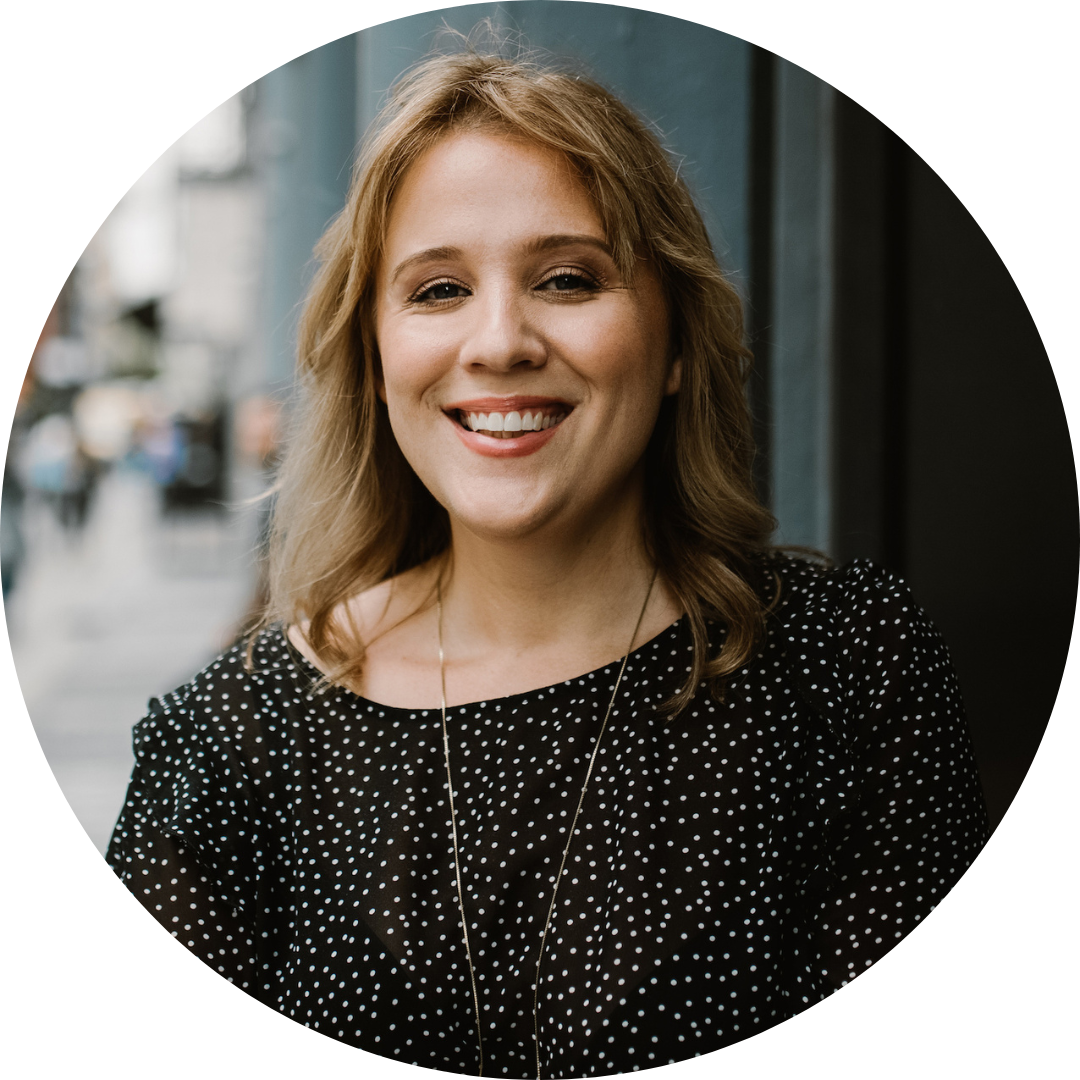
Rachel Cunliffe is the founder of Cre8d Design, a web design and development studio that helps creators and businesses build websites that are beautiful, clean, user-friendly, and fast. Cre8d has worked in the space for over two decades, specializing in custom WordPress design, audience experience, and content strategy. At Cre8d, the team partners closely with clients to clarify their goals, organize their content, and create websites that genuinely reflect who they are and that people love to use. Their work blends thoughtful design, modern tech, and a deep respect for the people behind the websites.
Takeaways
- Trust your gut: If your site feels messy, your readers feel it too.
- Design for calm: People crave clarity, not chaos – keep it simple and focused.
- Your website is your pantry: Take everything out, organize what matters, toss what’s expired.
- Pop-ups aren’t the enemy, but timing matters: Be intentional about when and where you use them.
- Write like a human again: Authentic stories connect faster than optimized fluff.
- Your brand should evolve: Outdated design can quietly hold you back.
- Simplify the tech: A site that’s easy to update keeps you consistent and confident.
- Distraction-free = trust: The cleaner the experience, the stronger the connection.
Resources Mentioned
Join the email list for Take The Exit – Be the first to step inside the story!
Custom WordPress Websites
Food Blog Trend Report
Rachels side project
Transcript
Click for full script.
EBT768 – Rachel Cunliffe
[00:00:00] Supercut
You are going to want to download our bonus supercut that gives you all the information you need to master Pinterest. Head to eatblogtalk.com/masterpinterest to download today.
[00:00:26]
Is your website starting to feel like a cluttered pantry? Over time, content piles up, your user experience gets a little messy, and suddenly people cannot find what they need. In this episode, web designer Rachel Cunliffe shares how to know when it’s time for a redes and how to transform your site into a calm, streamlined experience that serves both you and your audience. We dive into signs your site is no longer working, how to clean it up, and why thoughtful design and content strategy are more essential than ever. If your website feels a little bit chaotic, this is your permission to reset.
[00:00:48] Intro
Hi food bloggers, I’m Megan Porta and this is Eat Blog Talk. Your space for support, inspiration and strategies to grow your blog and your freedom. Whether that’s personal, professional or financial. You are not alone on this journey.
[00:01:17] Sponsor
If the cost of the Eat Blog Talk Mastermind is holding you back from applying, you are not alone. Gayle and Nat had the same concerns, but what they have gained from the Mastermind has far outweighed the investment.
The cost of it, I guess, was really my just initial concern, but I knew that, you know, what I would put forth in the Mastermind would be. What I would get out of it.
So I saw it for me as like a good business investment and opportunity. It’s something that I’ve never, you know, done or tried before. And, you know, I know Megan has a lot of experience and I know other women that join the Mastermind do too. So I thought this was a great way to kind of expand my blog.
I also knew that joining a Mastermind, I wouldn’t necessarily be able to measure a direct return on investment because some of these things honestly are just priceless. And although I knew I wouldn’t directly be able to go, okay, I’ve spent this much this month on the Mastermind, I want to be able to make this much back in return.
It was about like moving the needle in key areas for me. Even if I knew that the connections and the things that I would be learning would be priceless and not necessarily tied back to a direct return on investment, if that makes sense.
If you’ve been wanting to justify the cost, remember that growth often starts with a leap. So secure your seat in the 2026 Mastermind today by going to eatblogtalk.com/mastermind
[00:02:41] Megan Porta
Hello Rachel, welcome to the podcast. How’s it Going today.
[00:02:44] Rachel Cunliffe
Hi, Megan. Good to talk with you.
[00:02:46] Megan Porta
So good to talk to you. You’re in New Zealand. What time is it over there?
[00:02:49] Rachel Cunliffe
You know, it’s six in the morning and the sun’s just about to come up, so I’m. I’m so glad it’s spring here now.
[00:02:56] Megan Porta
Oh, wow. Okay. So, yeah, it’s like everything is opposite, right? So morning there even. Well, getting close to evening here and going into fall and you’re going into spring. Well, I’m super excited to talk to you today. We’re going to talk about how to know when the right time is for food bloggers to redesign their websites. Before we get to that, Rachel, do you have a fun fact to share with us?
[00:03:21] Rachel Cunliffe
I do. For the last 22 years, my husband and I have had an open home every Friday night and we invite people over for pizza. Some nights it’s just about 10 people. Other nights it gets up to like 40 something people. Yeah.
[00:03:36] Megan Porta
Okay. I love this. This is something I’ve been wanting to do. I don’t know. Sunday nights just for me would work great. I think Friday night is just sacred family time. But Sunday, I feel like, what a good way to kick off the week. So do you have any tips for getting started with it?
[00:03:53] Rachel Cunliffe
You know, a lot of people ask me this. In fact, I actually launched a side project, it’s not my main focus, called fridayspizza.com where I just write about the hosting experience because everyone is like, it’s so much work. How can you do it? My house, I have to get it perfect. I’ve got so much on my plate.
[00:04:10]
How can I add to it? And I just say eating together with other people is better. It enriches your life in every single way. Just give it a go, whatever works. If it’s just ordering in takeout and eating together, just eating together, you can talk with other people and just realize that you’ve got other people around you when you’ve got good things, bad things, hard things going on in your life.
[00:04:33] Megan Porta
Oh, okay. You’ve inspired me. I feel like it was maybe meant to be that you mentioned this, because it’s been something that I’ve been wanting to do and more recently I just thought I need to do this. So thank you for the inspiration and the nudge. Okay. Super cool to learn that. Now, can you give us a little bit of a background on your business?It’s Cre8d Design, correct?
[00:04:54] Rachel Cunliffe
Yes. So at Cre8d Design, we mainly focus on food bloggers, but not exclusively. And our love is to work with food bloggers and to who are really ambitious, who want to take their blog to the next level. They’ve given it a go. They realize this is their love, it’s sustainable for them and they want to take it to the next level with a custom WordPress design rather than sort of a pre made theme that they’ve probably started with.
[00:05:22] Megan Porta
Okay, cool. So perfect audience. Here you are talking to people who often get to that point where they’re like, oh gosh, things are getting a little bit messy. And I love the analogy that you use with a pantry because I feel like every week I look into my pantry and I’m like, what happened?
[00:05:40] Rachel Cunliffe
What?
[00:05:41] Megan Porta
Like what exploded in here a week ago? It looked great. All of a sudden I can’t find anything. It’s such a mess. And the same thing can happen to our sites over time, right?
[00:05:52] Rachel Cunliffe
Oh, exactly. You know, everyone’s seen those perfect Pinterest or Instagram reels of people’s pantry that’s got all the labels, all the content, all, everything well organized and looks beautiful. It just doesn’t stay that way. Let’s be realistic. You know, it’s in many different ways a pantry can get unorganized. And I think it’s a perfect analogy for a food website.
[00:06:15]
You have things that started off in a really nice structure and organization, you know, where everything is, it’s easy to get to. And then sure enough, sooner or later you’ve got multiple bags of the same thing stuffed in behind each other. You’ve got half opened things, you’ve got expanded, inspired things, things you’re like, I don’t even know why this is in there.
[00:06:35]
Sometimes my kids toys end up in the pantry. And then things like, you’ve got too much in there actually as well. Maybe you need a bigger pantry. But that’s a whole other thing. But sometimes you need to take it all out and go, right, let’s clean this all out. Combine things together into the same bag or container, get rid of things that we no longer eat.
[00:06:58]
We thought we were going to do this, we’re going to have this specific dish, but we just don’t do that anymore. And then reorganize it in a way that works for your life right now. And by that I mean like two years ago you thought maybe I was going to do a lot of baking, but actually that’s just not fitting my lifestyle right now.
[00:07:17]
And it’s the same with the food blog. When you start out, you think, I’m going to do all these things. And then you realize two years in. Hey, my specialty, my niche is this type of cooking, this type of baking, and I’m really focusing on that. So then you need to restructure everything that makes sense so that those things are the easiest to find when you walk in there.
[00:07:40] Megan Porta
Yeah, that makes so much sense. What a great analogy, especially for people who live and breathe and speak and eat food and cooking all the time. So love that. So how do we know, in terms of our website, when the right time is to get a redesign? Is it that feeling of things are just a little all over the place? They’re not feeling super concise and to the point? How do we know?
[00:08:08] Rachel Cunliffe
Yeah, exactly. That. I think. And it’s a few other things, too. I think people come to us and they say things feel hard to find. They want streamlining it again. I think that’s the key thing. If it doesn’t also reflect what you’re offering now, or there’s a sort of a disconnect between your brand and what your audience is needing, and everything sort of feels out of alignment.
[00:08:30]
It doesn’t feel like, you know, like you’re putting your best foot forward anymore. It might have been two years ago, but we’re not wearing the same clothing we were, you know, two years ago. Well, in general, two years ago, we’ve sort of shifted. Our lifestyle has changed and. And our blogging does change as well as technology and things and the technology thing.
[00:08:50]
I think, you know, if it feels like a painful chore to make an update on your website because you’re so worried that things are going to break or things are just going to. Yeah. Get more. They’re just so confusing to make those edits. Perhaps the tech is also needing to be reevaluated too. It really shouldn’t be awful to update your website.
[00:09:12] Megan Porta
Yeah. And that. Just that feeling. I get this in my house sometimes, too, and I’ve had it about my website over the years at certain points, but just that feeling of like, things feel like kind of like the pantry thing you’re talking about. Like, things just feel disorganized and messy, even just pulling it up or walking into a room, it’s like things just don’t quite feel right. Do you know what I mean? Like kind of a. Just a little inner sense that you have.
[00:09:39] Rachel Cunliffe
Yeah, we know it. We all sense it when things aren’t quite right. And, you know, there’s a lot of cleaning experts that talk about everything has its place, and that’s for good reason. You feel a lot calmer yourself when you know that everything’s ordered rather than chaotic, you know, so that’s really important for us and our readers as well.
[00:10:00] Megan Porta
So talk about what a distraction free food blog might look like.
[00:10:05] Rachel Cunliffe
Yeah, I think, you know, in the last few years, Megan, people are more and more tired, they’re more and more overwhelmed. So they’re coming to us and our websites with this sort of latent stress that’s kind of at a higher level than it’s been in the past. And so they’re really not necessarily coming with the, you know, excited expectation.
[00:10:27]
They’re coming like, I need to solve a problem. What am I going to cook for my family tonight? So they need a lot of clarity, not noise. And there’s just so much noise online, a lot of distractions, a lot of things. So I think if you can provide a focused site like that’s really calm, it’s going to help people connect better with you, build that trust, that loyalty that they’re going to be like, oh, this is my safe space, I can come here, find what I need finally.
[00:10:55]
And I’m just going to find recipes that really work. And I think distraction free doesn’t mean it has to be bare. Right? It just means intentional. And you know, there’s lots of little pieces that help make it intentional and not distraction. I mean, the other day I was trying to purchase something and about four different pop ups from this ecommerce site came up at various points when I was trying to check out and I was like, imagine if I was in a store trying to buy a pair of jeans and I was walk, I had the jeans in my hand and I was walking up to buy the jeans and four or five things came in my way and said, oh no, you can’t go there.
[00:11:35]
Like I’m going to stop you right now. It’s ridiculous. And so we really need to think about like let’s make their purpose happen really clearly, really quickly because people want to get in and out, find what they need and get on with their lives. So anything you can do that’s kind of competing for their attention, that’s getting in the way of the experience that they’re wanting.We need to think about is do we need this? How can we make, how can we serve people better?
[00:12:04] Megan Porta
So can you give us some examples for just thinking specifically about food blogs? What would that be? What would we be getting rid of?
[00:12:11] Rachel Cunliffe
Yeah, so I think when I am cooking a recipe, I don’t want to have a pop up ad right when I’m cooking a recipe. However, if I’m just sort of scrolling through a site trying to gain ideas. That’s fine to have ads there. I think you can get short term benefits from ads everywhere.
[00:12:31]
But long term you’re going to harm your readers trust in you that it’s too difficult to cook if I’ve got a pop up ad coming over the top of my iPad on the kitchen counter. Other things are more like if it’s slow to load, load your site with all the ads, load your site with all the things on your cell phone connection and you know, maybe you’re in a bit of a rural location and you haven’t got the best cell phone signal.
[00:13:02]
What is the experience like there? If someone’s on vacation using your recipes, try and see what that experience is like from an outsider or watch your friend cooking on your website, with your website and just go, oh gosh, that’s kind of getting in the way of them cooking the recipe right now. How can I make that easier for them?
[00:13:25] Megan Porta
Okay, do colors or like any other sort of visual branding, play into that? The distraction free design?
[00:13:33] Rachel Cunliffe
Yeah, I think instead of distraction, maybe more like the text size. If it’s really hard to read, you’re going to spend more energy than is needed to read that content. And so if you can make it really a nice size, the colors, I think food bloggers in general get colors really good because they know that the food should pop.
[00:13:53]
So they haven’t gone overboard with too much like text on hard, difficult backgrounds to read. So I think that’s in general pretty good. But often, sometimes you get text that is too big as well. So you’re scrolling so much in order to read the thing. So I think that’s, you know, when I say distraction, it means that you can just get to what you need to do. It doesn’t have to be popping up and shiny. But those things certainly are quite a big distraction.
[00:14:19] Megan Porta
Okay. And I imagine you test on mobile and you recommend testing on mobile and desktop as well for sure.
[00:14:27] Rachel Cunliffe
And a lot of people still cook on their tablets as well. So double check what it looks like on iPads as well.
[00:14:33] Megan Porta
Oh yeah, I never think about iPads, but people do use those especially for cooking. I think it’s just kind of handy to set up in the kitchen, right?
[00:14:41] Rachel Cunliffe
Yeah.
[00:14:42] Megan Porta
Okay, so anything else about eliminating distractions or just making it easier for the user?
[00:14:51] Rachel Cunliffe
I think think about what is your number one call to action on your page. It might be different on different pages of your site, but if you have all these competing call to actions, it can get confusing. Now one example is different opt ins. So you’re like as a reader, you’re like, am I filling in this form and getting the same thing as the form further up the page?
[00:15:12]
And like that can be kind of confusing. So you need to be really clear what people are opting into for each one. And if you have too many different competing ones, people probably will just not fill it in at all because they’re not sure which one is the right one.
[00:15:28] Megan Porta
Right, yeah, that can be confusing. And then, so what do you think about pop ups generally? Is that like, are they good, bad, does it depend.
[00:15:37] Rachel Cunliffe
They are effective but they’re annoying. So I think you need to balance this whole thing of. And I use pop ups and I’m not against them, but I think really again think about if someone is on a particular page, like for example, an individual recipe, and they’re in the part of the recipe card, that’s not when you want to pop up, perhaps on your homepage after they’ve been there for a little while, but not straight away because people are actually just doing the thing you want them to do, which is exploring your website.
[00:16:08]
And I think before you want to sign up to something, you’ve already got to build a bit of trust with people that there’s a purpose. We get so many emails, you know, we have to really earn that trust to get their email address.
[00:16:24] Megan Porta
Yeah, totally agree with that.
[00:16:28] Sponsor
Hey food bloggers, we have something super exciting to share at Eat Blog Talk. The Eat Blog Talk podcast is now on YouTube. You can watch full video interviews with incredible guests, sharing game changing tips for your blogging journey. Subscribe now and don’t forget to share with your fellow food bloggers. Let’s grow together. Head to YouTube, search, Eat Blog Talk and start watching today.
[00:16:48] Megan Porta
And then how does content play into this? The actual content that we’re putting on our sites, does that play into this whole, like don’t add noise and clutter and be more streamlined?
[00:17:07] Rachel Cunliffe
Yeah. And this year there’s been so much turmoil about the advent of AI and the impact and there’s been all sorts of different advice about how to write your blog posts, but so much of blog content sounds the same and if you took away the author, the bio information and the branding and you just had the recipe and you were to say who wrote this?
[00:17:31]
Most blogs, you wouldn’t have any idea. So I think there’s been a swing back to almost the old days. And I’ve heard this in some of your old episodes, past episodes as well. To go back to stories that are actually relevant to the recipe, but stories lived experience your tested how you’ve tested it and really focus a lot on your voice being strong in there.
[00:17:55]
So it’s not just about writing a long post or a post of a certain length. That’s how do I serve my readers here? You know, is it. How do I really help them understand how to get success out of this recipe and to include that in there? And if you’re just writing to a certain length or trying to, you know, fill in a template that everyone else is doing, you’re not going to stand out.
[00:18:20]
There’s just so many food blogs out there. And I think one of the people whose voice she’s not a client. We’ve worked with her in the past, but she’s just got such a clear voice. Like, you can just tell when you read her site that she’s giggling when she’s writing some of these lines.
[00:18:36]
I was reading her recipe for, I think it was cottage pie and she was saying, you know, this is everyone’s favorite brackets or not the vegetarians, of course, you know, And I was just like, you know, it’s like you’re sitting down with her and she’s talking about her recipe. And I think with a lot of food bloggers, if you were to bump into them at the store and they were saying, hey, I made this amazing apple pie this weekend, the way they would tell you about it as a friend is very different to how they would write it on their blog posts.
[00:19:06]
You know, your friend wouldn’t say, this easy. Dinner is going to be on your table in 30 minutes or less and your family will love it. It’s so I think if you can write like a human, you know that that voice will come through. Yeah, I think that’s super important.
[00:19:21] Megan Porta
Yeah, I think that is becoming more and more evident as this year goes on and I think it’ll continue going in that direction beyond 2025. But I love to hear you say that. I love any expert that says that because it really is refreshing not to have to like, write like a robot anymore.
[00:19:40]
Yeah, it’s been a weird year, but good in the sense that people want humanity back into the content. Right? Yeah. And then speaking of just like writing templated, what do you think of the. I guess, like, themes. I think that’s the right word that come kind of templated and kind of do it yourself and you just plop things in and they do look very similar to many other websites. What are your thoughts on those?
[00:20:08] Rachel Cunliffe
Yeah, I think they’re fantastic for getting people up online really fast. If you are just dipping your toes into food blogging and you’re not sure whether this is something you want to pursue as a career or whether you can do it, that’s the easiest, cheapest way to get online quickly. I think these sort of free or low cost tools, or even the page builders or site builders, they are all DIY options.
[00:20:33]
Like if you just don’t want to hire it out, you just want to get started, go down that route. Definitely the limitations of them is that they want to maximize their sales. Right. So they will advertise thousands or hundreds of features that their theme can do out of the box. And if you don’t know what you’re sort of buying, and most people don’t when they start out food blogging, you can be wowed by this and think, gosh, this can do everything potentially that I might want to do.
[00:21:01]
But the downside of that is that you’ve got a lot of code, a lot of code bloat, so the site can be slower. And also when you log in as an administrator to the back end of your website, you’ve got to look through those hundreds or thousands of theme options to find the one you want to change.
[00:21:21]
So it’s really overwhelming and stressful to make changes. And, you know, so it can be quite bloated and quite difficult to use, even though you think it’s going to be easy to use. So, you know, I think they have their place. They are about a starting point, not a finishing point.
[00:21:39] Megan Porta
Yeah. Oh, that’s a good way to put it. It’s a good starting point. But yeah, I mean, you do. When you go to food blogs, it’s so easy to spot the people who are just kind of doing the bare minimum, doing what everyone else is doing, maybe plugging one of those templates in.And it, there’s so much difference in just the way you feel when it looks a little bit unique and set apart from other food blogs.
[00:22:05] Rachel Cunliffe
Yeah. I mean, you, you walk down, you know, a street and you see all the houses that look exactly the same. You know, it’s the same thing there. And it’s like, where did all the color go? Where did all the originality go? Here? It’s the same thing.
[00:22:17] Megan Porta
Yeah, you’re great with analogies. I agree with that. When you’re in those neighborhoods where it’s like, oh my gosh, nothing looks the same here because we’re so ingrained to like, everything looks the same in a given neighborhood. So when you are in those neighborhoods where it’s like one house is a completely different style than the one next door, it’s so cool.
[00:22:36]
I love that. Yeah.
[00:22:38] Rachel Cunliffe
I mean, as humans, we love originality. We love personality. We are drawn to people with interesting points of view or they’re fun to be around or interesting to be around. We don’t want everyone to be cookie cutter at all.
[00:22:52] Megan Porta
Yes, exactly. Yes. I think we all appreciate this conversation. So let’s say a food blogger comes to you and says, Rachel, I want to update my website. I want you to put some thought into it. I don’t want to be a cookie cutter. What would you. What process would you go through? Like, what would you look at and help them with?
[00:23:16] Rachel Cunliffe
Yeah. So there’s two kinds of parts to it. One is branding, and that’s a whole topic in itself and a process we go through. We get people to come up with a branding statement with us, and we work through that process of brand and voice and what’s their values and what’s their unique offering, who’s their audience, what’s their purpose and their mission and all that type of stuff.
[00:23:37]
So that’s branding. The other one that I also really love is organization and an audit of everything. And it doesn’t sound fun. I mean, no one wants to have an auditor come into the office. Right. But it actually is important because if you’re going to invest that much energy into a redesign and budget into a redesign, you want to do it well.
[00:23:58]
It’s not just about making it look pretty. It’s about making sure that it’s going to serve your audience well. And so a big part of that audience, that audit, is choosing the right taxonomy. And it’s a funny word, taxonomy, but the way you’re going to organize all of your content. And for food bloggers, over time, things sort of get messy.
[00:24:20]
And that’s that pantry analogy again. You know, you’ve got a lot of categories, a lot of tags. If you have different people who’ve come in and contributed content, maybe they’ve named things differently than you have. So there’s inconsistency, and things can get really messy there. And so we spend a lot of time figuring out the best way to organize their recipes and their other content.
[00:24:47]
I think there’s about 20 different ways that you can organize recipes. So there’s a lot of options, and nobody should be using all of them unless you’re maybe the all recipes of the website, you know, of the world, you need to think about what serves your audience. So some sites you’re going to be thinking about dietary considerations, others you’re not.
[00:25:06]
Some sites you’re going to be thinking a lot about seasonal fresh produce. Others it’s more about how long it’s going to take or how difficult or like as budget bites does the cost to make the recipe. So there’s many different ways you can think about organizing those. And then there’s probably two different ways that you can present that to people. One is with filters and one sort of more magazine style. So thinking through that kind of how do you want people to move through the website, what are their needs and make it as fast as possible for them to get to what they’re looking for. All of those types of things.
[00:25:42] Megan Porta
Yeah. And then how do you consider monetization too? So ad placement and how loaded the homepage is and things like that.
[00:25:52] Rachel Cunliffe
Yeah. So now with things like Raptive and MediaVine, they layered on top of our work. So it’s not really like in the old days when it was like Google Ads placed in various spots, it was less dynamic. So we don’t really involve ourselves as much in the ad placement specifically. That’s more up to the client and the ad agency to figure out that right balance.
[00:26:15]
But I think in our perspective, you really want to be careful about balancing the experience of your users with revenue. And so I’m quite excited to see a lot of food bloggers are experimenting with other ways to get that revenue. It could be the ad free memberships that people offer so that they pay a little bit of money each month and then they can cleanly browse the site and support the creator rather than just blocking ads.
[00:26:43]
Substacks and you know, WordPress can do everything that Substack does, but Substack has made it super easy to collect that recurring revenue. And I think people expect if you’re going to sign up to a Substack, you’re going to be asked for the money versus a food blog where people have become very accustomed to getting it all for free.
[00:27:03] Megan Porta
Right.
[00:27:04] Rachel Cunliffe
And there’s other membership models too that people are offering like a cookbook club, things like that. So I think the best thing to do is try to diversify your sources of income. And I know people have done that for a long time with affiliates like Amazon, but any of these sort of things can change pretty quickly.And we know that as food bloggers that things can change. And the more different ways that you can diversify, it means that you’ve got that sustainability in the long run.
[00:27:33] Megan Porta
Another theme for the year right there. Diversify your revenue. Okay, so in an ideal world, if you or somebody else redesigns a food blog and it’s just quote, perfect, what does that success look like?
[00:27:49] Rachel Cunliffe
I think first for the creator, they feel a lot more confident and in control. They feel that they are empowered to make all the changes they need to. They know how to organize their content. And for the readers, they feel that they can find what they need to really quickly. They want to come back.
[00:28:07]
They have a great experience while they’re there and they’ve that sort of, that, that trust is built. Every time they come back, they feel like, okay, this recipe works. I can find what I need. It’s not a confusing, chaotic mess here. It’s an oasis amongst all of the other things that is going on in my life and it becomes a joy to use.
[00:28:25]
I think if you can feel like, oh, this is great. This is one of my favorite parts of the food blogging because I think for a lot of food bloggers, they all come to us and they say, oh, I’m not technical, you know, I’m really stressed out by computers and you know, I’m sure I’m the only one, but I feel really like not very good at all this stuff.And I’m like, no, actually that’s the normal experience here. Food bloggers joy is being in the kitchen, not being on their computer. And you know, and so anything we can do to make it a joy for them to, it’s calm for them as well as their readers. I think a lot about being sustainable.
[00:29:03]
If you don’t want to update your website, you’re not going to update it and you know, you’re going to outsource it and then you feel more and more disconnected to that blogging process.
[00:29:13] Megan Porta
Yes, that is so true. So for you Cre8d, and I love how you spell it by the way, you put a little eight in there, which is super cute. What packages, I guess do you offer, food bloggers? Do you have like semi help packages? Full packages? What do you provide?
[00:29:31] Rachel Cunliffe
Yeah, so we have the semi custom option which we’ve been doing in the last few years because there are people who are like, I don’t have the budget for the complete custom, but I want to have some of these kind of core features that we see in a lot of them. So we offer that.
[00:29:45]
But our main work that we absolutely love is custom WordPress. And it’s a very guided process from start to finish. It takes about 12 to 14 weeks. And we step you through that whole process. Biggest thing that can slow down is content. So, you know, sometimes we’re waiting for some new publicity photos before they relaunch the site.
[00:30:08]
Sometimes it’s the reorganization of the content. So we start that process right at the beginning. Here’s how we’re going to map out all your content. But it does require them to go back through and audit, you know, which things should I reorganize and things. So that’s the two things. But roughly 12 to 14 weeks.
[00:30:25]
And we guide you step by step so you don’t have to be like, oh, what do I do here? This is quite overwhelming. We make it very clear, the process.
[00:30:34] Megan Porta
So we can be in the kitchen cooking our food and taking our pictures. Right. And you are doing the heavy lifting, which is, yes, music to our ears. Is there anything else we should know, Rachel, about Anything we’ve talked about what makes a good design, how to know when it’s time to redesign anything that we haven’t covered?
[00:30:55] Rachel Cunliffe
I think if you are on the fence and not sure if your website is sort of more than 3 years old and you are frustrated in any shape or form, it doesn’t necessarily have to be a full redesign. Sometimes you can fix something that’s not optimized. So that’s always another option. It doesn’t have to be all in, but when your technology is quite old, your theme is quite old, it can be more work to renovate than to rebuild.
[00:31:24]
So, yeah, just be really careful and be strategic rather than just, oh, I don’t like my brand or I don’t like something, like, let’s actually evaluate it first, because it’s a big investment. You want to make sure that it’s worthwhile doing. And sometimes we say to people who come to us, blog for another 6 to 12 months, build up your content.
[00:31:44]
Because you don’t actually have enough content for this big magazine style website that you’re wanting to build because it’s just going to look bare and it’s not enough to fill that pantry, in a sense. So, yeah, you don’t have to rush into these things. It’s something you want to be really considered about.
[00:32:02] Megan Porta
Another pantry analogy. I love it. Well, thank you. This was really helpful and I think this gives people a good idea about whether they’re there or not. And just some, if nothing else, things to think about about structure on their website and usability and all of that. So thank you for your time and for all of this value, Rachel.
[00:32:22] Rachel Cunliffe
Oh, fantastic. Thank you so much. Yeah.
[00:32:25] Megan Porta
Do you have either a favorite quote or words of inspiration to leave us with?
[00:32:29] Rachel Cunliffe
I am a reader so it’s really hard for me to like pick one quote. But recently one that I just sort of returned back to is be Even in the small task, the menial task, how can I do this in a great way? So that’s something that I aspire to.
[00:32:44] Megan Porta
Love that. Thank you for sharing that. We will put together a show notes page for you Rachel. If you want to go peek at those, head to eatblogtalk.com/cre8ddesign. So that’s CR number 8D design and just reiterate where people can find you if they are interested or just want to learn more about you.
[00:33:04] Rachel Cunliffe
Yeah, so our website created design and you’ll have that in the show notes. And also we recently launched Best Served Hot, which is like a food bloggers report about what’s trending with food blog design and food blog technology.
[00:33:18] Megan Porta
Awesome. Thanks and everyone go check that out. Thank you again Rachel and thank you so much for listening food bloggers. I will see you next time.
[00:33:28] Outro
Thank you so much for listening to Eat Blog Talk. The best way to support this show is to share it with another blogger or friend who could use encouragement today. Let’s share the love. I will see you in the next episode.
💥 Join the free EBT community, where you will connect with food bloggers, and gain confidence and clarity as a food blogger so you don’t feel so overwhelmed by ALL THE THINGS!
Want to achieve your goals faster than you ever thought possible? Stop by Eat Blog Talk to get the details on our Mastermind program. This transformative 12-month experience will help you accomplish more than you would be able to in 5+ years when forging ahead alone.
Click the button below to learn what a mastermind program is, what your commitment is, and what Eat Blog Talk’s commitment to you is. Learn More About The Mastermind Program
✍️ Reach out to connect with Heather Eberle, a copywriter for food bloggers. As much as you enjoy your business, maybe writing or marketing isn’t your cup of tea. Maybe you’d rather spend more time in the kitchen and less time on your laptop. Heather is here to clear your plate! Let Heather help you share your content with the world.