Monetization Strategies for Food Bloggers
If writing a cookbook has been sitting on your someday list, this episode might be the push you need. Amy Reid from Baking With Granny shares exactly how she self published her first cookbook, why she chose that route, and what it really took to make it profitable. This is a practical, honest look at cookbook creation for food bloggers who want more control and more stability.
Listen on the player in this post or on Apple Podcasts, Spotify, YouTube or your favorite podcast player. Or scroll down to read a full transcript.
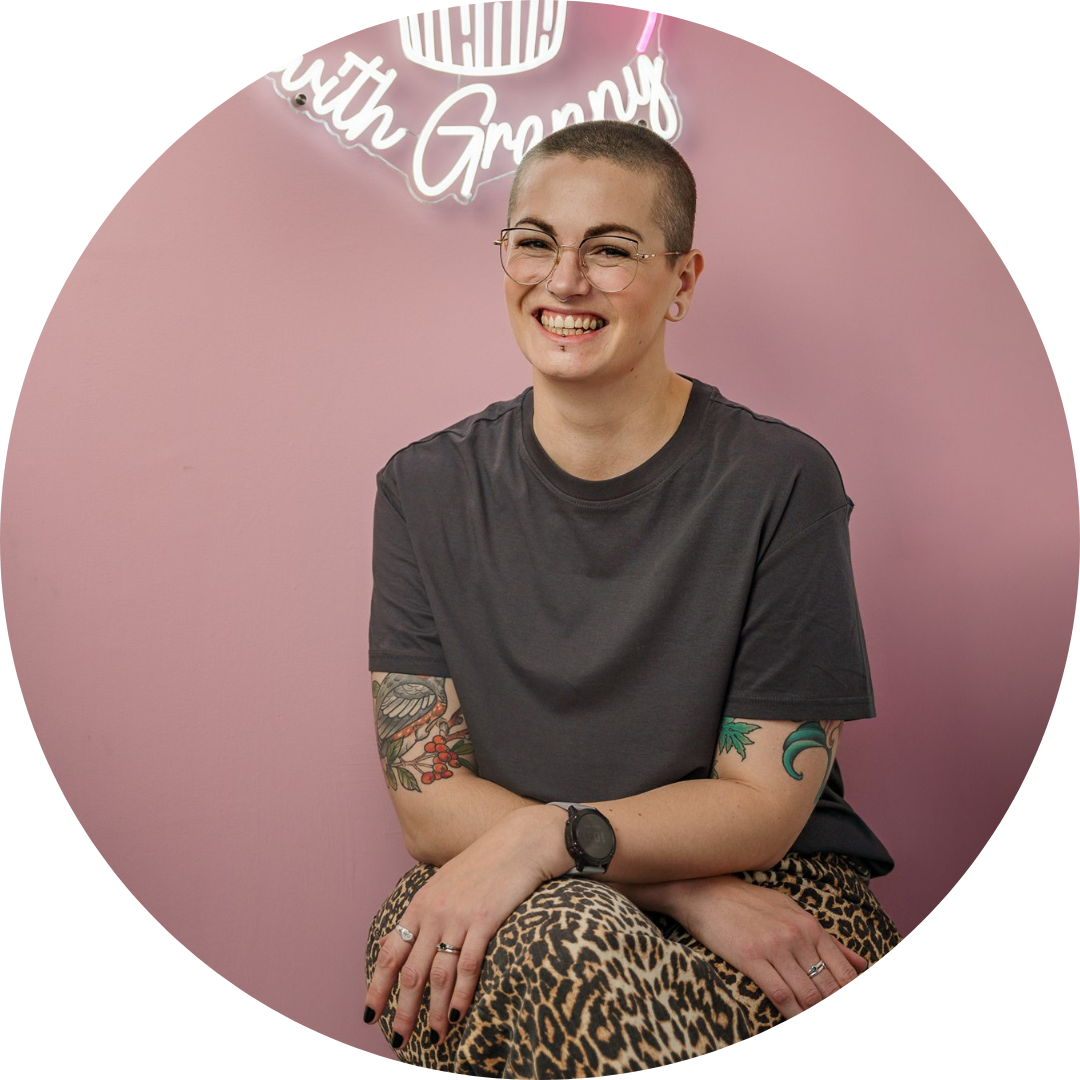
Amy Reid is the voice-behind and creator-of Baking with Granny. The daughter of a professional baker, Amy grew up in a house which was filled with cakes & bakes. Once her own two children came along (and her mother became “Granny”), it was suddenly obvious that many of their family recipes would be lost in time, if not written down now. And Baking with Granny was born! Amy now takes recipes from years gone by and transforms them into easy home baking recipes that people around the world can make and enjoy.
Takeaways
- The right time is when your business can support the focus: You do not need perfect conditions, but you do need margin.
- Self publishing gives you full creative and financial control: From photography to pricing, every decision stays in your hands.
- Pre orders validate demand before you spend big money: Selling first reduced risk and confirmed the book was wanted.
- Large scale recipe testing builds confidence and credibility: Hundreds of testers removed guesswork and strengthened the final product.
- You can combine hardcover printing with print on demand: This balances profit, accessibility, and global shipping.
- Cookbook sales can meaningfully diversify income: This was not a passion project. It was a profitable business move.
Resources Mentioned
Get Megan’s Memoir – Take the Exit – Step inside the story!
Transcript
Click for full script.
EBT788 – Amy Reid
[00:00:00] Megan Porta
It has been two years since Amy Reid was last on the podcast and so much has changed. Back then we talked about imposter syndrome. Today she is a self published cookbook author who has moved through some major life transitions and come out stronger, more confident and more in control than ever. In this episode, Amy pulls back the curtain on how she brought her first book to life. From managing 300 recipe testers to shipping 2,000 books from her home, and the mindset shift that made it all possible, this is an honest, empowering story for anyone who has ever wondered if now is the time to finally go for it.
[00:00:38]
Hi food bloggers, I’m Megan Porta and this is Eat Blog Talk. Your space for support, inspiration and strategies to grow your blog and your freedom. Whether that’s personal, professional or financial, you are not alone on this journey.
[00:00:54] Megan Porta
Amy, hello. It’s been a while since we’ve talked. Two and a half years to be exact. How have you been?
[00:00:59] Amy Reid
Yeah, really good, really good, thank you.
[00:01:02] Megan Porta
So good to have you back on. We are going to talk about self publishing today, which is something you just did, right?
[00:01:08] Amy Reid
Yes, yes, very exciting. Yeah.
[00:01:10] Megan Porta
Before we get into that though, I would love to know what pain points do you feel will bring people to listen to this episode.
[00:01:20] Amy Reid
So, yeah, when it comes to obviously food blogging, the sort of natural thing that goes hand in hand with that is a recipe book. And for years people had been saying to me, you know, when are you going to do it? And I put it off and eventually got to a point where I was like, you know what, if I’m going to do it, I’m going to do it now.
[00:01:36]
And self publishing just became the way to do that for me for a number of reasons. But yeah, self publishing has been great and no regrets, it’s worked out really well.
[00:01:46] Megan Porta
Yeah. And it’s such a good option right now. I feel like for just diversifying not only your revenue, but your projects and your business and your brand.
[00:01:56]
Right.
[00:01:56]
This is something.
[00:01:58] Amy Reid
I mean the diverse and income was a big one for me as well. And self publishing versus traditional certainly allows for more of that, is what I find.
[00:02:07] Megan Porta
Yeah. And I’ll ask you some of those questions in a little bit. But I wanted to just frame our talk first. Do you want to tell us a little bit about your blog and your business?
[00:02:16] Amy Reid
Yeah, of course. So my blog is Baking with Granny. It is a baking blog, obviously. Traditional home baking mostly sort of UK and Scottish recipes as I am based here in Scotland. And the name came from the fact that my mum is a professional baker. Well, she is now retired, but professional baker and my kid’s granny.
[00:02:36]
And it was a way to preserve those traditional home baking recipes that we grew up with that, you know, your granny would have made, but also that my mum would have made in bakeries over the years. And so that’s how it came about. That was 10 years ago that I first started, so been doing this a little while now. But yeah, so the blog is the sort of main thing now, obviously the book. And yeah, here I am. Here you are all these years later.
[00:02:58] Megan Porta
Yes, 10 years is a long time. That’s great.
[00:03:01] Amy Reid
Yeah.
[00:03:02] Megan Porta
So what prompted you to get into self publishing? What made you want to write a cookbook?
[00:03:08] Amy Reid
So the, like I say, it kind of goes hand in hand. I find that most people have a food blog do get the question as to, you know, do you have a recipe book? And I’m no exception. People have asked me that, you know, since day one. And so 10 years on, it felt like, you know, it’s an hour never type thing.
[00:03:22]
And I wanted to create something, I suppose, physical as well because obviously we do all this online and we know it exists and people see it, but you don’t really hold it in your hands. And I wanted to give that to my kids as well, to have that physical book to pass on.
[00:03:36]
You know, we passed on generations. And yeah, I’ve got all my granny’s old cookbooks and there’s just something quite nice about that. And like I say, obviously diversifying income, certainly when it comes to blogging. Over the last few years, Google helpful content upgrade updates, these have all taken a hit on people and the fear is there, you know, I’ll be next.
[00:03:58]
Whereas if, you know, then have another income alongside that, it’s a little safety net as well. So, yeah, a few reasons. And yeah, the self publishing just came about because I’m a control freak. I wanted to have the control over everything, which obviously self publishing allows, but also just, you know, working to my own tune, you know, having my own time frames.
[00:04:20]
I did all the photography myself, so lots of various things that kind of came together to think, no, that’s the preferred route for me.
[00:04:28] Megan Porta
Yeah. So how do you, how do you know when it’s the right time? Because I feel like this is such a big project that it’s something you can so easily say, like, oh, next year I don’t have time now I’m focusing on the blog, I’m focusing on getting my Google traffic back, whatever, so you can put it off forever when do we actually know when it’s right?
[00:04:50] Amy Reid
And I did put it off forever, 10 years. And yeah, it is that question of when is the timing right for it? And I don’t have a sort of definite answer. But for me it was more the kind of. It was that kind of now or never sort of mindset. Like say there’s all these sort of various factors that came into, you know, I’ve been doing my vlog for quite a while.
[00:05:10]
It was now making a passive income. So I had the freedom to kind of step back and say, you know, I can put my focus there and know that things are still going to be taken away in the background. So that was a big point of it. And the age of my kids as well.
[00:05:23]
I see people that do this now that, you know, have toddlers and I think there’s absolutely no way I could have done that. I mean, when I started my blog, my kids toddlers, now they are, you know, 12 and 14. So we’re at the point where I do have a little bit more freedom and a bit more understanding on their part and they have been a great help as well.
[00:05:42]
There’s some pictures in the book where you will see their little hands and when it came to packing orders, they were great help for that. So certainly that’s part of it, but also just things falling into place. You know, we moved house a couple of years ago. Things are a bit more settled now.
[00:05:56]
I had my husband’s support behind me. You know, just general life things I suppose feeling a bit more confident in my work as well. And previously when we spoke, I was talking about things like imposter syndrome. And that was a couple of years ago. At that point there was no way I could have self published a book.
[00:06:12]
But you know, just a bit of soul searching and finding some self belief. I just thought, you know. Yep, let’s. Let’s get it done.
[00:06:19] Megan Porta
Yeah. So it sounds like you just kind of had a knowing when the time was right and I think that’s probably applies to all of us. We know definitely not when it’s not a good time and kind of have that nudge when it might be a good time. So something.
[00:06:34] Amy Reid
Yeah, no, I think that’s a good way to describe it. It’s like I knew when it wasn’t right and then it suddenly wasn’t not right anymore. So it must be right.
[00:06:41] Megan Porta
Yeah, must be right now. Okay, and tell us what is the title of your book and what’s it about?
[00:06:47] Amy Reid
So the book is Scottish Beaks and it’s a Scottish speaking book.
[00:06:51] Megan Porta
Oh, fun. Okay.
[00:06:53] Amy Reid
Yeah. So I suppose another point of actually when the timing was right was when I came across the Cookbook Lab and I believe Chelsea on talking about. In fact, I think it was possibly even on Eat Blog talk that I first heard about the Cookbook Lab. And once I started looking into that, then you know that the self publishing niggle had been there already and I had, I sent a couple of sort of cold emails to publishers, you know, would you be interested?
[00:07:19]
And never heard back. But I never had a real sort of manuscript or anything like that. It was just an idea. And then when I heard that about the Cookbook Lab, I thought, well, I have this idea and that’s the tool there that’s going to get me through it. So that again, timing wise was part of it.
[00:07:35]
And using that, one of the things she talks about is kind of having your topic and I thought, you know what, I could do a whole book of everything, then that’s that done. Whereas if I do a sort of a theme, so the Scottish theme in this instance, there’s room for other books in the future.
[00:07:50]
And that was a big sort of decider of, you know, that kind of narrows down a huge project as well. You know, it can be that book covers these recipes and that’s more manageable than, you know, a huge catalogue of every baking recipe I’ve ever done.
[00:08:04] Megan Porta
Yeah. So can you talk us through the process of self publishing? So you found the Cookbook Lab. What transpired from there?
[00:08:13] Amy Reid
Yeah, well, I mean, the Cookbook Lab is a great tool for actually running you through all of that. The one thing I did find is like many things when it comes to food blogging resources and online resources for creators is a lot of it is US based and obviously I’m in the uk so it does vary slightly.
[00:08:28]
There was some bits I had to kind of figure out for myself. But yeah, the self publishing process really, you need to obviously start with your idea, you need to get it down on paper. If we’re talking about cookbooks, obviously there’s a lot of recipes to take into account. A lot of recipe testing, a lot of Google documents, a lot of Google forms, a lot of laying things out and planning.
[00:08:50]
And that was the sort of the initial hurdle was getting it all down on paper because you have all the ideas in your head. But to actually have it down and tangible to work out what needs to be what and what needs to be where, that takes quite a bit. Once you’ve got all that, obviously the recipe testing is A big one, which was great fun, but a lot of work in itself as well.
[00:09:11]
And I. I think I possibly made my. My workload harder for myself with that as well. But no regrets. I took on 300 recipe testers.
[00:09:21] Megan Porta
Oh.
[00:09:22] Amy Reid
So, yes. And it wasn’t the intention setting out. I actually put out a plea to my evil subscribers to say, I’m going to do the cookbook. Does anybody want to be involved? I would love some recipe testers. And I got 700 responses.
[00:09:37] Megan Porta
What.
[00:09:38] Amy Reid
Which was unexpected but reassuring because it made me think, okay, people do want this. But I had to kind of narrow that down as to, you know, are you capable? Are you able to, you know, provide feedback? Can you do it in this time frame? You know, also working out, you know, what people’s skills were, because you wanted a variety of skills in there, because, you know, this book is for everyone.
[00:09:59]
So, again, yeah, a lot of Google forms, a lot of documents and spreadsheets to work that out, but narrowed it down to 300 and coordinate that over a number of weeks and months, as you know. Right. This week, five recipes will go out to up to 10 recipe testers. Give me your feedback.
[00:10:16]
We’ll move on to the next. But no regrets with that. It certainly made me more confident in each and every recipe, knowing that people have tested it in their own kitchens all over the world.
[00:10:25] Megan Porta
Absolutely. Do you have anything that you learned from that that you would pass on to other people?
[00:10:31] Amy Reid
Yeah, I mean, I would definitely say it was a worthwhile exercise. It was a test of my admin skills to, you know, remain organized in that. But it was like, it was a good sort of confidence boost in terms of knowing that everything was working and being open to the feedback. Generally, it was very positive feedback, but you had to be prepared that, you know, someone might come back and say, no, it’s absolutely terrible.
[00:10:53]
And, you know, I suppose, you know, a couple of years ago that would have really knocked me, whereas now it was like, no, I can deal with that and take its constructive criticism and move forward. But, yeah, in terms of lessons, yeah, like I say, obviously being organized was the biggest lesson. And just, you know, having the confidence in the recipes to know that, you know, people can have success with them, but also they can give you the feedback that, you know, you can build from.
[00:11:21]
It’s not always going to be feedback you take on board, but it’s feedback nonetheless that you should be paying attention to. Yeah.
[00:11:28] Megan Porta
So you decided your topic, your niche that you were gonna write about. You obviously gathered the recipes, made the recipes and then got the testers. Um. Yeah. Where from there? Where did you go after that?
[00:11:42] Amy Reid
Yeah, so after I had all the recipes tested and made sure I was using a format throughout, that they were all following similar sort of steps and ingredients were laid out correctly, you know, same sort of language, all these things that, you know, when you’re putting on a blog, you know, you need to pay attention to.
[00:11:59]
But suddenly when it’s all laid out on pages, it becomes very obvious when it’s not following that same meme structure throughout. So that was the next step. And then after that, it was obviously photography, which is a huge, huge undertaking, but it was one that I wanted to do, certainly in this first book, I wanted to do by myself.
[00:12:17]
And that took, yeah, a good sort of three to six months to really nail down every single photo because, again, I was big taking everything and then photographing it, you know, not every photograph I was happy with. So there was some reshoots. So, yeah, that was possibly the sort of the biggest undertaking when it came to that.
[00:12:36]
And would I do that again? I’m not so sure, but I’m glad I did.
[00:12:40] Megan Porta
Yeah. Yeah. I think someone can get so easily caught, just hung up on the whole process because there’s so much to do. You’ve mentioned, like, testers and figuring out your recipes in the first place. We haven’t even mentioned that. And then photographing and laying out the whole design, I’m sure you had to learn.
[00:12:58]
Did you know Adobe InDesign already or did you have to learn that?
[00:13:02] Amy Reid
So it wasn’t something that I used, you know, Lightroom, Photoshop, all these sort of things. So I was familiar with the Adobe programs, but I hadn’t used InDesign yet. So that’s where the cookbook lab kind of paid for itself, was that it had all the sort of tutorials, there was templates you could use.
[00:13:17]
And Chelsea and her experts lay that out really well as to even just things like, you know, what format the images need to be in, because it’s very different for print than it is for being on your blog. So that was. That was a real learning curve. But I feel like I’ve sort of mastered it to a point now, because you have to.
[00:13:35]
But, yeah, no, it was great fun. And again, going through all the research as to how I wanted it to look. And that’s where, again, the self publishing was quite nice compared to traditional publishing, because I knew I wanted a picture of every recipe and I could just make that decision, whereas I know from other food bloggers I’ve traditionally published.
[00:13:53]
They could sometimes have a fight on their hands and don’t always win when it comes to wanting all the images and the photographs. So that’s where again, self publishing was the right choice for me. I could have that control in terms of design and photography and the whole sort of layout within the book.
[00:14:07] Megan Porta
And it seems like you’ve kind of gone through all the experimentation so now you’re set up for future books. Right. Like you’ve learned the hard things, you’ve gotten into the nitty gritty details of what layout design is and getting your testers and organization. So now do you feel better prepped to do more?
[00:14:26] Amy Reid
I feel like I would, I wouldn’t be starting from scratch again. I have, you know, a template that I like, I have, you know, design that I like and I don’t like. You know, the version that came out was not first version that I worked with, you know, I went through into designs and then actually thought, actually no, this is, this is not the vision we need to change some things about.
[00:14:45]
So I’ve been through that process. That’s not to say if I did it again, I wouldn’t go through other things because you know, now I have it in print and I love it. You know, that’s not to say I would necessarily want to do everything exactly the same. And I suppose it’s the same pure Food blog, isn’t it?
[00:14:58]
You know, you go through different phases, you, you grow, you change designs. Something that ones felt right doesn’t anymore. And I would believe that would happen with future books as well.
[00:15:08] Megan Porta
Yeah. So little details like do you print hardcover, paperback, did you have a hard time making those decisions or was it pretty easy? Did you know what you wanted?
[00:15:19] Amy Reid
So that’s when things become down to what you want, what you’re willing to spend and you know, what risk you want to take. There is obviously print on demand services, which is what the Cookbook lab kind of focuses on at the moment, although I believe they’re updating with some more information on on different services.
[00:15:38]
So the print on demand is obviously a big one and there’s not much risk with that because you upload your book either to the likes of Amazon, KDP or IngramSpark, you know, these on demand printers like Lulu’s, another one that’s quite popular at the moment and they will print a book when somebody orders.
[00:15:54]
So you’re not got a big stack of books sitting and hoping that you sell them all. And that’s great. However, what I found with that was to make that a font affordable, a paperback was really the best option. To do a hardcover meant that you weren’t, you were actually going to end up losing money.
[00:16:11]
Really. I’d be paying people to get the book because of the printing costs of that and I really, really wanted a hardcover. I thought that, you know, most of my favourite cookbooks are hardcovers and they just feel more durable and more sturdy. There’s just something nice about hardcover, but when you do the hardcover, it’s then, you know, having that stack of thousands of books that you hope you sell.
[00:16:32]
So the route I went on was to print the hardcovers but also do print on demand for the paperback. So it does mean I had 2000 books suddenly arrive on palette at my door. I just hope I had to sell them.
[00:16:47] Sponsor
Food bloggers, are you ready to make money and share your brand with the world? Whether it’s cherished family recipes, health focused meals, weekly meal planners or your unique kitchen creations, Lulu has helped thousands of creators turn their cookbook dreams into thriving, printed income generating realities. Here is why Lulu should be your cookbook partner of choice.
More control. Keep creative control over your content and branding faster to market. Get your book in front of readers without the delays. Build your brand. Know exactly who’s buying your cookbook and connect with your fans. Imagine your recipes in print, your name on the cover and your audience raving about your cookbook. With Lulu’s powerful tools and support, that vision is within reach.
Don’t wait to share your passion. Start creating a new revenue stream for your business today. Turn your cookbook dreams into reality with lulu. Head to eatblogtalk.com/resources to get started today. Eatblogtalk.com/resources and click on the Lulu link.
[00:17:56] Amy Reid
You decide the number you order based on what you think you can sell. So that’s what we went for. And then obviously like I said, I do have the print on demand, it’s paperback and I have priced them the same and the reason I have done that is because I printed the hardcovers overseas so I actually printed them in China so they became much more affordable.
[00:18:17]
Obviously there is the shipping cost with that, but in terms of the pricing of the book, that was much more affordable. However, the paperback is a print on demand and that is done through IngramSpark and they have worldwide distribution via Amazon. I think you can get it through Barnes and Noble and Walmart.
[00:18:35]
All these sort of things is listed on there so you can order from there and that allowed for worldwide shipping of that. Whereas because I’m in the UK and I have this huge stack of books. Yes. I will ship it anywhere in the world. You can end up paying as much for the shipping as you can.
[00:18:51]
So it opens up that market for people to save money on shipping if they really want a copy and they’re not too fussed about a hardcover or paperback. So I’ve got the two options there and I did price them the same because I didn’t want people to be restricted based on price alone.
[00:19:05]
It was more on location.
[00:19:08] Megan Porta
I think this is one of the big perks of self publishing, is that you can do what you’ve done, you can mix and match, you can decide what you want, you can do a little. Little of both. And I think that’s great.
[00:19:18] Amy Reid
Yeah. And it does give that freedom as well. The. The next thing I’ve been asked is whether I will do it in a sort of American version of it, because again, we are in the uk, everything is in grams in the metric system and people do want it in cups and things as well.
[00:19:31]
So it’s not something I’ve committed to yet, but it is something I’m considering. Again, a lot of work.
[00:19:37] Megan Porta
Again, it’s your choice.
[00:19:38] Amy Reid
Yeah. When.
[00:19:39] Megan Porta
When you feel it’s right, you can do it. You’re in charge.
[00:19:42] Amy Reid
Yeah, exactly. It does allow for you to make those decisions yourself.
[00:19:45] Megan Porta
Yeah, absolutely. So talk about marketing, because 2,000 books arriving on your doorstep is a lot, so clearly you have plans to sell it, otherwise you wouldn’t have ordered that. How are you marketing your book?
[00:19:59] Amy Reid
So I suppose that the real sort of thing was when I. This is where the recipe testers kind of came into themselves. One of the things I decided to do quite early on was actually to put a page in the book, kind of an acknowledgments page for every recipe tester. So they got their name in the book.
[00:20:13]
So already 300 recipe testers with a name in a book, you hope they’re going to buy a copy just to have their name in there. So, you know, it was a nice thing to do as a thank you. But also there was a slight marketing decision there as well. And again, because there was that 700 initial inquiries for recipe testers, I thought, well, that’s already people that are interested.
[00:20:32]
So if I could sell 700 copies, that’s nearly half of 2000 gone. And then obviously from that, I thought if I bring it out before Christmas, it makes a nice gift and hopefully we can shift half pretty quickly. And we did. Thankfully, I decided, once I had confirmed that the book was printing, I Would open pre orders.
[00:20:55]
So it was in the summertime I ordered pre. Opened up pre orders just via my website and it was within 24 hours, there was 300 pre orders already in place.
[00:21:05] Megan Porta
Amazing.
[00:21:06] Amy Reid
Which was very exciting and very surreal because until that point I’m doing all this work and thinking, is anybody going to buy a copy? And thankfully they did. So, yes. That was at the end of July, beginning of August, that I opened the pre orders and the book came out on the 28th of October.
[00:21:25]
And by that point there was over 600 pre orders.
[00:21:28] Megan Porta
That’s so great.
[00:21:30] Amy Reid
That was a big sigh of relief, but also quite a daunting prospect that Suddenly we had 600 orders to go at once.
[00:21:36] Megan Porta
Right? Yeah, but it’s a good problem to have.
[00:21:39] Amy Reid
I think it’s a good problem to have. Definitely. The only other concern was that the shipping, like I say, because we’re printed in China and it was 2000 books, they are sent by boat. They don’t send them on the plane because it’s too many. So they come on pallets on a boat, which is fine.
[00:21:57]
Was prepared for that. It takes, you know, a few months in that case from printing to door and allowed a little cushion of time just to. For any delays that might happen. And yeah, there was delays and they arrived the day before.
[00:22:10] Megan Porta
Oh, my goodness, you’re kidding. Wow.
[00:22:13] Amy Reid
No, it was literally the day before. And the whole intention with the pre orders was that they would be shipped out to arrive on the day. And unfortunately that wasn’t possible anymore. So as a sort of a means of, you know, apology for the delay, I ended up signing all the pre orders as well.
[00:22:28]
So that was nice. But, you know, I think that was more on me thinking I was letting people down for delay. But actually everyone was fine and even some people were like, you know what? Don’t worry about signing, it’s okay. You know, it was just a. Right.
[00:22:42] Megan Porta
You take that on yourself. Yeah.
[00:22:46] Amy Reid
So yeah, it’s not without the stresses of self publishing because everything falls on you.
[00:22:51] Megan Porta
Absolutely. I love it. You’re literally waiting for a boat to arrive in port and deliver your books.
[00:22:57] Amy Reid
Yeah, yeah. There have been strikes at Rotterdam or something, which meant that all the boats into Europe just stalled and there was just nothing you could do.
[00:23:05] Megan Porta
Right.
[00:23:06] Amy Reid
I just had to wait and just hope.
[00:23:07] Megan Porta
Out of your control. So what are your marketing efforts like going forward now that you have the books and you’ve kind of got that first wave out of the way? Do you have any plans, other plans for that?
[00:23:19] Amy Reid
Yeah. So obviously social media Plays a big part. You know, constantly reminding people if there’s a recipe that I share that’s. So most of the recipes I would say are new recipes, but a lot of them do already exist on the blog. So if I share one that is already existing, I will remind people.
[00:23:34]
This is also available in my book, you know, just little nudges all the time. I did do a Black Friday sale as well, which wasn’t something I intended to do until I realized that Black Friday was also our five year wedding anniversary. So I did a little discount, just sort of hand in hand as that.
[00:23:51]
An ice free celebration for that and then again run up to Christmas. I offered things like a gift wrapping or if you want to send it direct to your loved one, you can do that. I suppose it’s just being aware of what’s going on in the world and how you can sort of tap into that.
[00:24:05]
Like I say, Christmas was a big one. Black Friday and then my email list as well. I’ve got little buttons that, you know, cookbook now out. Or if I’m sharing a recipe again, this is also in my cookbook, that sort of thing. So that’s how I’m sort of pushing sales on the website.
[00:24:23]
Outside of that, I’ve been trying to get into some bookshops as well, which has been somewhat successful. Because you’re self published there is a sort of thing of, you know, the bigger bookshops, they don’t work with self publishers, they work with like traditional publishers which is fine, that’s just the way it is.
[00:24:40]
But I have managed to get into a few independent bookshops in Scotland which has been really nice. And yeah, in the run up to Christmas it was, you know, once a week a little email. Can you send four more copies? Can you send four more copies? So it was, it was nice. There was an icy boost with that as well.
[00:24:54]
And that was a good way because again I’m then putting out on my social media you can buy a copy here and you know, and they’ll share my things and a bit of back and forth, which is always nice. Yeah.
[00:25:03] Megan Porta
And that requires a little legwork. Like you have to kind of get out there. Right. But worth, worthwhile and worth the effort.
[00:25:10] Amy Reid
Yeah, I would say so. I know that when it comes to self publishing there is other ways you can do it where you can order your books and then they get sent to a distributor and they kind of take that over and I don’t know that I would say I would never do that.
[00:25:23]
Perhaps in the future it’s something I would consider because, like I said, we got all the books delivered here, so every book that has been sent out, every hard copy has been packaged by either myself, my husband or my two kids. We have ran them to the post office or had our lovely postman come and pick up sacks of books at the beginning.
[00:25:39]
So that’s been a lot of work. Again, that all falls on us. There is middle men available that can take over the distribution and can get them into shops for you. Like I say, it’s not something that I did this time. I’m not saying I wouldn’t ever try it, but there is that option as well with self publishing.
[00:25:57]
That can help bring it further quicker, if that’s something that you’re concerned about.
[00:26:01] Megan Porta
Yeah, it sounds like goodness, you’ve had a great first run of just getting it out there. Congratulations.
[00:26:09] Amy Reid
Thank you.
[00:26:09] Megan Porta
What impact has it had? Has it had a good impact on your blog and just kind of overall in your business?
[00:26:16] Amy Reid
Yeah, I would say so. I mean, certainly in terms of the investment, so I don’t know, like how much we want to get into numbers, but. And again, I’ll be kind of working in pounds because here in the UK, but the printing of books was about £6,000, so that was for the 2,000 books.
[00:26:32]
So that was the sort of initial investment for that and that did include the shipping. So it was a reasonable enough investment, but the hopeful is that you would get the return. And then actually, in terms of book sales so far, I think I’m up to about £20,000, which is I’ve made my money and more.
[00:26:51]
So in terms of diversifying income, it certainly helped. Now, that obviously isn’t taking into account by time that’s not being deducted off of those. So once you take that off, depending on what you want to sort of class is obviously investment in yourself. Yeah, it has worked out financially well, which is interesting when you hear about people that traditionally publish, because they don’t say that often.
[00:27:17] Megan Porta
Right, yes, that is the case.
[00:27:19] Amy Reid
Yeah. Obviously you get your advance, so you haven’t then got that 6,000 pound that you’re outlaying yourself, but you are then, you know, getting some advances and things for years to come. You know, that’s only going to happen. Like, you know, any more money on this week is only going to happen if I continue to be working.
[00:27:36] Megan Porta
Right. And then so monetarily it sounds like, yes, it was worthwhile. Are you getting extra blog traffic, social media, more just traction there. Anything else coming from this?
[00:27:49] Amy Reid
Yeah, definitely. So in terms of my Instagram following, I was one of those people that was just hovering under 10,000 followers for the longest time. And then once the book came out, it’s kind of shuffled up and that kind of ticks over itself now, which is quite nice, the blog traffic, definitely. One thing I was very careful about was to disable ads on the sales page because I didn’t want to overwhelm people with ads when they’re purchasing.
[00:28:16] Megan Porta
Oh, yeah, that’s a good one.
[00:28:17] Amy Reid
I did that. So, yeah, people are on the website. Will they look at recipes, ad revenue? Yes, it has definitely gone up, but we’re talking about quarter four anyway, so I think until next year we have a comparison. It’ll be hard to see, but definitely traffic and things have remained steady and increased, but because it was the end of the year, it’s hard to say for definite how much of that was to do with the book.
[00:28:40]
How much was it? You know, it was Christmas. Yeah.
[00:28:42] Megan Porta
Who are you finding? A certain type of person or demographic, who’s purchasing your book, who’s interested?
[00:28:49] Amy Reid
Yeah. So that was something that I, for years now, actually, but more so when it came to releasing the book was who am I speaking to? You know, who is my audience? And I think these days with, you know, AI and all the things that are going on, you do need to know who you are and who you’re speaking to, have that sort of authenticity there and, you know, give them what they want.
[00:29:08]
So I have had an awareness and it certainly seems to be true given the feedback I’ve got, but my audience tends to be quite an even split between boomers and millennials. Oh, interesting. So it’s an interesting sort of combination there. And certainly I would find that the boomers are the ones that are the most invested in the book and the recipes themselves, which is not a bad thing at all.
[00:29:32]
It’s actually quite nice because it speaks to them and they are the grandparents now. So for being with Granny, it works out nice.
[00:29:39] Megan Porta
Yeah, that’s great. They can identify a little bit. Do you. Are you mentally planning your next book already?
[00:29:45] Amy Reid
So it was interesting. It was like the day that the book came out and we were packaging it up. My son, he just turned 14 at the weekend, he was like, so are you going to do another book? This one sent out the first, but yeah, I mean, I suppose the intention with doing a sort of single topic book has been that there is a scope to know, expand on that, to perhaps do a series to do similar sort of ones.
[00:30:11]
I would love to Do a Christmas themed book. I feel like that’s always quite a nice one and obviously then you’re sort of. You’re not as mass appeal then because it’s quite seasonal thing. But I love Christmas and I would love to sort of tap into that a wee bit. But yeah, no, I think by doing the Scottish, I think I’ve kind of left myself open to, you know, exploring things like British and even just like, you know, zoning in a bit more to do cakes, biscuits, scones, you know, have those other topics and have them all sitting on a shelf together.
[00:30:38]
Yeah.
[00:30:40] Megan Porta
So you mentioned confidence earlier. Do you feel like this project has just opened up confidence not just with your book but with other areas of your business and life?
[00:30:50] Amy Reid
Yeah, definitely. I think the biggest thing, like I say, was that initial email as to you, look, I want to write a book. Will you help me? You know, recipe testers, feedback, just people to be involved. I did also ask for people that would be happy to receive a discounted book to leave a review, honest reviews only.
[00:31:10]
But yes, if you would consider giving it a wee boost when it came out and the amount of people that came back and actually wanted to be involved, that was a huge confidence boost. Because when you do this job, you feel like you’re something just screaming into the abyss. You know, you’re putting all this content out there, you’re doing all the SEO and hoping that the algorithm likes it and somebody picks it up and is actually looked at.
[00:31:32]
But until you are actually getting a name and someone coming back to you giving actual feedback, that is a huge confidence boost. And I would certainly say if you are someone that has a food blog and you are feeling like you are screaming into the abyss, ask for people to give you feedback.
[00:31:48]
You don’t necessarily have to be at the stage of writing a book. If you have an email list, if you have a social media following, ask them what they want, ask them what they like, what they want to see, and them just coming back to you and giving you an answer can be that nice boost that you need to actually think, yeah, I am doing a good job here and I can give people what they want.
[00:32:05] Megan Porta
Yeah, that’s great advice. Just put it out there. Right?
[00:32:08] Amy Reid
Yeah.
[00:32:09] Megan Porta
So to kind of wrap up, do you have any specific tips? I mean, you’ve given a lot of tips, but anything that we haven’t talked about that might just tip someone over the edge, like, okay, I’ve been thinking about this and now I’m definitely going to do it. Just anything encouraging at all.
[00:32:26] Amy Reid
Yeah, well, I suppose one thing that we haven’t sort of delved into yet is obviously, and it’s something that you hear all the time, it’s AI, AI. I would be lying if I said that that didn’t help me at points in this book. And I say that in things like, you know, collating the recipes, like I knew what I wanted, I want them to be, but it was like, you know, you could ask what, what order do you think would flow well for these?
[00:32:51]
I’ve already got all the information. Yes. Further feedback and further ideas. So definitely using AI is a good help for obviously sort of writing the book. But even just in day to day tasks for your blog, it’s that sort of instant feedback of someone. Like I said, you can ask on social media, you know, email lists, but we’re then asking our audience who we want to provide this information to.
[00:33:14]
We want to be having that information ready. And that’s where AI can help fine tune those thoughts that you have. But can, you know, make it make more sense.
[00:33:22] Megan Porta
Yeah, this has been so helpful and encouraging. I think just like we’ve mentioned, in a time when new projects are needed really in people’s businesses, anything we’ve forgotten.
[00:33:33]
Amy.
[00:33:36] Amy Reid
I think we’ve pretty much covered everything. I’ve got all my little notes here. But yeah, I think like you said, sort of knowing when the time is right comes down to knowing when it’s not right. And then once it is right, it’s just kind of running with that and thinking, you know, do people want this?
[00:33:55]
You know, it’s okay to ask if they want it. And yeah, once you kind of have that sort of boost as you. Yeah, okay, I’m going to do this, you know, run with it, let that confidence carry you through and you know, do the research as well, you know, do the research. It’s not going to be an overnight thing.
[00:34:09]
If you want to self publish. It is a learning curve the entire way and although I could tell you every step I have done it will be different for you because your audience is different, your idea is different and again, depending on where you are in the world, the process will be slightly different.
[00:34:23] Megan Porta
Yeah. Thank you for sharing all of this about your journey and best of luck to you with your sales and future books and blog and everything and success with it all. Do you have a top tip for bloggers right now? Cookbook related or not?
[00:34:39] Amy Reid
Yeah. Oh, this was really effective. Just what I’m saying about AI and I can’t remember where I heard it. It was maybe on one of your podcasts. It was a podcast somewhere that somebody said the quote, AI is a tool for accessibility. And that really stuck with me. And I feel like that’s very relevant.
[00:34:56]
We’re all in the mindset of AI is terrible. It’s trying to take our jobs, it’s trying to steal our content. Whereas I like to take more the approach of it’s something that can make tasks and tools and all sorts of things more accessible. And that goes for us as creators, but as for our audience as well.
[00:35:13]
So use that to your advantage to make, you know, the Internet a more accessible place.
[00:35:18] Megan Porta
Yes, I love the perspective. Thank you for putting a positive spin on that and thanks again for being here. We’ll put together a show notes page for you, Amy. Those can be found at eatblogtalk.com/bakingwithgranny2 since this is your second time here, can you tell everyone where you are? So mention your website, social media and obviously again your book.
[00:35:39] Amy Reid
Yep. So the website is bakingwithgranny.co.uk and then on social media it’s just bakingwithgranny on Facebook and Instagram. I’ve got my email list as well, which you’ll get on the blog itself. The book is available to purchase direct from the website. Again, just bakingwithgranny.co.uk. That is the hardcover, which I do ship worldwide. Alternatively, you will find it on all your sort of online booksellers, Amazon, Barnes and Nobles, Walmart.
[00:36:08]
All the places you would normally find a book. That’s the paperback copy.
[00:36:11] Megan Porta
Everyone go check it out. It’s so exciting. I’m gonna go look at it too. So thank you Amy for being here and thank you for listening food bloggers. I so appreciate you. I will see you next time.
[00:36:20] Outro
Thank you so much for listening to this episode of Eat Blog Talk. If you are craving learning, connection and increased productivity at a low monthly cost, join the Eat Blog Talk inner circle. Go to eatblogtalk.com/focus to join. I will see you in the next episode.
💥 Join the free EBT community, where you will connect with food bloggers, and gain confidence and clarity as a food blogger so you don’t feel so overwhelmed by ALL THE THINGS!
Want to achieve your goals faster than you ever thought possible? Stop by Eat Blog Talk to get the details on our Mastermind program. This transformative 12-month experience will help you accomplish more than you would be able to in 5+ years when forging ahead alone.
Click the button below to learn what a mastermind program is, what your commitment is, and what Eat Blog Talk’s commitment to you is. Learn More About The Mastermind Program
✍️ Reach out to connect with Heather Eberle, a copywriter for food bloggers. As much as you enjoy your business, maybe writing or marketing isn’t your cup of tea. Maybe you’d rather spend more time in the kitchen and less time on your laptop. Heather is here to clear your plate! Let Heather help you share your content with the world.