Monetization Strategies for Food Bloggers
Ad revenue is no longer enough to support a long-term food blogging business. In this episode, Yumna shares the exact ways she diversified Feel Good Foodie into a recognizable brand with multiple income streams. This conversation is packed with practical ideas for experienced food bloggers who want more stability, visibility, and long-term growth.
Listen on the player in this post or on Apple Podcasts, Spotify, YouTube or your favorite podcast player. Or scroll down to read a full transcript.
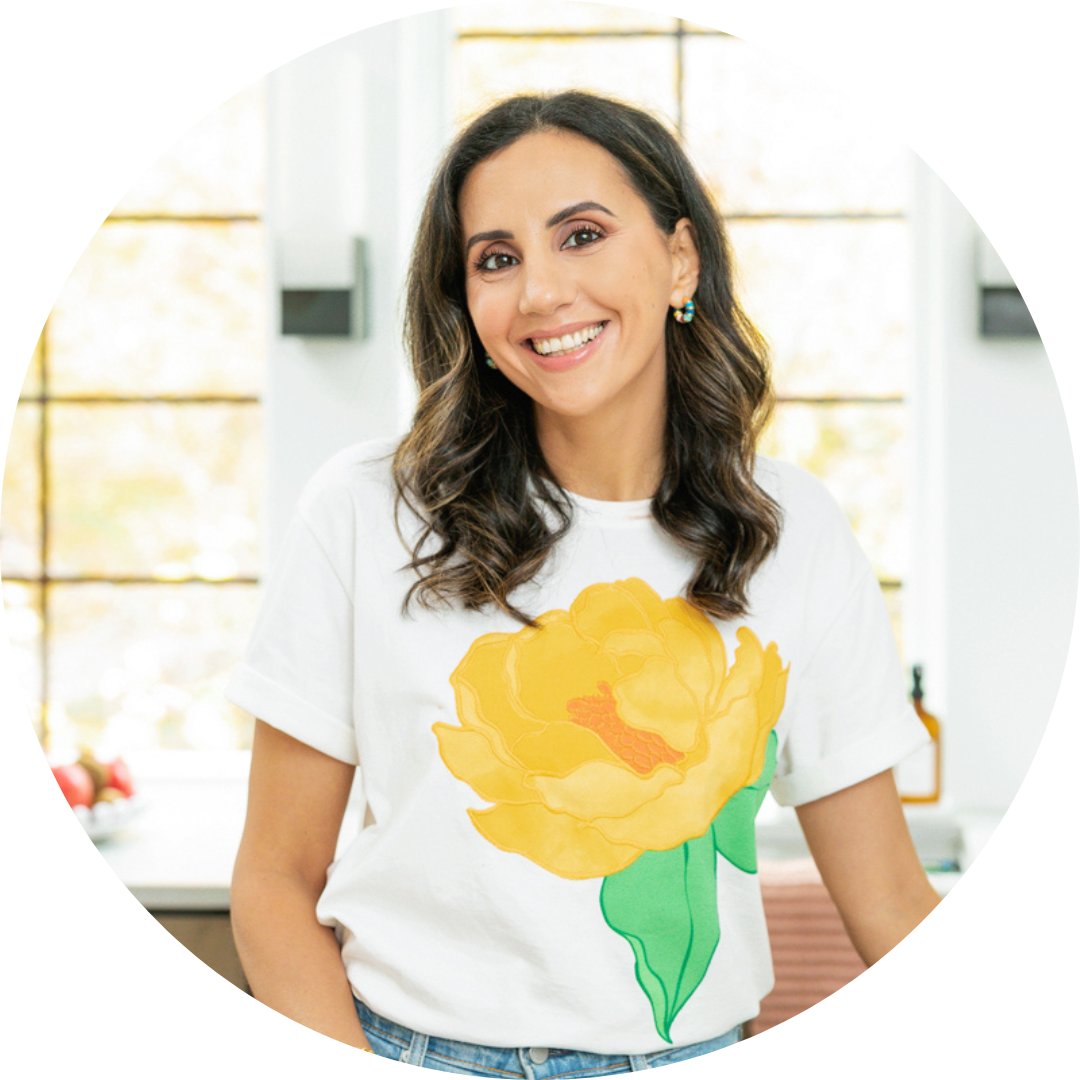
Yumna Jawad, who was born in Africa to Lebanese parents and moved to the US at 11 years old, is beloved by millions of fans globally on Instagram, TikTok, and her website, Feel Good Foodie for her unique, delicious, creative and easy recipes that often go viral on social media. She has grown her massive following from scratch the past decade and has recently founded a new culinary venture, Oath Oats, launched in November 2022.
Yumna’s viral food trends have been featured by Live with Kelly & Ryan, The Today Show, Good Morning America, PEOPLE, Vogue, and the New York Times. A graduate from the University of Michigan Business School, she now lives in Grand Rapids, Michigan, with her husband and two kids. Yumna’s parents are both Lebanese so she proudly features Lebanese, middle eastern and Ramadan recipes as part of her heritage. Her first cookbook, The Feel Good Foodie Cookbook, launched in May 2024 (Penguin) and is filled with over 100 approachable, unique and delicious “Middle Eastern meets Midwestern” recipes for the entire family. The cookbook hit the bestseller lists on Amazon, USA Today and Publisher’s Weekly.
Takeaways
- Build revenue streams before traffic declines force you to.
- Long term brand partnerships outperform one off sponsorships.
- A cookbook strengthens authority far beyond direct sales.
- Affiliate income grows faster when personality leads the content.
- Email works best when it builds relationships instead of pushing recipes.
- Video creates stronger audience connection than static content alone.
Resources Mentioned
Get Megan’s Memoir – Take the Exit – Step inside the story!
Transcript
Click for full script.
EBT802 – Yumna Jawad
[00:00:00] Megan Porta
What if your food blog could grow beyond ads and into a true multi stream business? Yumna Jawad of Feel Good Foodie joins me to share how she built a globally recognized brand from scratch and how she has expanded far beyond traditional blogging into cookbooks, products, partnerships and more. We talk about diversifying revenue, building a loyal community, and creating a brand that people trust, follow and buy from. If you are thinking bigger about your business and what’s possible long term, this episode is packed with insight and inspiration. I hope you enjoy.
[00:00:36] Intro
Hi food bloggers, I’m Megan Porta and this is Eat Blog Talk. Your space for support, inspiration and strategies to grow your blog and your freedom. Whether that’s personal, professional or financial, you are not alone on this journey.
[00:00:51] Megan Porta
Yumna, welcome back to the podcast. It has been many, many years since you were here, so welcome back.
[00:00:57] Yumna Jawad
Thank you so much, Megan. Good to be back.
[00:00:59] Megan Porta
Yeah. I think you were one of the first interviews I had. I mean, it was like 2019, so that was the first year I started, so it was very early on. So we’re due for this conversation. Absolutely. And today we’re going to talk about just building that sustainable food blogging business that everyone wants right now beyond advertising.
[00:01:17]
So we’re going to talk about all kinds of things to get into outside of ads, get your sights off of ads for a little bit and you can think about some other options today. Before we get into that though, what will prompt people to press play on this episode? What pain point are we solving today?
[00:01:36] Yumna Jawad
Absolutely. So with ad revenue down and AI overviews taking over, a lot of search inquiries and platforms changing faster than ever, I think that this conversation is going to be great to teach food bloggers how to build a business. It doesn’t just depend on one stream of income.
[00:01:54] Megan Porta
Yes. Amen to that. I think we all, all want that right now. And congrats on everything you’ve done. I mean, I’ve followed your TikTok account. You have grown so much in so many ways. I know you just published a cookbook recently. Right too. And that was fairly successful. Tell us about that.
[00:02:17] Yumna Jawad
Absolutely. So I think that in the initial stages, when I first started food blogging, I had received advice to try to stick to one thing and get really good at it. And I think that was good and I think that I always did that. But at the back of my mind, I knew how important it was to be everywhere and also to make sure that I’m not just, you know, a creator found only on Instagram.
[00:02:41]
So I wanted to make sure that I was diversified. So I started TikTok in 2019 or 2018, even started YouTube channel. Started all these different things. And in the back of my mind was always idea of doing a cookbook as well. And so I’ve been very fortunate to be able to grow my brand on so many different platforms and also to extend beyond just social media to also have a physical product like the cookbook.
[00:03:04] Megan Porta
Yeah, I think it’s so easy to get in the rut of, like, ads are working, so I’m just going to keep on this path until they’re not. And then it’s like, oh, my gosh, what do I do now? And I think a lot of people are in that space right now where they’re kind of like, I need to focus on something else outside of ads, but I don’t really know where to focus. Right. Yeah, yeah. So it’s an uncomfortable.
[00:03:26] Yumna Jawad
I think that a lot of us have to ask that question of, like, okay, maybe traffic is still okay, but maybe it’s only dipped 10, 20, 25%. But if it did continue to dip next month, next year, we have to start thinking about what else have I built that actually has value and can kind of take me through to the next phase of being a creator and continuing to, you know, have a brand.
[00:03:48] Megan Porta
Exactly. So Feel Good, Foodie. When did you start your blog? Remind me what year.
[00:03:54] Yumna Jawad
So, I actually, I started on Instagram before starting.
[00:03:58] Megan Porta
Okay, I forgot that.
[00:04:00] Yumna Jawad
Thirteen years since starting on Instagram, and now I think we’ll see a lot of creators that do start on social media, especially after the pandemic, and then go to the website. But when I started, it was kind of backwards because there weren’t people like me who started on social media.
[00:04:14] Megan Porta
You were a pioneer. Yes.
[00:04:16] Yumna Jawad
Yeah. So I did that for three years, and I just thought I was having fun on Instagram. And I thought at the time, 2013, that blogs were dead. I was like, no one reads blogs anymore. You know, Instagram is where everything is happening now. And I started what I called at the time a micro blog, where it was basically, you know, the essence of running a blog, but all happening, happening on Instagram.
[00:04:38]
So I would share the recipe right there, I would share a photo of what I made, and it was just a faster way to share content. So I started there, and then the algorithm started changing. And then one day in 2015, I actually lost my account for, I think it was like 15 hours it was gone.
[00:04:55]
And there was no reason why it just lost it. And it just kind of hit me that I could lose it any day. I’m not paying for this. I don’t. These followers are not mine. I don’t owe them anything. They don’t owe me anything. And so that’s when I decided to start a website. And that was in 2016.
[00:05:10] Yumna Jawad
And so it’s been almost 10 years now since the website has been. Yeah, actually exactly 10 years. So it’s really cool just to see it, you know, be so successful for 10 years, but it really wasn’t successful the first two years. And I kept thinking, what’s the point of all of this? And it was just, you know, spending money, not making any money, and wondering, what’s the point of actually having a website?
[00:05:31]
Maybe I was right that blogs are dead, and I was glad that I just kept up with it and in the end, you know, ended up paying off.
[00:05:40] Megan Porta
Yeah, it’s been really cool to watch you just dig into different areas of your business and to grow those areas. And I think that’s kind of what our conversation about is about today, getting your sights off the ads for a little bit. Because we all know when you focus on something that isn’t working, what happens it.
[00:05:59]
It continues to not work, and it usually goes downhill. So maybe find something that fuels you or gives you passion outside of your blog so that you can diversify your business.
[00:06:10] Yumna Jawad
Absolutely.
[00:06:11] Megan Porta
Where do people start with that? We just hosted Flavor Media Summit in Austin, and I noticed this was a common theme. It was like, yes, I know that I need to diversify, but I don’t know how to do that or where to start or where to look first.
[00:06:27] Yumna Jawad
Absolutely. I think some of the easiest places to start is brand partnerships. And I think when it comes to brand partnerships, a lot of bloggers used to do them, I think five, ten years ago, maybe. And then once income started picking up for the website, a lot of them ended up saying, well, it’s so not worth it.
[00:06:45]
I’m getting paid, like, you know, less than I would make in a day or in two days on the website. And it takes so much effort coordinating back and forth with the brand. And so a lot of people stopped doing them because they never felt like it was enough of an effort. And for me, ad income exceeded brand partnerships, but I never stopped.
[00:07:03]
I’ve always done them since the beginning. I think I was doing them before I even did the website. So starting off with brand partnerships is a really strong place, I would say, because it just feels natural. Think about the things that you’re already using, and then go into that. There’s also some websites, like Impact, for example, or Sway Media, that have a list of different opportunities, and they’re usually looking for an influencer to share about some kind of product, for example.
[00:07:30]
So you can kind of sign up for some of these websites and you look at different opportunities, and if you see something for a brand that speaks to you, you can apply and get in. I mean, there’s a lot more competition now than there was 10 years ago, but at the same time, that’s a good way to do it.
[00:07:46]
And also reaching out, you know, via dm, putting together a proposal, a pitch deck, whatever it is. And it doesn’t have to be too many brands. I’m at the point now where I’m working with less brands now than I did five, 10 years ago, but the brands are stronger, more meaningful, and longer relationships, and it just feels like a natural partner.
[00:08:06]
So when I show up with Stonyfield yogurt, people are like, well, duh, yeah, we know you love it. You’ve never mentioned a single other yogurt in 10 years. It’s so natural. And I just naturally always use it. You see it in my fridge, you see it in recipes, and it feels like a natural partnership.
[00:08:23] Megan Porta
Yeah.
[00:08:23] Yumna Jawad
So that’s one area 100% that I would start. If you’re not doing that already, or if you did at one point and you stopped, think about how you could go back to brand partnerships.
[00:08:32] Megan Porta
Yeah. I feel like for a long time, people didn’t do it for the exact reasons that you said, because it just felt like so much work compared to, like, I can get ad revenue. But now that we’re looking outside of that, it might be a good avenue. And I know a lot of brands are exploring partnerships with creators.
[00:08:50]
You don’t even need, like a ton of followers. You just need an engaged audience, people who love you, a community that support you. Right. You don’t need a huge, massive amount.
[00:09:01] Yumna Jawad
Absolutely. And I’ve noticed as well, I get rejected sometimes from brand partnerships because my following is too big and they’re looking for a micro influencer a lot of times, whether it’s because of budget or whether it’s because they’re targeting a certain type of creator. So whatever kind of creator that you are, there’s so many different brands and partnerships out there that are looking for somebody like you.
[00:09:24]
And so I think that it doesn’t mean that you have to have a ton of followers. I do think having at least fifty thousand to a hundred thousand gets you on the radar. But sometimes the smaller, the better. The engagement is actually better when you’re a smaller influencer. It gets worse the more followers you have.
[00:09:41]
I’m 8 million now and my engagement was definitely better when I had 100k than now.
[00:09:47] Megan Porta
Did you say 8 million? Holy crap.
[00:09:49] Yumna Jawad
Emailed that 4.8.
[00:09:50] Megan Porta
Oh, I thought you said 8. I was like, that is so many. That’s like the rock level.
[00:09:55] Yumna Jawad
I think I have about 11 million altogether across all of the social media platforms. But Instagram is my strongest one.
[00:10:02] Megan Porta
That’s so cool. And then partnerships can apply to Instagram, they can apply to TikTok even. Do you do anything on YouTube? Is that a thing?
[00:10:13] Yumna Jawad
Yes, I still do actually. And sometimes, sometimes it’s just like an add on is the way that we’ve been doing it. But I have partnered with some brands that only want to do YouTube and so that has worked out pretty well. I used to do some long form content for YouTube and that’s something that I think I want to go back and start, start up again and try it again because it’s so much more natural to just be featuring your Vitamix blender, for example, throughout the whole video instead of just like flashing something quick in a 30 second reel.
[00:10:42]
So that’s something that I want to go back to. And that’s a brand that I actually did work on a YouTube video with a long time ago. And so yeah, there’s opportunities like that for YouTube. There’s not as many as there used to be, but I think there’s ways to get there too.
[00:10:58] Megan Porta
Yeah, that’s great. Okay, let’s talk about your cookbook. Is that a good opportunity, do you think? For most people. Some people. How do we know if this is a good avenue?
[00:11:10] Yumna Jawad
I think that’s a great question. I always heard that a cookbook is not a good money maker and I heard that that’s a really bad way to, you know, try to diversify your revenue. And so everybody used to always tell me, don’t make, don’t write a cookbook to make money. Write it because of other reasons that, you know, to grow your brand, to tell a different story, etc.
[00:11:34]
And so writing a cookbook for me, I always had that in the back of my mind that, okay, this is not something to make money on. But so, so I wrote it because I was really excited about creating this story about everyday recipes with a mediterranean flair and not caring about search engine optimization and whether Sumac is something that normally you would find in a berry crisp.
[00:11:56]
Because if you if you saw sumac on crisp, you know, you’d be like, I don’t want to make this, but it’s a small spice. And, you know, putting it in a cookbook allows you to be creative without limiting you with search, you know, optimization. So that was one of the reasons I really wanted to do the cookbook, was to tell the story about some Mediterranean recipes that I really didn’t feel like I had the freedom to do on the website.
[00:12:20]
I also felt like my audience was really asking for something physical and tangible. And then I also wanted to just document some of my favorite recipes and creative recipes and. And something that was physical and could be displayed in my kitchen. So it was something I was super passionate about for so many years before ever doing it.
[00:12:38]
But what I was surprised about was that if you do have a big following, you can actually get paid really well. And I was actually really surprised about the advance. And it’s something that I would do again and again, because the advance, if you have. I think you have to have a really big following, but if you have over a million followers on Instagram especially, it is super attractive to publishers.
[00:12:59]
And that’s something that I learned. And having a good agent, though, will help you negotiate that contract. But I was actually really pleasantly surprised, and I’m glad I didn’t do it for the money. But when I found out the advance, how strong it was, I was like, this is actually an excellent revenue opportunity.
[00:13:16] Megan Porta
Yeah. So for people who don’t have a million or even close to a million, maybe they have 100k or under, is it still a good avenue to explore?
[00:13:25] Yumna Jawad
I definitely think it’s still a good avenue to explore because it’s something that, if it ends up being successful, your second advance could be even bigger, for example. And then there’s always the opportunity to. To sell more and have royalties from the cookbook after. And then I always think about it. For me, I thought, okay, well, in five years, if we’re no longer doing Instagram, in 10 years, if we’re no longer doing that, this is a skill that I now have and an experience that I now have that I could do it again.
[00:13:52]
And if you think about, you know, how much money you can make from a cookbook, it may not match what you would make in advertising, but if all of that revenue went away one day, like that money is pretty good. Just looking at the cookbook, you know, it would be the kind of money I would make as a senior marketing account manager, for example, which is the title I had at my previous job before starting.
[00:14:15]
So a job like that, I’m like, well, it’s still, you know, when you compare it to ad revenue, sometimes it doesn’t seem to add up. But on its own, when you look at it, it’s still an affluent opportunity.
[00:14:26] Megan Porta
Okay. So, yes, do it. Pursue it for a passion like you were talking about, hey, this is a creative opportunity, and I’m actually passionate about this topic. And eventually that might turn into more cookbooks and more revenue and just get started more.
[00:14:43] Yumna Jawad
Yeah. And then I think in the end, too, it does help build your brand. When I looked at the recognition of Feel Good Foodie, you can even just look at it at trends, Google, you can look up your own brand and see, like, how many times were people searching just for my name over.
[00:14:56]
Over the years? And you can definitely see it peaking right when my cookbook came out. And then right after as well, it just kind of continued to grow. And so the popularity of the brand grew after that cookbook. And I don’t think it’s a coincidence. It’s, you know, another, you know, Amazon now has your title.
[00:15:13]
You’re now recognized as an author. There’s, you know, featured opportunities to be on TV and to be in, you know, magazines and, you know, articles and things like that. And so it does help to uplift the brand a little bit as well. Just even doing podcast interviews, doing any kind of, you know, kind of media to get the name out there helps to bring that up.
[00:15:35]
And the cookbook is just one more thing to talk about. So, yeah, I. Before I had my cookbook, I used to do a lot of local television cooking. And so I just reached out to somebody in Grand Rapids, Michigan, and I was like, hey, can I come cook? And, you know, I’m Middle Eastern.
[00:15:49]
I’d love to teach how to make my hummus recipe. And so I would go there and, you know, it’s like half an hour to get there. Like, you’re making all this. You have to take, like, three versions of the recipe with you. And it was so much work. And I did it because I did it for a few years before I went on national television, because I was like, I want to hone the skill, I of being comfortable talking about myself, talking about a recipe in front of a live audience, even if it gets, you know, cut off and rerecorded and configured later on.
[00:16:19]
I wanted to have that opportunity. And so what ended up happening was I kept doing that and eventually made it on national television. But now every time I go on national television, or local. I have a cookbook to mention. So it’s like you always have something to sell. And I love that aspect of like, I’ll never stop selling the cookbook.
[00:16:39]
It’s always a product that if I ever appear anywhere, I can say, oh, and by the way, grab my cookbook on Amazon or everywhere books are sold. So I like that aspect of it too. It’s something that even if you make a little bit of royalties, you’ll always have that for the rest of your life.
[00:16:54] Megan Porta
Yeah, that’s such a good point. It’s in print. It’s not a blog where you can go back and change things or your website can go down. It’s literally just always going to be there. Yeah. I love what you said about. It’s just a way to build your brand, which is something everyone’s doing right now, looking for those ways.
[00:17:12]
And the Knowledge panel on Google is so valuable right now with just the E A T focus. It’s gold to have the Knowledge Panel. And when you publish a cookbook, you get that magical knowledge panel.
[00:17:26] Yumna Jawad
Absolutely. Yeah. And sometimes you get verified too, on Instagram as soon as you become an author, so you don’t have to pay for that. Verification, the meta verification, I think having offer. Yeah. If you apply. And you know, they love authors and so that’s a. That’s a good way. So I think. But, you know, I can’t sugarcoat how hard it is to do this.
[00:17:47]
I think from my proposal to. My proposal was I started it in July 2020. July 20, 2021. And my book came out in May 2024. And so it was almost three years between working on the proposal and the book coming out. And when the book comes out, you’re not done. You’re. You’re going into three months and marketing and it is so much work.
[00:18:10]
And then things kind of calm down, but you never stop talking about it, you know?
[00:18:13] Megan Porta
Yeah. It’s a forever project, which is kind of the point. You mentioned being on national TV. That’s amazing. So how often do you seek out gigs like that? And then do you do other public speaking as well?
[00:18:27] Yumna Jawad
I do. When my book came out, we sought it out a lot. I had somebody on my team who was reaching out to local places and national spots as well. And we secured a lot of things and they. They tend to like cookbook authors because it’s a fun thing to talk about. It’s a tangible thing.
[00:18:44]
They can look at it and pick out a recipe. And so I did that a lot. And now, what I try to do is I’ll go on something local maybe like once a year. Only I’m trying not to do as many of those because I got almost burnt out in 2024 just doing so many of them.
[00:19:00]
I was pushing the book and driving to Chicago, you know, with a food processor in my trunk and, like, my book and stand and all that stuff, and, you know, going all over the place. And now I’m not doing them as much. So I might pick and choose, like, one or two a year locally and then.
[00:19:17]
But if there’s ever a national opportunity that comes my way, I always say yes 100% at the time. So the Tamarind hall show reached out to me to talk about cabbage, and I was like, that’s kind of. We didn’t pitch them. We didn’t. Like, it wasn’t on my radar. But they’re like, we see you do cabbage recipes.
[00:19:36]
I’m like, I do, and cabbage is trending. Do you want to come talk about it? And I was like, of course, you don’t get paid for that, but you do get, you know, reimbursed exposure to whatever it is. I still. I fly out to New York and I do that, and I did it, and it was great.
[00:19:51]
And I didn’t even talk about my book. I think they flashed my book at the end of it, and I ended up selling a couple, maybe like a hundred books that day or something like that, just from that opportunity. So I do that a lot. And then one thing I’ve noticed, too, is that now that I’ve been doing this for 13 years, I am doing a lot more public speaking as well, and I’m getting paid for it as well.
[00:20:11]
And so I did Being Arab American April is American Heritage Month. And so I spoke at Ford Motor Company for their Middle Eastern North African celebration event on a panel. Yeah. I spoke at another company as well, doing, like, a virtual cooking class. And those are all opportunities to get paid, too, because, you know, they want experts to come in and speak at, whether it’s a conference, whether it’s a panel or workshop, anything like that.
[00:20:40]
And so I’ve been doing about, like, four to five a year of those. And there was a lot. I think there was, like, three in April alone. Just because it was Arab American Heritage Month. Yeah. So it’s been a really good opportunity, and I’m getting more of those now that I have the cookbook as well, because I think that, you know, it spotlights you as an author, as an expert, and people always want that for those kind of speaking opportunities, do you
[00:21:05] Megan Porta
seek out most of the public speaking or do people find you or both.
[00:21:09] Yumna Jawad
It’s been mostly people finding me.
[00:21:11] Megan Porta
Okay.
[00:21:11] Yumna Jawad
That’s what it has been.
[00:21:12] Megan Porta
Yeah.
[00:21:13] Yumna Jawad
Which is really good because I don’t know where to look for them yet. It’s just kind of there. There’s so many random ones that come up and there’s just been interesting. Like I never would have known that Ford Motor Company was doing this. Right. Who knew?
[00:21:26] Megan Porta
Yeah.
[00:21:27] Yumna Jawad
Huge celebration. And they had like, they had wrestlers there, like WWE wrestlers that were Arab American and they had entrepreneurs from different. And so. And I was sought out. And so it’s really interesting. But that is something that could be another revenue opportunity as well. And there is a way to seek them out more.
[00:21:45]
So that’s something that is now on my radar more than before. That I want to try to pursue more.
[00:21:52] Megan Porta
Yeah, absolutely. Okay. I’m super excited to ask you about affiliate because I think that’s it’s such a good opportunity and it always has been. But I think it also. It’s one of those things that you have to kind of put some time into and some effort. So do you find is this fruitful for you and how.
[00:22:13] Yumna Jawad
I think it took a while to become fruitful for me, but I think it’s at the point now where it actually is pretty decent. I think it’s not making as much money as brand partnerships as my cookbook or as my ad revenue, but it’s definitely want an extra added, you know, revenue stream for me.
[00:22:31]
And the way that I do it mostly is through Amazon. I think Amazon is the easiest one. And just linking, trying to think of things that like daily linking. And so some of it is passive through my website by linking a few equipment or gadgets that I’m using in order to do a recipe.
[00:22:50]
Some of it is also passive. Kind of passive. Through a newsletter, for example. It could be, here’s my item of the week. Here’s. You know, if it’s a meal prep recipe, here’s like four meal prep things that I love and can’t live without. So it’ll be just in that. And then others are a little bit more active.
[00:23:06]
It’s on, I think whenever I’m doing something on stories that feels a little bit more active.
[00:23:10] Megan Porta
Yeah.
[00:23:10] Yumna Jawad
Because I’ll get on and I’ll share like you guys. I love this, you know, new organizational baskets that I bought. They’re so pretty, they’re useful. And I’m talking. I’m really trying to convince people, like, why it’s awesome. And then that’s when I usually will see the biggest spikes, is when I’m actually going on stories and sharing something personal, something in my home, and I’m holding it, using it in some way.
[00:23:33]
And most of the time it’s not related to a kitchen stuff, it’s not related to cooking.
[00:23:37] Megan Porta
Interesting.
[00:23:38] Yumna Jawad
My best Amazon ones have been a sweatshirt that I’ve wore.
[00:23:42] Megan Porta
Oh, wow.
[00:23:43] Yumna Jawad
Fuzzy slippers. And so, yeah. And those have been some of my best Amazon affiliates. So I think we’re at the point now too, where people want to buy things from people. There’s so many items that you can buy on Amazon. If you’re looking up just the water bottle, thousands and hundreds of thousands of items show up and how do you know which one to buy?
[00:24:03]
Yeah, you can look at reviews, etc, but sometimes too, if you, if you don’t want to waste that time, if you follow somebody and you respect them and their opinion and you like their taste and their lifestyle, it’s such an easier way to be like, okay, which water bottle does Yumna use? That’s the one I’m gonna buy.
[00:24:18] Megan Porta
Yeah.
[00:24:18] Yumna Jawad
So I think, yeah, and in a way, when you start looking at it, because I hated selling and I hated the idea of telling people, buy this and buy this. And so I started approaching it more of just, hey, this solved my problem for X, Y and Z. I think you guys might like it too.
[00:24:35]
And people started finding it useful. And whenever I would wear something, you know, I would appear talking about like, oh, can you link your sweater? Can you link sweater Now I just link it because I’m like, I know you’re gonna ask. Yeah, yeah, I’ll just go ahead and link it. And it’s. It takes a certain mentality to kind of get away from like, oh, my gosh, I’m always linking things.
[00:24:56]
I’m constantly telling people to buy things. And I think you just have to get over that hurdle and slowly just throw a link here and there on stories and just get people used to buying things from you. And people used to you, like, just sharing these kind of ideas. And it’s fine because people do it all the time.
[00:25:13]
And for me, it took me a while to get over that because I felt like I was being pushy. And you’re not being pushy, you’re just being helpful. Right.
[00:25:21] Megan Porta
Do you find the most traction on Instagram? You mentioned stories. Is that where you get the most traction?
[00:25:28] Yumna Jawad
Yeah, I do. And I know other people have more traction on their websites or on email. I find that when I’m actively talking about something and showing it, it feels like the highest traction there.
[00:25:41] Megan Porta
Okay. Do you use TikTok? I don’t know. Can you do that? Can you share affiliate on TikTok?
[00:25:48] Yumna Jawad
TikTok people love to buy things and the TikTok shop is huge on there. And, and there’s this culture now where people just know to go to your link in bio. So what I have in my link in bio is here’s my Amazon shop and here’s my shop mine, the shop buy and there’s ltk.
[00:26:03]
And I’ve dabbled with both. Right now I’m using Shop My and so I have my Shop my there and Shop My is more for like outfits. I worked with a stylist for a while who completely changed my look and it was so much fun. Like she was buying me the cutest outfits and t- shirts.
[00:26:17]
And so one of the biggest things I get asked about is my t-shirts. And I have a collection of, I think it’s like 60 different fun t shirts with like cool graphics.
[00:26:26] Megan Porta
Yeah.
[00:26:26] Yumna Jawad
And some of them are unique and one of a kind. But people always ask me like where to find those and those are all linked in my shop my. And so the TikTok culture, they don’t even ask where to find it. They just know to go to your bio.
[00:26:37] Megan Porta
Okay.
[00:26:37] Yumna Jawad
I have it linked there and it’s pretty passive. It’s not. And it, it’s not as much revenue as it is when I do on Instagram, but still helpful. And I think one thing that helps too, if you’re starting out and you want to see where the biggest traction is, is using tracking links.
[00:26:53]
Because on Amazon, same product, you could have a tracking link for whether you share it on email, website and social.
[00:27:00] Megan Porta
Yep, that’s a good point. Yep.
[00:27:02] Yumna Jawad
Yeah. So that’s a good way to track it. Yeah. And then trying different things too. Amazon is good. Trying like Walmart or think places that you normally shop at. I think is really helpful.
[00:27:11] Megan Porta
Okay.
[00:27:12] Yumna Jawad
And yeah, and I think that if it feels really hard for you to remember to do affiliate all the time scheduling something like try scheduling it for every Wednesday at, you know, noon. I’m gonna share something and just have it scheduled and just forget about it and start there and see what happens and then throw out a second one and a third one.
[00:27:32]
And now I hear people who have it scheduled like daily, daily at noon or 12 o’ clock, 3 o’ clock, there’s an affiliate thing that’s going out so they don’t have to think about it. Yeah, just like a blog post.
[00:27:41] Megan Porta
Sure.
[00:27:42] Yumna Jawad
I think if we want to diversify our income stream.
[00:27:44] Megan Porta
Yeah.
[00:27:45] Yumna Jawad
That’s kind of how we have to start thinking about it because I was just doing occasionally like, oh, I got this new mug and it’s really cute. I’m going to link it. But now it’s like, no, I just have to like, daily. Yeah. Have it already, like scheduled. Yeah.
[00:27:58] Megan Porta
And I like that you said to look outside of your kitchen too, because it can be easy to like, well, what kitchen appliances or, you know, spatulas or whatever am I using? But it doesn’t have to be that. People want to know what your, like you said your T shirts and what you’re wearing and what you’re using and what you’re drinking out of and all of that too.
[00:28:17] Yumna Jawad
Absolutely.
[00:28:18] Megan Porta
Yeah. Okay, cool. Yeah, Skincare, that’s a huge one. I know. Especially is really big.
[00:28:25] Yumna Jawad
And I, I myself am influenced by other people trying different things. I’m like, oh, I like her mascara and.
[00:28:30] Megan Porta
Right.
[00:28:32] Yumna Jawad
That new, you know, toner etc. So, yeah.
[00:28:35] Megan Porta
So maybe it’s even taking note of what you’re noticing in other accounts too, to know what you should be offering. That sort of.
[00:28:42] Yumna Jawad
Yeah, like, that’s exactly right. What are you buying from other people? And I remember following a food blogger and I had bought like a jean jacket that she was wearing once. I bought like jeans. I was like, wait, I’ve never bought anything from this blogger that actually is related to food because I’m already a food blogger myself and I already have all the things and I already have opinions on the best pots and pans and the best gadgets.
[00:29:03] Megan Porta
Right.
[00:29:03] Yumna Jawad
But I like the jean jacket and I really like.
[00:29:07] Megan Porta
Not a jean jacket expert yet.
[00:29:09] Yumna Jawad
Yeah, exactly.
[00:29:11] Megan Porta
Can we talk about email a little bit? How do you use email to just round out your business?
[00:29:17] Yumna Jawad
And that’s a great question. I think email is one of the most important things of my business because it’s a direct relationship with my audience. I think that social media is amazing for discovery, but email feels like where people are like really just like they become part of like your routine. You know, you become part of their routine actually.
[00:29:37]
It’s like you are like, you’re signing, they’re signing in, like they get an email from you. Bless you.
[00:29:43] Megan Porta
Thank you.
[00:29:46] Yumna Jawad
So I know that if I’m sending emails on Wednesdays and Saturdays, like, people are seeing those emails and it’s part of the routine to like, know that feel good foodie is sending an email on those days. And then they’re, you know, interacting with you. They have an opportunity to reply back to you.
[00:30:00]
And the way I try to do it is not just like, here’s some recipes, but it’s more like different types of emails. So there are some emails where it’s like, hey, Mother’s Day is coming up. I know you’re not cooking, so I’m not even going to share any recipes with you, but I’m going to share with you, like, some really fun, you know, things that you should forward to your family to buy.
[00:30:18]
Like, just forward them this list. And there’s 40 items in here that, like, I think you would love, you know, So I think that’s a really cool way to have a relationship. And sometimes people don’t want that. They just want recipes. So they’ll. They’ll tell you, they’ll unsubscribe if they need to. But I think it’s really good to just keep it engaged, tell stories about yourself, even if it’s a one line, you know, share meal plans, share, you know, links for things that you’re enjoying.
[00:30:44]
And I always share, like, if I ever have any events coming up, if I have any cookbook updates, the cookbook’s on sale, things like that. I’m constantly using some of that. And it’s a really good way to sell because it’s, you know, people are used to just, you know, having these newsletters packed with so many different things.
[00:31:02]
So if you have something to sell, even if it’s one thing, you can say, like, you guys, everybody’s going crazy over these new overnight oats jars. And I thought I would share them again because so many of you guys bought that. And it’s interesting. And if they don’t want to click on it, they don’t have to click on it.
[00:31:15]
But it’s a. It’s a nice way to tell a story, share something interesting, and provide a way to also make some additional revenue as well. And, you know, I think a lot of people think about email is like getting traffic to your website and getting that for ad revenue. But there’s also different ways of looking at email for, you know, revenue outside of just ad revenue.
[00:31:38] Megan Porta
Yeah. Thinking outside the recipe a little bit.
[00:31:41] Yumna Jawad
Yeah. One thing I do too, is I ask people to, like, leave reviews on the. Through email. Like, hey, if you bought my cookbook and you like it. Oh, yeah, leave a review. And so it’s just a way to engage them. Um, and I really, like, obviously that it’s not dependent on the algorithm in any way.
[00:31:55]
If I send the email, it’s in their inbox and they have an opportunity to read it as well. Once a month, I do something where it’s just like my hope. My phrase is like, so good. And so at the end of every month I’m like, what made April so good? And so it’s just like fun things that like about April and people really like those.
[00:32:13]
It’s like, hey, we went to Italy with my family and we had a lot of tennis this month and people, oh, and by the way, here’s like a book I read. And so you’re just kind of linking to things while telling a story. Here’s something. I lived in the sweatshirt, you know, and I’ll link the sweatshirt.
[00:32:28]
And so it’s just like a fun recap of how the month went and people really enjoy them. I find a lot of people reply to those emails and they’re like, oh my gosh, your trip looked amazing. Oh my gosh, your kids are growing up. Oh my gosh, I love that book as well.
[00:32:41]
I read it too. And so you’re connecting with them. And sometimes people just click on the links because they’re curious and get that cookie from Amazon that really helps to get, you know, future revenue from sales.
[00:32:53] Megan Porta
I like the once a month idea. Just to fill people in on what you’ve been up to.
[00:32:57] Yumna Jawad
Yeah. And I like having them to go back to. I’m like, oh, yeah, that’s kind of fun. That’s what I do.
[00:33:02] Megan Porta
Like a little journal.
[00:33:04] Yumna Jawad
You don’t do a diary anymore, you know.
[00:33:07] Megan Porta
Yeah, that’s a great idea. Do you, do you do meal plans of any sort?
[00:33:11] Yumna Jawad
I do. I have one a week that goes out. And so what we decided to do was to do a hundred meal plans and they’re free. And the goal of those meal plans was just to get revenue, to get ad revenue. So to get people back to the website, clicking on some of those links and just making, making the recipes.
[00:33:28]
And so we never monetize those, but I do know that a lot of people have monetized them successfully. And I think when it comes to monetizing those, the more value you can add, the better. So for us it’s pretty simple. We are just picking, you know, recipes for dinner Monday through Friday. And then we’ve got like a snack that we do for the weekend and we just have the recipes and we use Chat GPT to just make a grocery list.
[00:33:54]
So it keeps it really easy. And after we, we did a hundred, now we’re just republishing those hundred meal plans and then updating them. Yeah. And so the second time through has just been a lot easier. They’re not taking as much lift, but we might say, oh, this recipe didn’t get as much clicks.
[00:34:11]
And we have a new pasta that we think would be more popular, so we might switch that out. But it’s pretty low lift and people really like them and they, again, you, they, it’s like an invitation for you to be part of the routine. You know, it’s like, okay, feel this. We sent the meal plan and I’m, I’m.
[00:34:27]
It’s Thursday now. I got my list to go grocery shopping over the weekend and I’m making these meals next week. And they won’t make everything, but it’s still nice to have.
[00:34:36] Megan Porta
What are your thoughts on other digital products outside of meal plans?
[00:34:41] Yumna Jawad
I think they’re, I, I think they’re super valuable and I think that it gives you just another avenue to explore outside of just ad revenue. So I haven’t done, I don’t think I’ve done any that have been paid as far as I know, but I know that people have been really successful. So my, Yeah, I think my advice would be to make sure that it’s adding a ton of value and it’s something that you personally would pay for.
[00:35:09]
And so I never did substack, for example, because I personally never paid for anybody’s substack. So I didn’t find value in that. And so I couldn’t see myself selling something that I wouldn’t pay for. And I felt the same way about a meal plan because I myself, before I even started cooking, like 10 years ago, would I have paid somebody for this?
[00:35:29]
I felt like maybe like for a book that had the whole thing like 20 bucks and done and it has a meal plan every week, but to pay on a weekly basis, I felt like I couldn’t do it. So I think whatever you’re offering, make sure it’s something that you or a previous version of you or your sisters or your friends would pay for before just, you know, throwing it out there and assuming that people would pay for it.
[00:35:54]
And so that’s why I haven’t done any digital products myself. But I know people have been immensely successful with like, you know, digital products, whether it’s just recipes that say, hey, these are my recipes for high protein, low carb meals that are going to help you lose ten pounds or whatever. Because I did this and they helped me lose 10 pounds just as long as it feels relatable and valuable.
[00:36:16] Megan Porta
Yeah, I know. I feel like a lot of us have put out digital products that were like not well thought through. We thought that everyone would just be all over it. And then after the fact, talking about my side dish e-cookbook that I created years ago, I was like, why isn’t everyone buying this?
[00:36:33]
Like, yeah, I, I wouldn’t have bought it either. So. Exactly what you said. Maybe think through that first. Before. Yeah, before you create it.
[00:36:40] Yumna Jawad
Even the freebies. I’ve been double thinking about some of the freebies that we offer people because we’ve got a pop up that shows up on the website and it’s like, get my Mediterranean spring meals. I’m like, well, why should I sign up for this? I can just click on Mediterranean on her website, right?
[00:36:57]
Whatever. Like why, why do I need to that, why do I need this? You know, and so just even thinking about the freebies we offer, like, would I myself click on this? And so I’ve been trying to do like just some things that are, that feel a little bit more interesting and just more valuable as well.
[00:37:14] Megan Porta
Yeah, agreed on that.
[00:37:16] Yumna Jawad
But I have, I’ve been focusing more on like physical products than digital products.
[00:37:20] Megan Porta
Yeah, love it. So when talking about just building that sustainable business and brand, how important do you think video is?
[00:37:30] Yumna Jawad
I think it’s very important. I think that video is everything right now because it’s just a way to connect with your audience in a way that pictures sometimes don’t, you know, can’t get the job done the same way. So video is a huge part of my strategy as well. Just people hearing your voice, people seeing what you’re wearing, people seeing like the technique that you’re using in making a recipe, the final product, and then just humanizing you as well.
[00:37:58]
And I think it’s important for video not to be perfect because of the age, you know, that we’re in right now with AI So just being casual as if like you’re just sharing a recipe with a friend, you’re sharing a tidbit, you know, a tip or advice or anything like that. So I think video is really important and I think that especially when you’re thinking about a physical product, like my brand, Oath Oats, for example, if I’m sharing Oath Oats and it’s just like a picture of here’s the package and here’s what it looks like, that’s great.
[00:38:27]
But I think that if I shared a video of me pouring it out, adding the milk, mixing it together, you get to see it Just tells a story that’s so much deeper and more valuable than just a photo could tell. And I think sometimes the mix is really good. But I think that video is not something that you can get away from today unless you’re 100% a photographer.
[00:38:48]
And that’s all your business is. You need to have video as part of your business, especially when selling products.
[00:38:56] Megan Porta
Yeah. It’s such a good way to show personality, too. I love following creators who are putting kind of themselves out there. And you can see their. Their smile and their kind of quirky things they say or whatever. It’s. It’s such a great opportunity just to be like, hey, here’s who I am without explaining who you are, you know?
[00:39:16] Yumna Jawad
Exactly.
[00:39:17] Megan Porta
Yeah.
[00:39:17] Yumna Jawad
And I think that it helps to build your personality, you know, so it’s like as soon as somebody sees a video, they are like, oh, that’s a Feel Good Foodie video. They know for sure.
[00:39:26] Megan Porta
Right.
[00:39:26] Yumna Jawad
Oh, my gosh. It feels. It’s a really good way to brand yourself. And sometimes it’s harder to do that with photos.
[00:39:32] Megan Porta
Totally.
[00:39:33] Yumna Jawad
So I think even for me, it’s just like the end of my video, I have to say, so good. And if I don’t say it, people are confused or like, wait, let’s hold on. Yeah, you know, and so it’s, you know, it’s as the personality piece of it, and it helps to strengthen your brand overall.
[00:39:51] Megan Porta
Okay. I think this was one of your videos that made me laugh so hard a couple years ago. It was like, I hope this was you, the banana one where you’re like, the. The hardest way to peel a banana, and then you, like chopped it into a bunch of pieces and then you peeled each individual.
[00:40:06]
Was that you?
[00:40:07] Yumna Jawad
Oh, yes, yes.
[00:40:08] Megan Porta
Oh, my gosh, that was so funny. And when I saw that, I was like, oh, my goodness. She has such a great sense of humor. This is so fun and funny. And I think I watched it like 10 times. I was like, this is so good,
[00:40:20] Yumna Jawad
but it’s so funny. And. And it was just people are annoyed. They’re like, what are you doing? What is she doing? Yeah. And I’m like, well, he got you talking, didn’t it? Like, he got you watching the video, didn’t it? And so now what I’m trying to do and it hasn’t, like, I don’t think it’s resonated quite yet with people, but one thing I’m trying to do is in the middle of my video, when something.
[00:40:40]
When you’re waiting on something, something. I’ll just like go do something else in my house. And so one of them is like a carrot cake. I’m like, throw it in the oven while you do your taxes. And I just have like, I go. And I’m like, my taxes. And I just wrote the word taxes, taxes, taxes.
[00:40:54]
Like just. It’s literally like three seconds. And it’s just a lifestyle, like, cut of me doing something that just adds personality. And one of them, I was like, go for a walk with your husband. And I just have my husband. Like, like we were walking outside and I don’t think it’s. They’re not catching on quite yet.
[00:41:11]
Sometimes we will notice some. Like, wait. And my sister noticed one and she was like, I thought it was a mistake. Like, I thought like, you accidentally added a clip of you and your husband in this video. I’m like, no, it’s part of the skit, like while you’re doing this. Because that’s what we do.
[00:41:25]
We’re always multitasking.
[00:41:27] Megan Porta
I. That’s so funny. I just did a video. I’m trying to remember which one I had. I have it on YouTube. But yeah, it was an instant pot recipe where there was like a 10 minute wait time. So I, yeah, pressed cook and then I like got my son’s Lego, like a lego creation you just made.
[00:41:46]
And I got that out and I pretended like I was putting it together. And then I. Oh, I juggled limes and did a few like, random things. And yeah, nobody commented on it either. I wonder if people were just like, what is she doing? What was this?
[00:42:00] Yumna Jawad
That’s kind of funny. Yeah, I. Sometimes I think it takes a while, but then I think once you, once you do it enough people are like, okay, what is she gonna do today? Or what she’s gonna do, you know, so. Yeah, and I think it’s important to take ourselves too seriously. Like one of my videos, I just, I try to eat something that’s not the recipe.
[00:42:18]
Like if I’m greeting carrots, I’ll just throw a carrot in my mouth or love it. I felt in my mouth the other day. I’m just trying to like, just be like, you know, more casual with them, less serious in the videos. So, yeah, they’re not catching on quite yet. I know to pivot I need to juggle some limes.
[00:42:37] Megan Porta
Well, I’m not, I’m not a juggler. So I was like, well, let’s see how this goes. So the limes were flying all over my kitchen.
[00:42:43] Yumna Jawad
That’s funny.
[00:42:44] Megan Porta
I’ll be like, stopping this video right now. This is weird.
[00:42:49] Yumna Jawad
That’s the things, like, sometimes people, like, don’t want that. They just want them.
[00:42:52] Megan Porta
Yeah, I know.
[00:42:54] Yumna Jawad
Find the balance.
[00:42:55] Megan Porta
I know. I need to add that humor in, and I feel like if I don’t, I’m missing something for myself. Yeah, but I appreciated your banana humor. That was hilarious. I still remember. I mean, that was years ago from all this time. I know.
[00:43:08] Yumna Jawad
Is there any. Oh, go ahead. I made a mistake once in a video and I was cutting something and I’m like. And cut them into perfect squares. And then I actually cut them into a. A circle. And I misspoke. But I was like, actually, I’m going to leave it in there. And people went crazy.
[00:43:22]
They’re like, it’s not a circle. It’s just hilarious.
[00:43:28] Megan Porta
So that’s a good strategy, actually. You could, like, on purpose say something, just a little detail wrong and see how many people catch on.
[00:43:37] Yumna Jawad
Exactly.
[00:43:37] Megan Porta
It’s a good idea. I like that. Okay, what are we missing? Is there anything that we haven’t talked about that could really help to round out a brand?
[00:43:48] Yumna Jawad
I think that, you know, when I think about the different sources of revenue, I think it’s important to also make sure that you’re monetizing on the social media platforms, because TikTok has a creator fund, Facebook has, you know, a fund as well. And, you know, Instagram is not doing them as much YouTube has something.
[00:44:08]
So I look at that as an extra source of revenue as well. And so it’s important not to forget that. And so when I think about, like, ad revenue, cookbook, affiliate brand sponsorships, you know, what’s it called, social media revenue as well, speaking engagement. So that’s like one of them. And what one of my goals is just to have as many of them as possible and kind of to have like an egg carton of them, maybe like 12 of them, if possible.
[00:44:33]
And some are much smaller. Like, speaking engagements is still a really small piece of my business compared to ad revenue, but it’s an extra part that one day I could flex that muscle and grow it if I needed to, because I have that skill and I’m developing it little by little. And so I think when you’re thinking about diversifying your revenue, it’s important to think like they’re not all going to be as big as ad revenue, but having enough of them if needed.
[00:44:56]
If one goes away, you can use some of these other ones and figure out how to grow them. So one of the ones, for me that’s not making money right now is I have a product called Oath Oats, and it’s a package overnight oats company, and it launched in November 2021. And all you do is add milk to the oats and.
[00:45:15]
And you have breakfast the next day. And so it’s your basic overnight oats recipe, but it’s all packaged up, and it’s a phenomenal product. And the reason I did this is because I wanted to have a physical product in people’s homes that was mine, and that was something that, like, you know, they can relate to the recipe.
[00:45:33]
And there are so many who are like, oh, I wish I can taste your recipe. And this is a way that they could taste the recipe and the way that, you know, I could grow the brand outside of just recipes online. And. And even though it launched four and a half years ago and it’s not making money yet, today, it’s something that is slowly growing and one day could possibly do something.
[00:45:53]
So a physical product is not for everybody, and it’s been one of the hardest things I’ve had to do. But it’s a really fun way to diversify and just think about, you know, offering something physical. I think licensing is a really good way to do that. Whether you’re licensing your name or your likeness into a physical or digital product, it’s another way that you could diversify for a different kind of revenue as well.
[00:46:16]
And it’s probably easier than having your own product that you’re managing the way. The route that I ended up going.
[00:46:22] Megan Porta
Right. Oh, that’s a great point. And I like that you see potential for some things and not necessarily like, is this creating ROI now, but in the future and looking outside of revenue, too. What other ways is it rounding out your business? You said you want to be associated with a product, which it’s doing now.So not always being tied to the direct revenue now.
[00:46:49] Yumna Jawad
Exactly. Yeah. And I just got recognized with a Webby Award for Oath Oats, and so amazing.
[00:46:55] Megan Porta
See? Yeah.
[00:46:56] Yumna Jawad
Thank you. Yeah. And so that recognition is something like, I’m not getting absolutely for that or anything like that, but it’s. It’s additional recognition. It’s more, you know, referral for the product and more, you know, the product is getting out there, and eventually it’s going to build enough momentum that I’m hoping we’ll have a good ROI for us.
[00:47:16] Megan Porta
Absolutely. Yeah. This is great. Okay. I loved this conversation. Hopefully this gives people a really good idea about what other things they can try this year outside of ads and to kind of take their eyes off of ads for a little bit so they can find those opportunities. Thank you Yumna this was so fun.
[00:47:34] Yumna Jawad
Thank you.
[00:47:35] Megan Porta
Can you tell us where we can find you so your website, social media etc.
[00:47:41] Yumna Jawad
Absolutely. I am Feel Good Foodie everywhere and so you can find me on instagram TikTok the website everywhere and yeah I hope that you check it out and if anybody ever has any questions I answer all my DMs so if anything you know sparked a question or anything like that I’m happy to answer.
[00:48:00] Megan Porta
Oh thank you that was very generous of you. Well thanks again for being here and thank you for listening food bloggers. I will see you next time.
[00:48:11] Outro
Thank you so much for listening to Eat Blog Talk. The best way to support this show is to share it with another blogger or friend who could use encouragement today let’s share the love.I will see you in the next episode.
Are you a passionate food blogger craving the perfect recipe for accountability, focus and connection? Click here to learn about the Inner Circle!
✍️ Reach out to connect with Heather Eberle, a copywriter for food bloggers. As much as you enjoy your business, maybe writing or marketing isn’t your cup of tea. Maybe you’d rather spend more time in the kitchen and less time on your laptop. Heather is here to clear your plate! Let Heather help you share your content with the world.