Monetization Strategies for Food Bloggers
This episode breaks open a major opportunity most food bloggers are overlooking. Facebook is quietly paying creators for views, and the barrier to entry is lower than you think. If you are relying heavily on brand deals or struggling to scale revenue, this conversation gives you a clear path to diversify income using content you are already creating.
Listen on the player in this post or on Apple Podcasts, Spotify, YouTube or your favorite podcast player. Or scroll down to read a full transcript.
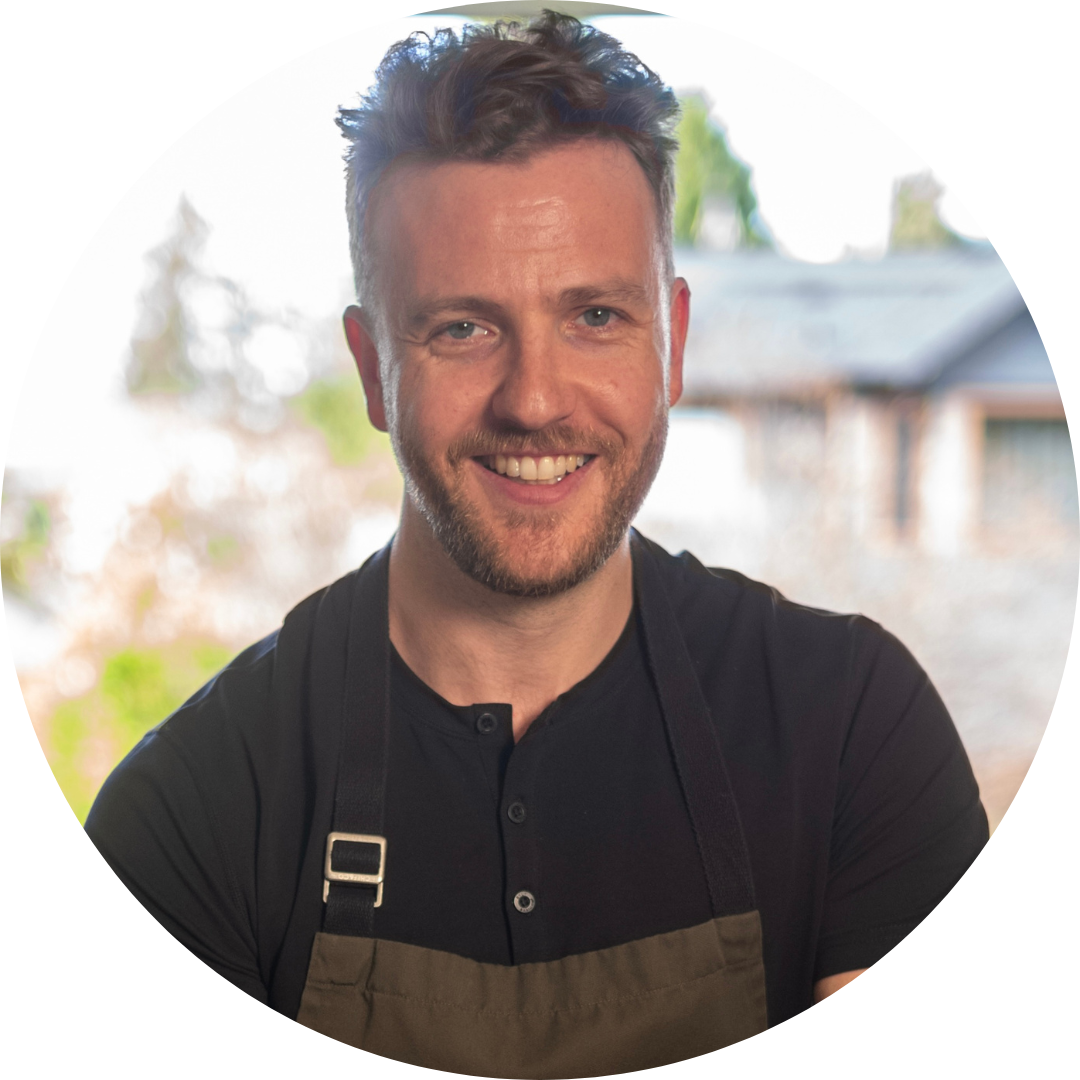
Josh, creator of The Chef Out West, is a rapidly growing content creator with a booming social media presence. In just eight months, he has grown his audience to 325K on Instagram and 512K on Facebook, gaining thousands of new followers daily. He also runs a Substack community of 23K subscribers, built in only five months.
With recent Facebook monetization generating over $10,000 in a single month from views alone, Josh brings valuable insight into high-performing content and audience growth. His platforms reached approximately 50 million views on Facebook, 44 million on Instagram, and 150K on Substack in the past month, making him a compelling voice on content strategy and growth.
Takeaways
- Facebook monetization is accessible with relatively low thresholds.
- View based revenue can scale quickly with consistent posting.
- Posting multiple times daily increases chances of viral reach.
- Repurposing and re editing old content drives new growth.
- Longer videos generate higher earnings per view.
- Consistency matters more than perfection.
Resources Mentioned
Get Megan’s Memoir – Take the Exit – Step inside the story!
Transcript
Click for full script.
EBT795 – Josh Gale
[00:00:00] Megan Porta
You guys, if you have quietly written off Facebook, or maybe not quietly, you might want to rethink this. In this episode, Josh Gale from the Chef Out West shares how he built over half a million Facebook followers in just eight months and generated more than $10,000 in a single month from view based revenue alone.
We talk about what’s actually working on Facebook right now. So many things that feel really easy in today’s landscape. We talk about how to monetize without selling your soul and how to create content that delivers to your audience without burning you out. And spoiler, Facebook is not dead. It is evolving. And the opportunity is absolutely wild right now for food creators. I hope you love this episode as much as I did.
[00:00:46]
Hi, food bloggers. I’m Megan Porta and this is Eat Blog Talk. Your space for support, inspiration, and strategies to grow your blog and your freedom. Whether that’s personal, professional, or financial, you are not alone on this journey.
[00:01:02] Megan Porta
Hello, Josh, how are you today?
[00:01:04] Josh Gale
Hi, Megan. I’m great. How are you?
[00:01:06] Megan Porta
I’m doing good. I’m so excited to chat about this. It has been a while since we’ve chatted about Facebook here on the podcast. I think there is a renewed interest and also just kind of a new spotlight on Facebook. Like, I know a lot of creators who are saying it’s actually working again.
[00:01:23]
For so long it felt like it was not working. So you’re here to share your story with all of that. So thank you for joining us. So to kind of start, why would somebody listening, press play. What pain point are we solving today?
[00:01:39] Josh Gale
See, I think, Megan, that’s a great question. And I think the pain point we’re solving is, you know, how to add a revenue stream to your content creation business using Facebook monetization.
[00:01:50] Megan Porta
Amazing. Well, I think that’s a lot of people. So, yeah, yay. A lot of people are tuning in. And you have a blog. Your blog is The Chef Out West, correct?
[00:01:59] Josh Gale
That’s me. That’s where you can find me.
[00:02:01] Megan Porta
All right, so tell us a little bit about it. When did you start? Just what is your niche? Give us a little bit of a background.
[00:02:07] Josh Gale
Yeah, totally. So, I mean, it feels crazy to say this based on where we are today, but we actually only kind of stepped into full time content creation almost exactly a year ago today. It’s March. Yeah, it’s March 3rd and we pretty much started this March 2nd last year.
[00:02:25] Megan Porta
Oh my goodness.
[00:02:26] Josh Gale
As a full time thing, like, I’ve been a professional chef for about 13 years and for me, Instagram was always a place to kind of like, showcase the food that I was creating in restaurants. And I did, you know, over the years, started to kind of like, build a bit of an audience for that.
[00:02:43]
But the reality is those were, you know, still images. They were, like, very tidy, elevated, kind of like restaurant food. And if you look at my, you know, content and my brand, the Chef Out West today, it looks nothing like that. So I really do feel like we kind of started from scratch 12 months ago, and it’s been quite a journey.
[00:03:01]
But when I look back, yeah, I think we’ve learned a lot, We’ve accomplished a lot. We’ve figured out, you know, really how to succeed in this space or. And have gotten to a place where we can know, help a lot of people who are, you know, either new in the space or trying to add a new revenue stream or just trying to do something a little differently.
[00:03:21] Megan Porta
So you had initially had your Instagram and Facebook accounts for your chef food, right? And then you started the blog a year ago. Okay, perfect. Well, that’s impressive. This is. This makes the story even more compelling. So I’m excited to dig into this. So you started your blog a year ago. You had your Facebook page up and running, but obviously there was a shift from chef curated, polished food to more like real, realistic blogger food.
[00:03:49]
Did you make that change on Facebook and Instagram as well to reflect the more real nature?
[00:03:56] Josh Gale
Yeah, I mean. I mean, I think that’s a great question. I, you know, before my very first reel, before I posted my first reel a year ago, I spent maybe a month just, like, consuming content in the space. You know, I’d swipe around on Instagram and see kind of like what was being done and, you know, how this new space worked, because it was pretty new to me and definitely recognized that everything that I had done just, like, no longer applied, totally didn’t matter.
[00:04:22]
Was not going to get me any audience. So when I finally filmed and edited and was ready to post my first piece, I was like, I’m just going to wipe everything clean. And I archived everything for my Instagram. So I cleaned it up and posted my very first, you know, reel. And again it was.
[00:04:39]
I’m pretty sure it was a tuna salad. It was something super simple. It was, again, not like the restaurant food that I used to do, but I just wanted to. I want. I wanted to try and, like, stay in one lane. And that, for me is kind of like elevated comfort food. And that’s, again, not the food that I was doing in restaurants, but I wanted to be very clear, like, this is me, this is the food that I’m doing.
[00:05:04]
And just kind of have a, you know, have a clear like identity in the space. And I think that was really helpful when I started, so.
[00:05:11] Megan Porta
So it was the same account, but you really kind of wiped things clean and started with this new blogger mentality from kind of from scratch. Okay, so at what point did you start seeing. Cause we’re talking about Facebook. So what, when did you start seeing traction on Facebook? Like, ooh, what I’m doing is working.
[00:05:31] Josh Gale
Yeah, so. So Facebook was interesting. Like, honestly my. A year ago, when I started full time content, my focus was entirely Instagram. I was not aware that Facebook was a thing. I didn’t think about it, I didn’t look at it. I happened to have the Chef out west page that I’d created years ago and supplement to my Instagram and it was just there.
[00:05:52]
And for months and months and months, starting last year, I was just posting to Instagram. You know, for any content creators listening, I’m sure we’re all aware that there’s a, you know, kind of like share to Facebook, cross post to Facebook option. I just happened to have that on. Honestly, I didn’t even think about it.
[00:06:07]
And then in the summer of last year, one of my reels went like very viral. It was a watermelon sorbet. And on Instagram, in a couple of days it did like 30 million views. And so my Instagram was in a great.
[00:06:21] Megan Porta
30 million.
[00:06:21] Josh Gale
That’s crazy. Yeah, yeah, it was a big one and my Instagram was in a good place. And then at the time I started using Meta for business, which is like the kind of back end manager for your Facebook and Instagram. And I was just noticing all of these Facebook notifications going on like, like crazy, to the point that to mute it.
[00:06:41]
And then I was. And then just from like a curiosity place, I was like, what are all of these notifications? And I go on my. Look at, I look at my Facebook, which had had like a hundred followers on it, and overnight it went to a hundred thousand. Whoa, from this one? Yeah, from this one reel.
[00:06:57]
It went crazy on Instagram. It went crazy on Facebook. And you know, I saw that number a hundred thousand, and I was like, okay, I need to, I need to like pay some attention here. Up until that point, Facebook was just a kind of like a net that was catching what I was doing on Instagram.
[00:07:12]
But this really kind of like piqued my curiosity. I was like, hey, is there something here? You know and I started poking around and looking at, you know, what had been happening and realized I was like, I need to, you know, I need to start paying attention here.
[00:07:27] Megan Porta
Data was speaking to you, and you like tuned in.
[00:07:29] Josh Gale
That was when things got interesting. Yeah.
[00:07:33] Megan Porta
Yeah. Okay, well, that. I mean, that is awesome. Congratulations. I love that. I love that you were just kind of doing the yes, I’ll post simultaneously to Facebook, because I think we all do that without giving it much thought. And then all of the notifications. That’s usually a sign, right? When you see all the, like, the chatter, you’re like, what is this all about?
[00:07:51] Josh Gale
Yeah, something’s. Something’s happening.
[00:07:53] Megan Porta
Something is amiss. So you tuned in and realized, holy crap, your Facebook was going wild.
[00:07:59] Josh Gale
So crazy.
[00:08:00] Megan Porta
Where did you go from there?
[00:08:02] Josh Gale
So from there, again, not knowing the platform at all, I was like, I need to learn a bit more about Facebook. So I’m going to go into, you know, matter for business and look at my insights and see if things are, you know, kind of the same as Instagram or if they’re working differently or if there’s a different audience.
[00:08:17]
You know, I think the first thing that I noticed is that my demographic was wildly different, like, complete. And I think most of us anecdotally could probably guess this, but on Instagram, my demo is, like, kind of that millennial, you know, and it’s a bit of a split between men and women leaning a bit more to the female side.
[00:08:37]
And then I look at my demos on Facebook, and they are, you know, 60 years old, 80% female. So, like, very different audience, which was one of the first things that just kind of, you know, caught my attention, and I was like, cool, maybe I’ll try and target my content a little differently.
[00:08:54]
But then things really changed when I started looking at the monetization feature on Instagram, and I was like, oh, weird. I’ve never seen this on Instagram. And I start clicking around, and it’s like, you know, you qualify for the monetization program. Do you want to turn this on?
[00:09:09] Megan Porta
And this is on Facebook, right? The monetization.
[00:09:11] Josh Gale
This is on Facebook. Yeah. And this. And honestly, this was a couple months after that watermelon wheel went crazy. You know, at this point, I was, I think, maybe close to 200,000 followers. And so I realized that I can turn on monetization for Facebook. And my first thought is, oh, crap, I wish I turned this on months ago, because that probably would have been pretty nice.
[00:09:31]
But I turned it on. It took, I think, a couple weeks to kind of get accepted and started into the program. And then I just started checking it daily and realizing that, whoa, I made $100 yesterday. I made $150 yesterday. I made $250, you know, the day before that. And all of a sudden it started really ramping up.
[00:09:49]
And in month one, again, without doing anything differently, just cross posting my content from Instagram to Facebook, we did about $1800. In month two, we did, I think about $4800. Then in month three, we did $10,000. And it was crazy. And I was like, oh, my God, this is so.
[00:10:10] Megan Porta
That’s wild.
[00:10:11] Josh Gale
You know, this. Yeah, this. This starts to change everything. Because for me, for so long in this space, the focus was brand deals. You know, I want to create content that kind of gets the attention of brands. That’s how I’m going to monetize again for creators listening that are doing the same thing.
[00:10:26]
I think we all know that the brand deal game is tricky. You know, I think one of the toughest parts for a lot of us is we, we have to go and sell ourselves, which is very different than just like, creating content and kind of sharing what we love about food. All of a sudden you become like a salesperson and you’re having a, you know, hunt for business and close deals.
[00:10:44]
And it’s, you know, if anything, it’s just a bit of a time distraction. And then I think at other times it’s just. It’s not easy. And so when I realized that I could make, you know, $10,000 a month just by posting my content, I was just like, oh, man, I can. You know, there’s.
[00:11:00]
There’s a different way to kind of approach this as a business. So that, that became really interesting and changed a lot for us.
[00:11:05] Megan Porta
Yeah, that’s so exciting. So I have questions about the monetization. Is there a threshold? Do you have to have a certain number of followers or what are kind of the stats in order to be monetized?
[00:11:16] Josh Gale
When. When I turned it on, the stats were pretty minimal. So what I’ve learned is that they actually opened up the monetization program to a larger audience last year. And previously you had to have quite a few views and quite a big audience. I think by now it’s just a few thousand followers, and you need to, I think, be over like a million views in a month.
[00:11:37]
So I think if you’re, you know, as long as you’re posting consistent content, the metrics are pretty, pretty achievable. Again, anyone listening who’s monetized or looked at the YouTube monetization program. It’s. There’s some, like, pretty big stats that you need to cross. Facebook was a lot easier. It was a lot quicker. Like, from the moment I realized we could turn it on till we started earning our first dollars, was literally a few weeks.
[00:12:06] Megan Porta
So where do you find us in the meta business suite? Where do you find the monetization magic button?
[00:12:13] Josh Gale
You so literally just go into your Facebook app on your page. And again, this is different than my Facebook profile. So I have my name, I have a Josh Gale Facebook profile, and then I have the Chef out West, my business page, and that’s where we cross post all of our content. If I go to the page and look down at the bottom, there’s literally an option where you can kind of pull up your insights and then within that there’s different categories.
[00:12:37]
And if you hit monetization, if you’re not in the program yet, that’s where it will show you the metrics and, yeah, offer you the opportunity to apply.
[00:12:47] Megan Porta
Okay, so, I mean, if you’re listening and you, you don’t know, go there and see. Maybe you’re.
[00:12:52] Josh Gale
Yeah, immediately immediate.
[00:12:54] Megan Porta
Like right now pull over, grab your phone and do that. Okay, so that’s, that’s awesome. So have you changed your strategy? Are you just still posting whatever you’re posting to Instagram, or do you have another strategy you’re using?
[00:13:11] Josh Gale
Yeah, we’ve, I’ve, I’ve definitely. We’ve definitely changed our strategy a lot, to be honest. So on Instagram, my cadence is pretty defined. I’m typically posting five times a week and I take the weekends off. It’s usually like a Monday to Friday, same time, 11am for me. Facebook’s quite different. I’ve recognized. One thing I’ve noticed with Instagram is that you can’t.
[00:13:36]
You can’t post too much. Like posting food content multiple times a day or reposting, you know, if you had a video a month ago that went viral, posting it this month, usually it doesn’t go as far as it used to. I think they’re really trying to clamp down on, like, replicate posting. Facebook’s quite different.
[00:13:53]
And it seems like you can post multiple times a day. There also doesn’t seem to be any rhyme or reason as to what content goes and what content doesn’t. So I’ll have content go viral on Instagram, YouTube and TikTok, and then, you know, perform like, well, but nothing crazy on Facebook. And then I’ll also have the complete opposite.
[00:14:15]
And I have a video right now on Facebook going crazy that I posted yesterday that on all the other platforms is just doing okay. And then on Facebook it is just before we hopped on, I think it was at 3 million by the time 4 or 5. It’s made $400 already and it took me 40 minutes to film.
[00:14:37]
So yeah, it’s, it’s a bit of a different beast. And one thing, Bjork from Food Blogger Pro, he said something really interesting. He said that posting to Facebook today is almost like buying a lottery ticket. Essentially it’s like you’re entering a raffle for a chance to have a video go viral. And a lot of it there, you know, a lot of people aren’t finding there’s again a rhyme or a reason.
[00:15:01]
It’s just that, you know, putting your name in the hat or like kind of playing the game is the best way to find some success. So our strategy right now is essentially posting three times a day, almost every single day and also trying to align that with their bonus program. So this is another thing that we can talk about.
[00:15:18]
But within the monetization program there’s actually these bonus incentives that kind of refresh weekly. So my favorite one is if you have two posts within a six day span that get 650,000 viewers each, there’s a $550 bonus for hitting that and that’s refreshed every six days. There’s another bonus for you know, earning around like $3,500 in a two week span.
[00:15:44]
There’s a $1200 bonus for hitting that. But if you start to roll those up, you’re looking at, you know, 2,500, $3,000 just in bonuses on top of the earnings. Yeah. So there is a bit of like a, almost like gamification to it. So again, anyone who’s close to qualifying or ready to qualify really suggest you go into those monetization, into that tab and just take a look at those bonuses and just try and like play, play that.
[00:16:10]
Like some, there’s some months like December for example, because it’s a big content month as I think a lot of us know around the holidays they have some crazy bonuses like every day they’re just adding and they’re really ramping it up. So in December we really, you know, again trying like gamify the way that we post and we’re posting all of our best content usually three to five times a day, just trying to like, yeah, take off as many of the bonuses as we can.
[00:16:34] Megan Porta
So for the, you Said about three times a day you’re publishing on Facebook. So are you doing all video? Are you doing any static? What kinds of posts are going up
[00:16:46] Josh Gale
Right now we’re back to all video. We were definitely kind of experimenting with photo posts. The crazy thing is you do get paid for just still images on Facebook. I think they’re a lot less likely to go viral. But I mean one thing that was crazy I noticed is that the like RPM or the, the dollars per thousand views that you get paid on a piece of content is actually higher on my photo posts than my videos now.
[00:17:14]
That being said, way less views. But again, I’ve posted photos that still get 50,000 views. I think that paid $54, something like that. I mean, not terrible considering it took me all of 10 seconds to get it posted. And if you look at my, you know, phone library, I have 6,000 photos of food.
[00:17:35]
Like I’ve got the content, it’s already there. So I think there’s a great opportunity for a lot of people just to try out different things. I don’t think it’s a one size fits all. I do think Facebook requires a little, just kind of experimentation, playing around.
[00:17:48] Megan Porta
Yeah.
[00:17:49] Josh Gale
The other thing with Facebook is that like longer form food content can also perform really well. Whereas on ins, you know, Instagram’s all about kind of like dopamine and like really capturing people’s attention quickly. And it’s, you know, just in the 12 months that I’ve been in it, I’ve, I’ve seen that distill tighter and tighter and tighter and it’s, you know, which is communicating to me that the attention span is getting smaller and smaller and smaller.
[00:18:13]
Facebook doesn’t seem to move in that same direction. So something that we’re working on right now is trying to publish just like longer form, more like tutorial style. Hey, cook this with me. You know, do you want to make this delicious, you know, this delicious cheese loaf? Cook it with me. And it’s a three minute video.
[00:18:33]
It’s a lot slower. The reason being if you can get people to watch a three minute video as a 30 second video, the RPM or again the dollars per thousand viewers is just way higher. So again, I think again that speaks to just trying things. I think, you know, on Instagram I feel like it’s a lot more curated and I know for me I want to curate my content and I want to try and only put out stuff that I really like or that I think will really perform.
[00:19:02]
Yeah, on Facebook I feel way freer to just try stuff.
[00:19:06] Megan Porta
Okay.
[00:19:06] Josh Gale
Throw out things. If it doesn’t, if it doesn’t go, I’m probably going to post another video in three hours anyway.
[00:19:12] Megan Porta
Okay.
[00:19:12] Josh Gale
You know, so it feels like a lot more experimental.
[00:19:16] Megan Porta
Yeah. Experimentation, it sounds like. I have a few questions. So are you. Did you turn off the auto publish from Instagram to Facebook? So you’re just going onto Facebook and publishing from there?
[00:19:28] Josh Gale
I’m doing both. Okay. So yeah, I can get really granular here. But one thing about Facebook on the monetization is if you use music in your reel that isn’t royalty free and your video goes viral and makes $500, 75% of that $500 will get paid to whoever owns the music. So that’s a huge thing to look out for when posting to Facebook is that if you are, you know, prioritizing for monetization, you can pretty much only use royalty free or no music.
[00:20:01]
Any music that has licensing or copyright, you typically pay 50 to 80% of that to the copyright holder of the music. So my Instagram, I still like using fun Music. And so yesterday again, this video that’s going viral right now is a great example. I posted one copy of it to Instagram with Fun Music.
[00:20:21]
I turned off cross posting just for that one video and then posted it one minute later locally on Facebook with a royalty free, kind of similar version of the same music. I wanted the same kind of feel for the video but with royalty free music. So to answer your question, it’s like a 50 50.
[00:20:38] Megan Porta
Okay.
[00:20:38] Josh Gale
Sometimes if the music’s royalty free on Instagram anyway, I’ll do the cross post and then other times I’ll kind of split it off. I mean, one thing I’ve experimented with as well is just posting both. So I’ll cross post the Instagram version over to Facebook and then post a second version. I’ll use a slightly different caption and use royalty free music.
[00:20:59]
And I’ve had quite a few instances where both videos have like done over a million views.
[00:21:06] Megan Porta
Oh my goodness. Okay.
[00:21:10] Sponsor
Food bloggers. Hey, if you have been dreaming of publishing your very own cookbook, now is the time to make it happen with Lulu. Here is the deal. At Lulu, over 6,300 cookbooks were published in 2024, and a staggering 36,000 plusbooks sold the same year. That could be your recipes shared with food lovers around the world.
With Lulu, you can publish and sell your cookbook directly from your website, keeping your audience close while maximizing your revenue. Thousands of creators have turned their cookbook ideas into successful Income generating revenue streams. With Lulu’s powerful tools and support, this could be your story too. Start reaching your audience in a new way, adding an extra stream of revenue to your business and seeing your cookbook in the hands of your raving fans.Take control of your cookbook dreams and diversify today.
Head to lulu.com and learn how to get started. Your recipes deserve the spotlight they were made for. Again, go to lulu.com to get started today.
[00:22:20] Megan Porta
Okay, well, that’s good intel. And then have you noticed any consistent themes across the board for your content specifically? So like, um, these types of videos do well or this category does well? I know it will probably vary from account to account, but I’m just curious for yours, what’s been consistent?
[00:22:39] Josh Gale
Yeah, I think that’s a great question because I think for all creators, being able to identify and then really build in those little niche departments is key. And so again, for me, it’s totally specific to my content, but something that I’ve been doing since, you know, month two that’s performed really well for me on my feed has been like high protein desserts, specifically high protein cheesecakes.
[00:23:02]
I posted. Yeah. One of my first viral videos was like a high protein chocolate cheesecake. It went crazy. This was at a time when I was like just desperate to see a video get into the millions. Like, I just wanted to, I wanted to know that I was figuring out the space because I was new to it.
[00:23:17]
And so this one video did like 10 million views. And I was like, I’m going to do every flavor.
[00:23:22] Megan Porta
Yes, right.
[00:23:23] Josh Gale
That I can possibly. Yeah, possibly imagine. And they’ve all done extremely well. You know, there’s probably 12 of them. And so I was like, perfect. I’ll just like, you know, obviously people want high protein cheesecake. It’s not, it wasn’t that. It was chocolate specifically. So I’ll do every different flavor. I did another thing with a little like potato waffle in a mini potato or in a mini waffle press posted that it did like 45 million views.
[00:23:51]
And I was just like, okay, I’m gonna do as many different versions of a potato waffle for breakfast. You know, I’m going to do with a fried egg. I’ll do this one with scrambled eggs and chili crisp. Add an avocado to this one. So it’s all about that. I think something that I’ve really recognized and I see this in other creators is it like it’s, it’s hard for us to figure out what’s going to go.
[00:24:11]
Like sometimes we’ll create a piece of content that we absolutely love. We can spend all this time editing it, find the perfect music. We’re so excited. We hit post and it just doesn’t go anywhere. And then, you know, a couple weeks later, something that you don’t even think twice about goes crazy. And so I think for us creators, it’s all about figuring out what the audience wants and just, you know, staying in that lane and just kind of like re skinning it, re spinning it, doing something similar.
[00:24:36]
So again, for me, it’s high protein desserts. Anything to do, anything with a tortilla, anything with an egg. And I just try and do those on repeat.
[00:24:44] Megan Porta
So you recommend to people listening? First of all, check the monetization situation. Second, just tune, it sounds like, just tune into the data, what is working and then follow that as deeply as you can into the forest of whatever high protein cheesecake. I mean, you cannot get more niche than that. That’s so awesome.
[00:25:05]
But yeah, like, what else besides that? I mean, it sounds so simple. What else do we need to know?
[00:25:12] Josh Gale
Yeah, I mean, honestly, it sounds simple. Yes. I mean, being able, you know, posting content three times a day, I think when you start, like build that out, that’s like, well, you need a lot of content to be able to post three times daily. And so one of the things that I’ve really recognized is now that we’re a year into it, you know, I’ve filmed maybe 200 recipe videos.
[00:25:34]
And so at first I was like, hey, I’m just going to keep, I’ll just keep doing this. Like I figured out how to film videos. I’ll just keep filming new stuff. And then I don’t know if it was a thought that I had. I think I was listening to someone on a podcast talk about it, but I was like, man, I’ve got so much footage that I’ve already captured.
[00:25:51]
What if I were to just go back and start figuring out ways to like re edit that? What if I just took the same footage and told a slightly different story or just like switched up the order or the voiceover? Yeah. And I’ve started to really play with that. And it’s, it’s been not only working well, but it’s also just helping with my overall workload.
[00:26:10]
You know, I’ve already done the work. I know every creator listening can probably, you know, empathize and connect with this. It’s like filming new content every single day is tough. You know, we all have busy lives. There’s all things that we want to do besides setting up lights, cameras, filming, cleaning, editing, etc.
[00:26:26]
And so I think one of the big wins that we’ve had has been this, you know, kind of decision to go back in the catalog and just start to like, re edit and then reshare videos that we already loved. And some of it will be those videos that I mentioned earlier where it’s like, I filmed something that I loved.
[00:26:42]
I edit it maybe a little too long. I posted it, it didn’t go anywhere. This was six months ago. So I’m like, I’m gonna go back to that piece of content with like a different set of eyes, do a different edit and just post it and see what happens. And I’ve had some huge success with videos that have been sitting in my, you know, like, library for six months.
[00:27:02]
They never performed the first time. And then I was like, I’ll just try and repost it. And so the thing that I love about Facebook, again, as we kind of just spoke to, is it feels like a way less pressurized kind of playground to just try things, you know, on Instagram, I don’t get as experimental.
[00:27:18]
I’m always trying to curate a little bit, and that might just be a me thing, but I guarantee there’s a lot of people listening who probably feel the same. You know, Instagram feels a little more like pressurized.
[00:27:28] Megan Porta
Yeah.
[00:27:28] Josh Gale
Whereas Facebook just, it’s a free for all. Like everything just feels like it kind of comes and goes. So it just feels so much easier to try new stuff. And whether that be try a longer form video that I’ve never done before, something I’m really working on on is trying to speak to camera more and do a lot more cooking videos where it’s just me talking to the audience, where we’re like kind of making something together and trying to move a bit away from that, like, really aesthetic style that I’ve done for a while or just try and recut old content.
[00:27:56]
So I think one of the things I love about Facebook is it gives me the place to try new things, experiment. And if something performs or like, does really well on Facebook, then I’ll take that to Instagram and be like, oh, cool. Like, this worked for a big audience. It’s proven itself. I’ll try it here.
[00:28:12] Megan Porta
Is there a length of video that you don’t go past on Facebook? Could you reuse some of your YouTube content if people create long form for you?
[00:28:20] Josh Gale
Yes. Yeah. So that’s a great, great question. I actually just had a friend ask me about that for like, something very long form, 30 minutes. Right now, there’s no time limit on Facebook. Yeah. And again, if you’re monetized, they Facebook pays just more and more for the time watched. So for me, most of my content’s around the like 28 second mark.
[00:28:41]
And I notice a massive difference on a video that’s if I have a 19 second video, do a million views versus like a 28 second video, do a million views, that 28 second video will pay like almost more than double. And so if you can, you know, get that kind of viewership on a 1 minute, a 2 minute, a 5 minute, a 10 minute, you know, you’re all of a sudden into the thousands of dollars.
[00:29:04]
So I think for anyone listening that has some long form content that’s proven itself, and whether that be on YouTube or another platform, Facebook is a phenomenal place to test that.
[00:29:14] Megan Porta
And would you have to. You couldn’t just link from YouTube, you would have to upload it independently to Facebook. Correct?
[00:29:21] Josh Gale
Okay, yeah, correct. So, yeah, just take that same piece of content. I do think right now Facebook’s vertical only. So if it were like a horizontal YouTube, you would have to probably like crop it in your editing software and then repost locally on Facebook. But that would again, if it’s performed on YouTube, there’s a high likelihood that it would do something similar on Facebook.
[00:29:41] Megan Porta
Oh my gosh, this is life changing. Okay. I have so many thoughts rolling around in my head. I was gonna ask you one other thing. What was that? Oh, do you have any tricks as far as I don’t know what they call them? Like comment. Not comments, but caption. Description. As far, like if you publish a one minute video on lemon cheesecake, what do you write about it?
[00:30:11] Josh Gale
Yeah, so I think that’s a great question. And to be honest, there’s still a lot of different ways that I approach it. And if you look at my content, you’ll typically see the comment for recipe. So one of the things that I am always focused on is trying to move people to our website and also give people a recipe that they can actually like hold in their hands or save to their phone or print.
[00:30:35]
And so we’re typically opening up our caption with a description of the dish, you know, lemon cheesecake. Comment. Lemon. And I’ll send the recipe right to your DMs. And then usually I’ll go on from there and I’ll just add something that to be honest, just sounds like conversational. Like, you know, I’ve made this lemon cheesecake five times.
[00:30:52]
Every single time it’s been a total hit. This is why it’s super easy to make. You don’t need a stand mixer. You don’t need any crazy ingredients. You got to give this one a try. I find that just something simple and honest works really well. I think the caption can be, like, a really good space to bring people into your experience.
[00:31:12]
And so saying that, like, I made this last week for my friends, and there wasn’t a slice left behind. You know, I’ve made this 10 times, and it’s my favorite recipe because it’s so easy and I don’t need any crazy equipment. I think it’s just a place, again, like, another place to connect.
[00:31:29]
And, you know, I’d kind of mentioned earlier that, to be honest, I still struggle a bit with that in my, like, actual content in my video. If you’ve seen any of my content, a lot of it is just, like, very aesthetic. It’s food coming together. If I’m in it, I’m in it for a second.
[00:31:44]
Like, eating a piece of food and being like, this is good. And so I’m still. I’m still trying to learn to bridge that gap a bit in my visual content. But I find the caption is a great place to, again, connect with my audience, tell a little bit of a story, tell somebody honestly why I like something.
[00:32:02]
And I think the. At least my audience, they connect with that.
[00:32:06] Megan Porta
Okay. Yeah. And it sounds like just experimenting, too, because it might be different how you communicate depending on the account. So just put something out there. Be real. I assume that’s part of it, too. Not polished and perfect, but real and you. And authentic, right?
[00:32:23] Josh Gale
Yeah. And also, like, not AI. Like, no, you know, no. No bs. I just. I think it’s so easy to write a quick three or four sentences. Like, one thing I’ve actually been doing is using, like, a dictate to my phone app. So rather than even typing it, I can just say. Say it the way that I would say it to a friend or to you, Megan, and just keep it, like, light, conversational, and not just, like, not worried about being, like, super polished or sounding mechanical or like a robot.
[00:32:51] Megan Porta
Yeah. Okay.
[00:32:53] Josh Gale
Yeah.
[00:32:54] Megan Porta
What else do we need to know if we. Okay, so me, I have had a Facebook account for forever, since I started my blog 15 years ago, and it’s been just on autopilot. I have somebody else kind of doing, you know, regular things there. I haven’t looked at it personally in literally years.
[00:33:15]
It’s kind of embarrassing to say that. So if other people are like me listening who they have an account, it’s technically active, but they haven’t given it attention. What else do I need to know? Getting back into it?
[00:33:30] Josh Gale
I mean, I would say a give it that bit of attention, you know, go check it out, take a look. Is your, you know, is your headshot clean, clear and up to date? Is your like, bio description clean, clear and up to date? I think one of the big things when it comes to bio is it’s just like a very quick elevator pitch about why somebody should check you out.
[00:33:50]
So like offering that value, you know, hey, I’m Megan Porta and I help you create delicious food at home. Make sure you follow for me, follow me for more. Check out all my recipes here. Just something inviting that, you know, kind of gives, gives the audience a reason to follow along and pay attention.
[00:34:07]
Aside from that, I would say just start posting. I think the biggest thing that Facebook and Instagram and most platforms are looking for is that consistency. I think if you show up one week, post two videos, disappear for a little bit, come back a week later, post a video, disappear, you can have phenomenal content.
[00:34:27]
It’s not going to perform. Everything that we’ve learned about the algorithms on all platforms is that you almost need, you need to prove yourself essentially to the algorithm before it’s going to go and like shop your content out to a larger and larger audience. So to me, the biggest and best thing that you can do with your content is to firstly, just be consistent, you know, and I think that outweighs phenomenal content by, by 2 to 1.
[00:34:53]
Like, you can make great content, but if you’re not going to share it consistently, it’ll never go anywhere. You can make, you know, decent, authentic content, but be, you know, unapologetically consistent about it. I’m going to post seven days a week, 11am on the dot, consistently. If you go to Facebook and do that for a month, I guarantee you you will start to see bigger and bigger numbers.
[00:35:14]
You will start to see that monetization number roll up and that’s where you can start to really, you know, push the gas and try new things.
[00:35:22] Megan Porta
One last question. I think the hang up I have for this is replying to comments because once you start giving it more attention, you start getting a lot of comments. So do I need to be in there commenting on all the comments?
[00:35:36] Josh Gale
I. So I’ll be perfectly honest with you no. Like again, when I started this, there’s so much talk about, like, these are 10 things you need to do before and after you post, go and interact with five big, you know, accounts. Post your video, spend 45 minutes commenting. None of that’s true.
[00:35:53] Megan Porta
Okay.
[00:35:53] Josh Gale
You know, and I, admittedly, for months, I fell into that trap. When I first started, I felt, you know, almost like, desperate to get my content performing. So I was like, okay, I’m gonna do every little thing. I want to make sure that if I have good content, I’m not missing a reply that then punishes my performance.
[00:36:11]
None of that’s true. You know, and now I don’t have to think about that. I post consistently. My views are strong. I don’t worry about, you know, I don’t worry about commenting for the sake of commenting or satisfying an algorithm or anything like that. I do reply to comments, again from that place of, like, wanting to connect with my audience.
[00:36:33]
So if people are asking good questions, insightful questions, if somebody says something that makes me realize, like, oh, I didn’t explain that in either the video or the recipe, a hundred percent, I want to reply with that. But I’m never going into my comment section replying with people, replying to people just because I think it’s going to help my answer.
[00:36:52] Megan Porta
Yeah, that’s perfect answer. Okay. Oh, Josh, thank you. I am so pumped. I am. I am doing this. I’m super excited. I’ve heard people chatter about it, but nothing is compelling as this. So I appreciate you sharing all of this. Is there any last thing we need to know that we’ve forgotten to mention before we start saying goodbye?
[00:37:16] Josh Gale
I mean, the one. One thing I’d want to end on, like, I. It’s crazy that this has, like, stood out in my mind for me so much in this kind of, like, you know, content journey that I’ve been on. But I heard a quote early, early days, and it was just post the content.
[00:37:33]
It was three words. It was post the content. And when I was starting in this space, that was really, like, confronting to me, a little bit, like, challenging to me. I was really. I was just like, oh, my God, I want it to be good. I don’t want anybody to think I don’t know what I’m doing.
[00:37:48]
You know, what. What are people gonna think? So I was just like, I was stuck in this little space of, like, unless it’s, you know, 90% or above, I can’t post it. Like, it’s got to hit that threshold for me. And then once I started posting and getting a little more comfortable, I realized how true that kind of, like, idea was.
[00:38:06]
And that phrase was a post the content and that connects so much with what I was sharing about that consistency. You know, I’ve had videos that I’ve spent hours, hours on, like, editing, because I just thought it was. It was gonna, you know, this would tell this perfect story. It would look so good.
[00:38:21]
It would go with the music. And then I share it, and it goes nowhere. And it’s like all that time was essentially for naught. That watermelon video, Megan, that I mentioned, that was my first, like, huge viral video. 30 million views. It sat in my drafts for three months. I filmed it.
[00:38:37] Megan Porta
Wow.
[00:38:38] Josh Gale
I filmed it quickly. I ate it. It was tasty. But when I looked at the footage, I was just like, I don’t. I don’t know. I don’t like it. I’m not, like, proud of it. It doesn’t feel something to me. And it just sat there and it sat there and then there was that voice in my head.
[00:38:49]
Post the content. I wanted to be more consistent. And I was like, I’m going to clear out my drafts. I’m going to post all the footage that I’ve, you know, started to edit it that I haven’t done anything with. And then two days later, I was like, what is happening?
[00:39:02] Megan Porta
This is crazy awesome.
[00:39:04] Josh Gale
And, Megan, I. So many people have told me the same thing. Like, I can count so many times that other creators have told me that some of their biggest videos were ones that they filmed in 30 minutes, edited in 20, and didn’t even think about. So I know the story resonates with a lot of people.
[00:39:20]
I’m sure there’s definitely some listeners on this call or on this podcast right now that have had the same thing happen. But just post the content. Don’t overthink it. If you’ve done the hard work of, like, showing up, thinking of the recipe, and filming it, do the easy part and just hit post.
[00:39:37] Megan Porta
Okay, done. I sold. Thank you for the encouragement. I. This is one of my favorite episodes I’ve recorded in a long time. Thank you so much for this. I feel so inspired. We will put together a show notes page for you, Josh. If anyone wants to go peek at those, you can head to eatblogtalk.com/thechefoutwest so obviously that’s your blog.
[00:39:59]
And is that your handle on all the platforms?
[00:40:03] Josh Gale
Yes. The Chef Out West is where you can find me everywhere on all platforms. Thechefoutwest.com is my website. All of my recipes are up there for free right now. You can actually download one of our ebooks for free as well if you check out the site. So go and take a look and send me a comment or reply and let me know what you think of the recipe, especially if it works out for you.
[00:40:22] Megan Porta
Thank you so much. This was amazing. And thank you for listening food bloggers. I will see you next time.
[00:40:28] Outro
Thank you so much for listening to this episode of Eat Blog Talk. Don’t forget to rate and review Eat Blog Talk on your favorite podcast player. See you next time.
Are you a passionate food blogger craving the perfect recipe for accountability, focus and connection? Click here to learn about the Inner Circle!
✍️ Reach out to connect with Heather Eberle, a copywriter for food bloggers. As much as you enjoy your business, maybe writing or marketing isn’t your cup of tea. Maybe you’d rather spend more time in the kitchen and less time on your laptop. Heather is here to clear your plate! Let Heather help you share your content with the world.