Monetization Strategies for Food Bloggers
Anja Eckert of Our Gabled Home shares how food bloggers can build on-camera confidence, post consistently, and grow a YouTube channel past 170,000 subscribers.
Listen on the player in this post or on Apple Podcasts, Spotify, YouTube or your favorite podcast player. Or scroll down to read a full transcript.
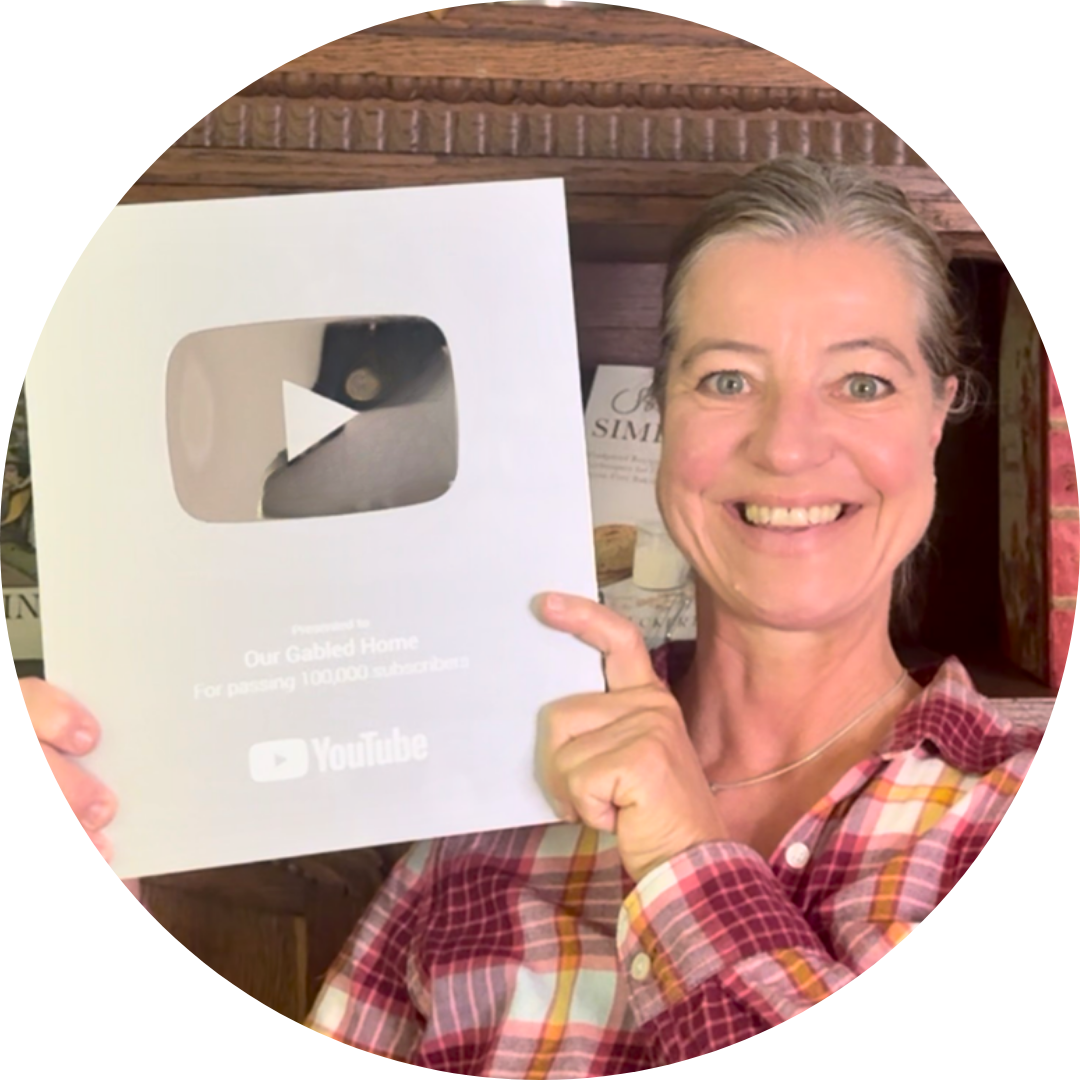
Anja Eckert is the founder of Our Gabled Home, where she teaches heritage sourdough baking and traditional German cooking to a YouTube audience of over 171,000 subscribers. After years of learning to be herself on camera, she loves talking candidly with other bloggers about doing the same.
Takeaways
- AI can write blog content, but it can’t replicate a real, human presence on video — that authenticity is what sets creators apart.
- Confidence on camera is a skill built through repetition, not something you’re born with.
- Ask friends and family what they genuinely like about you — it reveals on-camera strengths you’re too self-critical to notice yourself.
- All you need to start is a smartphone; a good microphone matters far more than fancy lighting or an expensive camera.
- Imperfections like a messy kitchen, background noise, or a flubbed take make videos more relatable, not less professional.
- Posting one long-form video per week, consistently, builds algorithm trust and audience habit better than sporadic bursts.
- Long-form video tends to outperform Shorts for monetization and sustained watch time.
- Treat negative comments as engagement rather than personal attacks — they can boost a video’s reach.
- Balance data-driven content decisions with videos made purely because you enjoy them; audiences can feel the difference.
- Reframe underperforming videos as learning experiences, not failures, and use YouTube’s analytics to figure out what to try next.
Resources
Book a 90 min 1:1 personalized Youtube strategy session with Anja!
Transcript
Click for full script.
EBT818 – Anja Eckert
Intro 00:00
Food bloggers. Hi, how are you today? Thank you so much for tuning in to the Eat Blog Talk podcast. This is the place for food bloggers to get information and inspiration to accelerate your blog’s growth, and ultimately help you to achieve your freedom. Whether that’s financial, personal, or professional. I’m Megan Porta. I have been a food blogger for 13 years, so I understand how isolating food blogging can be. I’m on a mission to motivate, inspire, and most importantly, let each and every food blogger, including you, know that you are heard and supported.
[00:01] Megan Porta
Hello, Anja. Welcome to the podcast. How are you? It’s been so long since I’ve chatted with you. I’m so excited to chat today. I’m having some technical issues, so if you join us on YouTube, you can see Anja, but you won’t be able to see me.
[00:07] Anja Eckert
I know. Lots of questions! No, I’m good. I can’t see you, but I’m excited to be here. Thank you for inviting me back.
[00:29] Megan Porta
I’m having some technical issues today, so I am not present visually, but you can hear me obviously. But yes, you were on the podcast, what, a couple — was it three years ago, two years ago?
[00:42] Anja Eckert
It must have been three years ago, even more than that. Yeah. Thank you.
[00:45] Megan Porta
Yeah, it’s been a while since you’ve been here, so welcome back. Today we are going to talk about YouTube, which I’m super excited about because you are my resident expert. I love your YouTube channel — you’ve just so impressed me with your YouTube growth and knowledge. So excited to dive into this with you. But why don’t you tell everyone a little bit about yourself and your blog and your business, Anja?
[01:04] Anja Eckert
Yeah, yep. So I started blogging Our Gabled Home in — what did I start, August? Oh my gosh — it’s going to be eight years now, August 2018. And I didn’t know what I was doing. I totally did it on the side as a hobby, and there were some life circumstances where I then jumped all in. But in the meantime, I was following another blogger who also had a YouTube channel, and for some reason she mentioned that we should be on YouTube. So I started YouTube in January of 2019. And yeah, you can go look at my first videos if you doubt anything I’m saying today — this is really reverse psychology at work. It’s like, don’t look at my first videos because they’re so bad, and then everybody goes and looks at my first videos. But I’m not going to delete them, even though on a personal level I’m slightly embarrassed about how bad they are. But on some other level, I’m not gonna delete any videos — I have never deleted a video, let me put it this way. And since then, I have grown this channel to over 170,000 subscribers.
[01:57] Megan Porta
Yes, exactly. Okay, yeah, I think that’s good advice. Amazing.
[02:26] Anja Eckert
And yeah, I know what it’s like for a lot of people to make that jump to video, but I’m here to encourage everybody and to give you some practical steps about how you can make that jump if you would like to do that.
[02:42] Megan Porta
Yes. And I think this is becoming more and more relevant, right? Because we are seeing the increased need to diversify not just traffic, but all the platforms. So what a relevant topic. So, to start — why do you think it’s a struggle for food bloggers to make the leap to video?
[03:05] Anja Eckert
Well, I have that too, you know — it’s just really nice to sit at your desk, at your computer, and type away and do something. You can be in your pajamas, no makeup, hair undone, and nobody can see you. You can do a thousand edits to your blog post, and whenever you feel ready, you hit publish. But it’s not instant. I mean, you’re obviously going to share your content, but there’s no direct link, and then showing up live on video — I mean, you can still edit it, but that’s a whole different ball game. And a lot of us are hyper self-conscious around showing up on video, so it can be a struggle for somebody who isn’t used to that.
[03:50] Megan Porta
For sure. And do you feel like — it sounds like kind of a confidence issue, and if you’re just overthinking it and anticipating it, it makes it so much harder to do, because I think the real struggle is just getting past that first step, taking the leap basically. And then once you’re past that, it just becomes so much easier. Do you agree with that?
[04:09] Anja Eckert
Yeah, I do — it does become easier. It’s like a muscle that you train, and experience only comes from experience. There’s no way around your first videos. I mean, everybody — even somebody with a million subscribers or five million subscribers — they still have their first videos. Maybe they’ve deleted them; like I said, I’ve never deleted any. We’ve all started at the same place. Now it’s really easy for anybody who’s thinking about getting started to compare themselves to somebody like me, or somebody who has even more subscribers, and think, “Oh my gosh, they’ve got it so together, they have all this camera confidence.” But none of us really started there — we all started at the same starting point.
[04:19] Megan Porta
Right.
[04:55] Megan Porta
Yeah. So how do you recommend people start gaining that confidence to show up on video, if they’ve just been thinking about this for years and they’re like, “I just can’t do it”?
[05:09] Anja Eckert
Yeah, I wonder if we also want to quickly — because this will probably enhance the conversation — talk about why now is the time to make that jump, and why it’s so beneficial for anybody’s brand to be on YouTube. I have a few notes; let me check them so I don’t miss anything I wanted to say. And that is: AI can write any blog post, and even if you guarantee people, “This is all human-written, this is all me and my voice,” you can put an image of yourself on your website and nobody knows who’s actually written it. You can have ghostwriters, you can have other authors publishing on your site — it doesn’t have to be you. When you show up on video, you are you, you’re real, and you’re right there. AI is not at a point where it can fake that. You can upload a photograph of yourself and a voice sample and create an AI video of yourself — it’s freaky how that works — but there’s something called the uncanny valley. If you watch one of those videos for about two minutes, you’ll realize they’re very repetitive; there’s nothing like what I’m just doing right now. AI will never come up with that — that’s you, in the moment. And after a while, you can feel it.
[05:20] Megan Porta
Yeah, absolutely — we want to hear it all.
[06:38] Anja Eckert
That is something that I can’t fake. And also, if you’re publishing videos — recipe videos — you can link back to your blog, so that’s extra clicks coming from YouTube. It also, in Google’s eyes, rounds out your presence online. For example, if you say, “I made this apple cake,” right — yes, you can say that all day long, but if you’re showing it on video, Google knows exactly what you’re doing in your video, what you’re saying in your video. AI can now actually see the images, and you have that E-E-A-T — that you actually made the apple cake — and it strengthens your whole entity authority, which is a thing. You can show up in Google search with little thumbnails, and it also helps with your knowledge panel, or knowledge graph, with Google. And then brands are often looking — I mean, we’re talking about YouTube, but this also goes for Instagram Reels — brands are often looking for creators who have videos up, for sponsorships or brand deals. So that’s another benefit for sure.
[07:36] Megan Porta
Yes — many great reasons to get into it. I think now is definitely the time, right, Anja? If you’ve been sitting on this for a while and you’re like, “Maybe I should, I kind of want to” — I think there’s no better time than now.
[07:51] Anja Eckert
Right, right. And Google — I mean, YouTube is the second biggest search engine — and if somebody’s looking for a recipe, they often go to YouTube to look for it. But also, people just watch content and watch other people cook and never make the recipe. I think it’s relaxing — watching other people cook, seeing the onions sizzling in the skillet.
[08:08] Megan Porta
Right, yeah, it’s entertainment for a lot of people too. So that’s a good point — some people have different reasons for watching YouTube videos. You’re kind of hitting all of those: the entertainment, the ASMR, the sizzling food. But also there are people who want to actually go learn, and watch and cook along with you.
[08:36] Anja Eckert
Yeah. And if you have a blog post and you’re describing a certain technique — how to roll something, how to fold something — you can extract a little short out of your long-form video and put that on your website: here’s the technique. And I’m sorry if you hear anything, but my dog has something in her nose and she’s sneezing so hard she’s banging her head on the floor — I hope it’s not coming through. But yeah, you can actually have that bundle that’s a little hard to explain in words and so much easier to just show in a 50-second video. You can put that on your website and people can click on it — that actually helps with your ad revenue, and it helps with all sorts of things.
[08:53] Megan Porta
That’s okay, that’s funny, it’s fine.
[09:15] Megan Porta
Yes. And then, real quick — I know this is a little off-topic, but I just saw that YouTube is stretching its monetization threshold. So I think you should get on it now before that happens in 2027, I believe — is that correct?
[09:34] Anja Eckert
Yeah, I’m only loosely following it, because obviously it’s not relevant to me anymore, but I know they’re making constant changes. And I would always say, there’s no perfect day — if you’re waiting for the perfect day, you’ll be there in 30 years and have never recorded a video. So I would just say, jump in — just jump in, don’t overthink it. The more you think about it, the less you’re going to be able to do it, because then your mind comes up with all the reasons why that may not be a good idea, and you talk yourself out of it. There’s a YouTube education channel, and one of their taglines is just, “Press record.” Literally, just press record.
[09:59] Megan Porta
Yes, I so agree.
[10:13] Megan Porta
And the first videos are probably going to be terrible, like you said. Eventually you’re going to look back and go, “Oh my gosh,” but you’ll also say, “Good job for hitting record, because now I’m here and I’ve made all of this progress.” So how do people get to that stage where they can confidently — or maybe not confidently — just press record, if they’re feeling like they’re not worthy, or they’re not ready, or they’re not perfect enough, or whatever?
[10:45] Anja Eckert
Yeah, so one of the first things I recommend is for anyone to go to their family and friends and ask, “Hey, what are my strengths? What are my talents? What do you like about me?” It can be something about the way you look, your hair, a certain way you do things, a certain way you talk — you never know. Because in reality, we’re so acutely aware of our own flaws — “I don’t look pretty enough,” or “I’m too this on camera,” or “I don’t like the sound of my voice,” or what have you. We have 500 things that we don’t like about ourselves, but we barely notice the things that are good about ourselves. So if we go on camera thinking about, “Is my hair okay, am I this, am I that,” then we become really self-conscious, and that doesn’t do well on video either. If, however, you go in knowing, “They actually said they like it when I slow down my speech,” or whatever — you’ll be surprised what your family and friends tell you. It’s also a nice ego boost to hear what they like about you. So write that down, drill it into your head — think about all the positive things about you that people notice, because you want to maximize on those and not even think twice about the things you don’t like about yourself. And also, we see ourselves so much more critically than other people do, because we look at ourselves in the mirror all the time.
[11:46] Megan Porta
Yeah, absolutely — I love that.
[12:03] Anja Eckert
And another thing is, these days all you really need is a smartphone — iPhone 15 or whatever, and up, and all the other phones — their cameras are so good that you don’t need a specific camera. So don’t let tech hold you back. Take your iPhone and just start recording a few videos. Make it super low-stakes — don’t even think, “This has to be my first YouTube video.” Just record some videos. Maybe say to a friend, “Hey, I’m going to record a video about how I make this recipe, and then give me your feedback” — what worked well, and let them give you positive feedback: “I liked when you did this, and I liked when you did that. And maybe, if you did that instead of this, you could do something else.” So you learn from it, and you focus on upgrading versus, “Oh my gosh, I was talking too fast,” because when all that negative self-talk comes in, that’s usually when it doesn’t look great on video — and then you also hate it, instead of just enjoying it. Another thing too — it sounds really mundane — but before recording, and I know what that’s like because I have, I don’t know what the count is, 100 or 500 videos on YouTube, do some light exercise before you start recording, because it enhances your blood flow. It actually enhances your thinking and relaxes you a little bit. It gives you endorphins, and it gives you a nice glow on your face. I’m not talking marathon — just a brisk walk around the block or something — and do some deep breathing, because if we’re not breathing, nothing happens; we can’t think. And then all of a sudden we can’t remember what we’re doing, which recipe we’re recording.
[13:48] Megan Porta
Woof, yeah — I’ve been there, yep.
[13:57] Anja Eckert
But let me tell you, I have videos where I’m super anxious before I start recording, and then I have some where I just start recording, no problem. But I’m telling you, after hundreds of videos, I still get nervous — it’s part of the process. It’s mostly when I have a more complicated, involved recipe that I want to record, and I know exactly — if something goes wrong, and I’ve had stuff go wrong, trust me, every mistake out there — then I know, okay, if this doesn’t work, I’m going to have to run back out, get all the ingredients, and do it all over again. So the stakes are high, and I do have times when I’m super anxious and procrastinating around it. I just want to tell you all that’s totally normal — most creators still have that, maybe not every single time, but we all have it. So that’s normal.
[14:56] Anja Eckert
And the other thing too — I’ve heard this from a lot of people, like, “I hate seeing myself,” and they try to hide. When you’re editing, you are seeing yourself, right? And try to develop a compassionate relationship with yourself when you edit, because you’ll be like, “I look too fat in this frame,” or “my shirt wasn’t right,” or whatever. And you can edit some of that out, but I would also say leave a lot of that in, because it makes you relatable, it makes you real, it makes you human — and people love that about other people.
[15:29] Megan Porta
Yes, I love all of that — the realness, the humanity. Like you said earlier, that’s something AI can’t replicate, right?
[15:34] Anja Eckert
Right — no, no, AI is going to be perfect. I mean, yes, sometimes you have six fingers, but for the most part, AI is too perfect. And I’ve had so many videos where my makeup was smudged, or my hair was sticking out in weird places, or something wasn’t right — I mean, with animals, my dogs are barking, or my cats are jumping into the frame. It actually makes you human, and I think humans, as we still are, crave humanness in others. It makes you relatable, because you’re not trying to do a Hollywood production — you’re trying to just show a recipe, and the more real you can show up. And if you make mistakes — I mean, I’ve had berries jump out of my bowl, and I’m like, “Oops, okay, there’s a real kitchen, right?” And if you’re relaxed, it also relaxes people — it makes it pleasant for them to watch you, because if you’re tense, they’re also not.
[16:35] Anja Eckert
So the more you can do to practice. And then one thing too — I’m actually practicing this right now — I’m sitting at my computer, I see myself down below, but I’m looking into the camera right here. And it’s so tempting to always want to look at the screen while you’re recording, to see where you are, versus actually looking into the lens. The more you can look into the lens, the better it will be. In the beginning, you can imagine your best friend sitting on the other side of the lens — so you’re talking to your best friend, conversational, friendly, relaxed. “Here’s how you make that cake — first you do this,” and sometimes, if the batter doesn’t come out right, you can add some more flour or whatever. Just imagine you’re talking to a good friend — which can be hard, because there’s no feedback, there’s just the piece of technology, that camera you’re looking at.
[17:30] Megan Porta
Right — yeah, put a picture of your best friend on the other side of your camera.
[17:52] Anja Eckert
Yeah. And for example, the iPhone has a little light over here, but you see yourself in the middle, so you’d have to look over to one side to look at the light so that you’re actually looking into the camera — which can also be tricky when you see yourself this big, and you’re looking over there all the time. It takes a little bit of practice. But what I’m trying to say is, you only get the practice if you put the practice in.
[18:03] Megan Porta
Yeah, I mean, right there — that’s everything. You’ve got to just put in the repetition. Get started and do that. Anything else about that piece of it before we move on? I want to ask you some more strategy about YouTube, but anything about getting to the point where you’re recording, confidence, perfectionism, anything along those lines?
[18:25] Anja Eckert
Yeah, the perfectionism piece — I mean, we can talk about that at any point, but I feel like perfection isn’t the goal. I actually chuckle at myself when I see myself in my own videos and something’s not right, or perfect. And don’t worry — there’s also this whole piece about, “What if I get bad comments?” And if you show up authentic — maybe I’ve been lucky, but I haven’t had any real hate comments on YouTube. People have complained about this or that, and of course they will — but even if they complain, it’s good for the algorithm, because it’s engagement. So sometimes when people say something about what I did or didn’t do, or how I sounded, I mean, people have bad days and they spread their bad mood on YouTube, on your video. Sometimes I’m just chuckling — sometimes I don’t comment if it’s really bad and I don’t want it to sit on my channel, I delete it. Otherwise, I’ve also had people chime in — other viewers having a whole conversation back and forth in my comments — and I just sit back and let them do it. There’s nothing I need to do other than read it and be amused.
[19:41] Megan Porta
Yes, I’ve seen that too.
[19:47] Megan Porta
I know, isn’t that funny when that happens? I love that, that’s funny. I’ve started getting a little bit — I don’t want to say sassy, but I used to either delete or let those comments go. But lately I’m like, this isn’t firing me up, but I’m going to respond. The other day someone said on YouTube — this was a ground beef video, so, you know, not the most exciting topic in the world — but they were like, “Get on with it already, enough about the ground beef.” And I was like, “Okay, buddy.” I just said something like, “Why don’t you just click away then?” And then he wrote back and said something else, and I’m like, “Good, he’s engaging.” Like — cut yourself off, I don’t understand — and I was like, “Well, why don’t you make a video about ground beef then?” or something like that. And I was like, yeah, I’m just — I don’t even care anymore. It doesn’t bother me. If you want to start a conversation about my lengthy video, fine, I’ll engage you a little bit. But yeah, I mean, do what feels right, right?
[20:34] Anja Eckert
Yeah, it’s all engagement.
[20:56] Anja Eckert
Yeah, if you’ve listened this far to the episode, or watched it, you know that I can talk and talk and talk. I have one video where the video is like eight months long, and I could have made it more concise and precise. This is why I have notes today, so that I can stay on topic. But I am pretty chatty and pretty wordy in that video, and it’s one of my earlier ones that actually does really well on YouTube. And somebody commented, like, “What a huge waste of time this was.” And the irony is, what would seem like a bigger waste of time is your comment, because — I don’t know if I deleted it in the end — but I’ve also had this criticism: “You chat too much, you’re not on-point enough,” like what you just said, Megan, right? And I’ve decided that I’m not going to try to be more precise and shorten myself, because then I’ll become self-conscious, and I’ll think about what I’m going to say and how it goes, and then I’m losing my authenticity and my personality. And if somebody doesn’t like me, there’s a gazillion other YouTube channels out there that can teach them in maybe 20 seconds about ground beef, where they can go. There’s no need — they don’t need to watch your videos. So that’s what I think: hey, there’s plenty of offerings out there, you don’t need to dwell on my channel.
[22:21] Megan Porta
Yeah, exactly my point — like, go find another channel, or create one yourself if you want the ground beef channel that’s succinct or whatever. So yeah, do what feels right. I think if it makes you feel crappy, don’t do it. But if something makes you feel liberated, or you’re good with it — like I didn’t mind replying and engaging with that person — then do it. I think that’s kind of the point.
[22:46] Anja Eckert
Yeah, yeah — and long-form video is not supposed to be super precise, it is supposed to be long. In the editing process, I will oftentimes cut something out where I’m like, “Okay, this is super repetitive, nobody needs to see me chop onions for three minutes.”
[23:03] Megan Porta
Yeah, but that’s your discretion — that’s something you get to decide, not other people. Okay, well, do you have some kind of strategy to share with us, as far as — maybe someone has an account but they’ve just left it dormant for a while and they want to get back, reinvigorate it — what are some more strategic ways to get started? Do you publish once a week? Do you have anything about what to publish, how to figure out what to publish? What tips do you have for us?
[23:41] Anja Eckert
Yeah, so first — before I answer that — I wanted to quickly say: literally get started with a smartphone. If you don’t have a camera, don’t worry about that piece of equipment. There are some cheaper cameras that may be worth the investment once you have the budget for it, or you’re really ready to go all in. I would say my lighting in my new place is very dark — I’m light-challenged now, and I constantly struggle with that, but it doesn’t stop me from doing it. But good audio is really important. So if you’re going to invest in any piece of equipment, I would say get a good microphone, because people will forgive you for bad lighting and bad video, but they will not forgive you for bad audio — if they can’t hear you, they’re going to click out of the video. So that’s where a good microphone matters — and there’s a ton of good choices, they get smaller and smaller. I have a little wireless DJI mic that I really like. It’s something I need to make sure is charged all the time, and it’s not under my clothes. And that’s another thing — make sure the audio is good. And you can also do some throwaway videos, like I said in the beginning — record some, don’t plan on posting, just to get some practice in front of the camera. Also, saying things like — back in the day I used to say, “Hey, I’m Anja of Our Gabled Home, and blah, blah, blah, blah” — you’ll have to say that a few times before it really rolls off your tongue. Otherwise you’ll have to look at your notes. But talking about notes — yes, it’s good to have some notes, a little bit of a loose script. You don’t necessarily need to follow it, but if you’re making a recipe and you know what the recipe is, obviously you have your layout there and you know what you’re going to do next. But let’s say it’s more of a talking-head video or instructional video, not necessarily a recipe — then it’s good to have some notes, so you don’t have to keep it all in your head, like, “Oh my gosh, what was next?” You can look at your notes. I do have a teleprompter — I don’t think it’s necessary at all in the beginning. You can just have it on a piece of paper, give yourself some time before you look over, then look back and start talking, because otherwise — ask me how I know, from when my teleprompter wasn’t working and I had to record something. You can also do Instagram Reels or YouTube Shorts, so it doesn’t have to be — I think YouTube changed it so Shorts can be up to three minutes long now, or anything under three minutes; everything over that is considered long-form and horizontal. It doesn’t have to be eight minutes long — but once you’re monetized, you get the mid-roll ad if it’s more than eight minutes. But I wouldn’t worry about that in the beginning.
[26:24] Anja Eckert
Okay, let’s see — back to your questions now. Of course I forgot them, and I thought I’d be able to remember them.
[26:39] Megan Porta
Yeah, that’s okay, no, it’s fine. So that’s all great, I love all of that, thank you. So if somebody has a few years of content on their blog and a YouTube channel that’s just kind of sitting there — where do they start? Do they start with their most popular blog content and produce those recipes, or what’s a good strategy there?
[27:02] Anja Eckert
I think it’s a bit of a mix. I think to get started, you should do something that you enjoy, that maybe you make often, so you don’t have to think about the recipe steps — it’s almost second nature, you can cook or bake this in your sleep — because you don’t want that piece to be something you’re thinking about when you’re also trying something new on camera. And then you can think about, okay, what’s my most popular blog post, what’s my revenue driver, and how can I enhance that? Maybe you just want to create a video about one recipe step, like I said earlier — how to score the bread, how to fold something, a more specific technique — and just do a short little one. And while I think “hands and pans” videos, where you basically only see the hands and the pans, are great, I think people love it when you show up on camera. And I have yet to meet a person where I’m like, “Oh my gosh, I really don’t enjoy watching that person,” if they have a nice presence. If you’re happy with yourself, people will watch you, and it doesn’t matter — I mean, we all have this, “I’m not pretty enough, I’m not skinny enough, I’m not young enough, I’m not smart enough,” whatever — we all have this not-enoughness. But there’s something beautiful about every person, just know that. We’re all beautiful on the inside, and if you can let that shine, then people will want to watch — you’re going to be a magnet, because people are attracted to that sort of confidence. And that takes maybe a little bit of intention — maybe it comes easier to some people than others — but I guarantee you, the really pretty, skinny people out there, where you think they’ve got it all together, they have the same nerves and the same insecurities that everybody else does. So that’s always my biggest thing.
[28:50] Megan Porta
Yeah — I love that. So show up on camera if you can, if you feel that boost of confidence. And then, like you said, start with something you really enjoy making, so that comes through — it’s like, “She’s really enjoying herself.” And I think that’s a good place to start, and from there it might unfold naturally — like, “I should make this one next because it’s a sauce that goes on this,” or whatever. It’ll kind of lead you to your other content.
[29:20] Anja Eckert
Right — and that’s a little bit off-topic, but that’s a little bit my business philosophy. You can make your decisions based on metrics and revenue and say, “Okay, I’m going to make this video because it’s probably going to do well,” or you say, “I’m going to do this video because I really enjoy the recipe — this was my grandma’s recipe, and we always ate it every summer.” And already you’re engaging the viewer, because that passion will spill over. And I like to do a blend of both — I like to do videos that I don’t necessarily assume are going to go viral, but I actually enjoy making them, and I think my audience can feel that. But then I will also make videos — I mean, why wouldn’t I, I’m running a business — where I know, okay, this is probably going to go viral, this is going to do really well. But after a while it might get a little repetitive, or it’s not really the pivoting I want to do. And also — this is more YouTube strategy in the long run — you may start out with one thing, but then the data tells you, “My viewers like this, but they don’t like that content so much.” Then the question is, how much do I pivot, how much do I serve my audience versus posting what I like? But that’s blogging, pretty much — it’s the same, you follow the metrics. But do you post a recipe just because you enjoy it and feel like it has a place there? Yeah, of course.
[30:50] Megan Porta
Yeah, no, I love that advice. And then, as far as posting frequency — what’s the current recommendation right now? Is it once a week, more than that, less than that?
[31:01] Anja Eckert
I think once a week is good — consistency is good. The way I see it, I think in the beginning I wasn’t quite so rhythmical — I tried to do one a week, but I was tempted by the idea of two a week, and then I quickly realized I couldn’t do it, I would burn out. So I have pretty much religiously posted once a week — through knee surgeries, major life events, travels, sicknesses, whatever — I’ve always posted something. Sometimes I’ve posted something just to post something, but I have always posted one video a week. And I think that kind of accountability is really good, because nobody’s going to say your channel is going to break if you start posting once a week, and if you have something really major and you really can’t do it, nothing’s going to happen — your channel is not going to disappear. But if you want to treat it like a business, you need to treat it like a business, or if you want it to be a business and make money with it, you need to treat it like a business. So that’s why I have my own accountability — I have a regular posting date, and I absolutely freak out if I don’t make my posting date, even though nothing’s going to happen. Nobody has ever knocked on my door and said, “Hey, I always thought you posted on that day, where’s your video?” Nobody has ever said that. So that’s just me.
[32:25] Megan Porta
Now, are you talking long-form specifically, or does that mean short-form too? So if you post a short, does that count as your one a week?
[32:41] Anja Eckert
No, that’s a bonus. When I say one a week, it’s typically long-form, and then shorts are on top of that. Sometimes I cut something out of a long-form video. I personally think shorts are a lot harder to monetize — you need a lot more watch hours with shorts, and yes, they can get a lot of views in the beginning, but oftentimes it feels like a lot. But I’ve had some shorts that are staying consistent and steady, and still driving views. But I think long-form is really where it’s at. You can still cut something short out of it, but I recommend one long-form video a week as a good signal to the algorithm.
[33:26] Megan Porta
Yes, absolutely — and Google sees that too. Google definitely picks up on that consistency as well. Google sees all. What other tips do you have, just as far as ins and outs, little nuggets you’ve learned that might be helpful to everyone listening? Anything at all you can think of?
[33:29] Anja Eckert
Yes, Google sees everything.
[33:46] Anja Eckert
Yeah, so don’t worry about how you show up — just show up as comfortable as you can. I have a video where I showed up in my pajamas, something about the evening, but everybody at some point is in their pajamas, so it makes you really relatable. And don’t overthink it — I mean, obviously I try to put on some makeup and do something with my hair that I think looks good on video, and I do have one side of my face that I like better than the other, so I work the angles — I don’t think anybody notices but me. And also, don’t worry about your kitchen being all spick-and-span and spotless — you’re not shooting for a magazine, you’re doing a real video in a real kitchen. And I think people actually like it even better if there are some dirty dishes in the sink than if everything is perfectly clean, because then they’re like, “Wow, I could never make a recipe like this and have my kitchen look this clean and organized.” So the small imperfections are actually where people exhale and think, “Yeah, okay, she’s one of us.” And also, really don’t compare your first videos to somebody else’s 500th video, because it’s just not realistic — everybody started exactly where you’re going to start. The best advice I can give you is just press record — it’s not my saying, but the consistency helps too, because of course I have that negotiation in my head, like, “Do I actually have enough for a video? Maybe I should also do this,” and then I’m going to have to — this whole negotiation. But if you set yourself a goal and a deadline, you’ll have to figure it out somehow — just like we are today, right? We could have totally rescheduled this recording for Megan to show up on video, but you decided we’re just going to go ahead with it. So stuff happens. And also, don’t be discouraged if in the beginning your videos are not performing well. It’s a funny thing with the algorithm — people always think there’s an algorithm that does things, but the algorithm really is your viewers. YouTube will not find viewers for you — it will serve appropriate videos to certain viewers, and the more the algorithm learns about you, the better it can serve. I probably started all over the place, which — I don’t know, maybe that stunted my growth a little bit in the beginning, because I could be further along — but I’m also further along than some other people, so it’s all relative. There’s so much advice out there that you obviously can’t take as general advice, and certainly not in a 40-minute podcast — but I’ll have something to say about that later, before we finish. Don’t let underperforming videos stop you. If I have a video that’s gone viral, I’m thinking about my next video to record, and it’s really easy to sit there and look at all the views. And it’s the same with videos that don’t do well — like, okay, this one video didn’t do as well as I was hoping, and onto the next. You just have to do that, because otherwise you get so sidetracked with the metrics.
[37:20] Megan Porta
Oh my gosh — I mean, with all platforms, right? It’s so easy to get so obsessed with the metrics, so I love that piece of advice too. Well, thank you, Anja. I know you have words of wisdom to share — is there anything else YouTube-specific that we’ve missed before we start saying goodbye?
[37:39] Anja Eckert
I don’t think so — I think we’ve hit it all, at least on the surface level.
[37:43] Megan Porta
Good, yeah. I know, as much as we can in 40 minutes. But I think this gives people real encouragement to get started, and even if they’ve gotten started, just to keep going and push through, because sometimes it can feel like such a long game, right? So just keep moving forward — don’t get caught up in the metrics, keep being you. All of the good stuff that Anja said in this episode, I absolutely love all of it. Thank you. Okay, you have words of wisdom to share with us — what are they?
[38:15] Anja Eckert
There are no failures, only learning experiences.
[38:21] Megan Porta
Ooh, okay, I need to write that — tattoo it on my forehead, perhaps. I love that, it’s so simple. I love what you said earlier too, just about how if a video doesn’t do well, okay, move on — it’s data, and move forward.
[38:38] Anja Eckert
Yeah, exactly. I used to say that about sourdough, too — there’s no mistakes, only learning experiences. If something turns out not the way you wanted it to, it’s more like, okay, what’s the lesson here, what’s the teaching? Not dwelling on, “It didn’t work, oh my gosh, it’s not performing,” but actually, okay, why didn’t it? YouTube gives you so much data and so many metrics in the analytics in YouTube Studio — it can be overwhelming, but sometimes it’s interesting to go back and, now you can even go to AI and say, “Why do you think this video didn’t perform as well as maybe other videos?” But see if you can learn something from it, rather than dwelling on the fact that it didn’t do well, or you made a mistake, or you perceived it as a failure.
[39:23] Megan Porta
Yeah, and you touched on something too — the data in YouTube is unreal, it’s probably the best as far as analyzing and providing metrics of any platform I’ve known. The data is so cool if you really want to dig into it. All right, Anja, thank you. Now tell everyone where they can find you, and where they can see your amazing YouTube channel. Give us all the goodies.
[39:48] Anja Eckert
Yeah, so I’m at Our Gabled Home dot com, and Our Gabled Home is also where I’m on YouTube and all the other socials. And I wanted to offer something for the listeners of this podcast — if somebody is really serious about it and would like a one-on-one YouTube strategy session, I have a limited amount of availability, but I’d like to offer that for somebody who wants to really talk with me about their specific situation, their fears, or goals, or whatever — we can focus specifically on one person, and then I’ll help you work through all of that.
[40:29] Megan Porta
And how do they get a hold of you for that — just find you through your website?
[40:34] Anja Eckert
You’ll put a link in the show notes, I think that’s the easiest way to do it. Yeah, of course.
[40:37] Megan Porta
Okay, perfect, we can do that. Amazing. Well, thank you, Anja, for your time and your value and knowledge — we appreciate you so much. Thank you for joining us, and thank you for listening, food bloggers. I’ll see you next time.
[40:48] Anja Eckert
Yeah, thank you for having me. Thank you.
Are you a passionate food blogger craving the perfect recipe for accountability, focus and connection? Click here to learn about the Inner Circle!