Monetization Strategies for Food Bloggers
Cliff Ravenscraft returns to share his framework for turning insights into real action — desired outcomes, urgency, and calendared next steps.
Listen on the player in this post or on Apple Podcasts, Spotify, YouTube or your favorite podcast player. Or scroll down to read a full transcript.
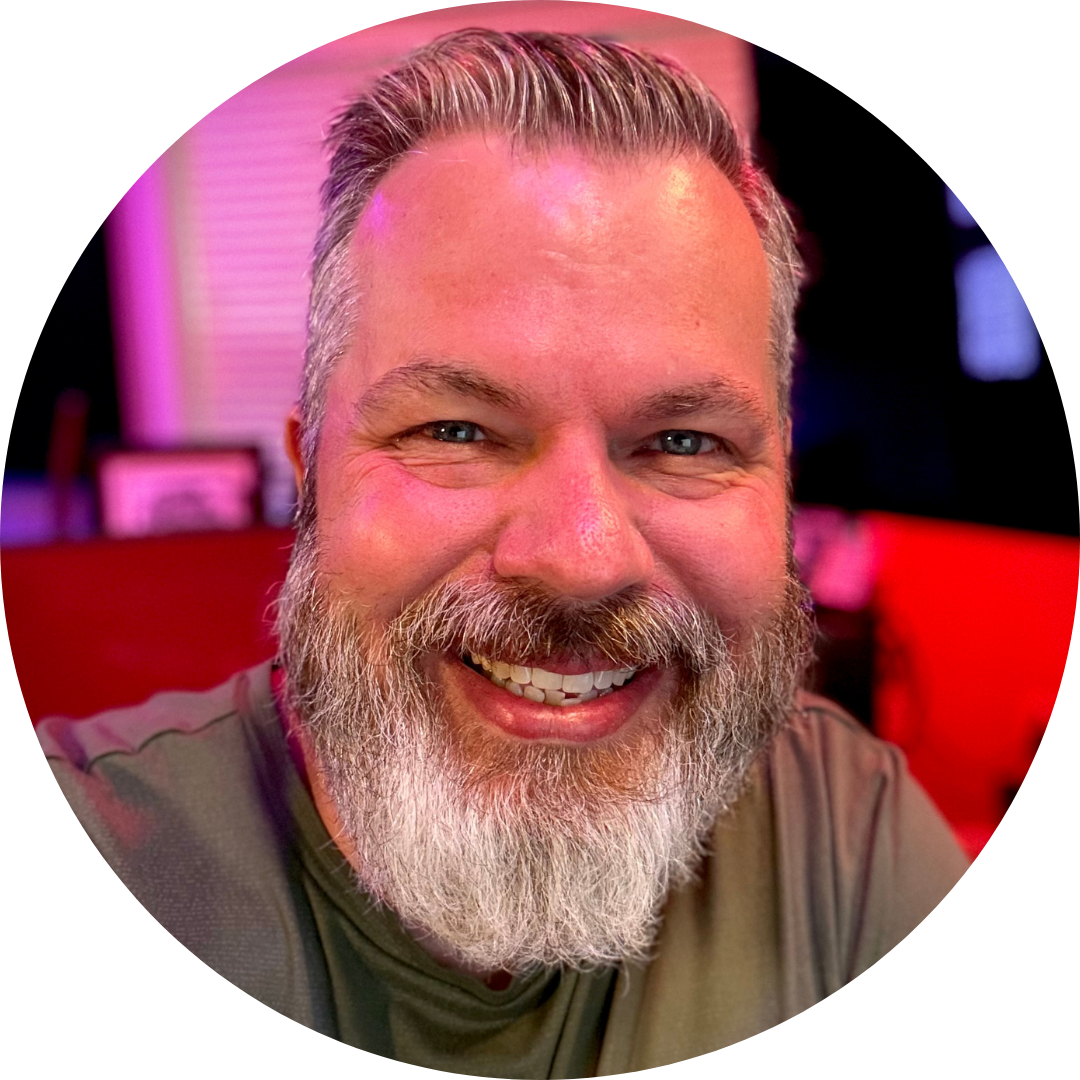
Cliff Ravenscraft is a Master Business Strategy and Mindset Coach who helps entrepreneurs gain clarity, make better decisions, and build meaningful momentum. Since becoming self-employed in 2008, he has coached business owners, leaders, and creators through major personal and professional transitions. Previously known as a leading authority on podcasting, Cliff has helped more than 40,000 people launch podcasts and build platforms around their ideas. Today, his work focuses on the mindset, identity, and strategic decisions that allow people to create the life and business they truly want.
Takeaways
- Insight alone isn’t progress.
- Get clear on your actual desired outcome before chasing a tactic.
- Ask “why is this important right now?”
- The real next step is often smaller than the original goal.
- Outside perspective breaks blind spots.
- Turn clarity into a specific calendared action.
- Reporting back drives accountability.
- You only need to know the next step, not the whole roadmap.
- Plans fail for lack of counsel.
- Consistency builds trust in yourself.
Resources Mentioned
Cliff’s Next Level Mastermind: Momentum
Transcript
Click for full script.
EBT814 – Cliff Ravenscraft
Intro 00:00
Food bloggers. Hi, how are you today? Thank you so much for tuning in to the Eat Blog Talk podcast. This is the place for food bloggers to get information and inspiration to accelerate your blog’s growth, and ultimately help you to achieve your freedom. Whether that’s financial, personal, or professional. I’m Megan Porta. I have been a food blogger for 13 years, so I understand how isolating food blogging can be. I’m on a mission to motivate, inspire, and most importantly, let each and every food blogger, including you, know that you are heard and supported.
[00:00] Megan Porta
Hello Cliff, welcome back to the podcast. It’s so great to have you back. How are you?
[00:06] Cliff Ravenscraft
I am doing so incredibly well. And I know you’re expecting — I’ve never been better, it gets better every single minute of the day. I am so excited to be on your show as a repeat guest. That’s always an honor. So thank you.
[00:11] Megan Porta
Yes. The standard answer.
[00:23] Megan Porta
Yes, it’s always so great to talk to you. I always gain so many insights, which is kind of what our topic is about today — getting those insights. But before we get into that, tell everyone who you are and what you do. Give us the rundown on Cliff.
[00:37] Cliff Ravenscraft
Let me see how fast I can actually say this. So, a lot of people know me through my days as an online business owner, where I started podcasting as a hobby in 2005, turned it into a full-time career, became known as the Podcast Answer Man, and taught over 40,000 people how to successfully launch a podcast in the world. I myself have had over 55 of my own podcast shows with over 5,000 podcast episodes. And let’s see — eight and a half years ago I transitioned away from podcast coaching and consulting into entrepreneurial mindset and business strategy coaching, mainly through facilitating mastermind groups.
[01:22] Megan Porta
Wow, I can’t believe you condensed that into like a minute. That was amazing. That gives us the rundown.
[01:28] Cliff Ravenscraft
We’ve got so much important stuff to talk about. I can’t be talking about me this whole time.
[01:32] Megan Porta
Exactly. Well, that’s Cliff in a nutshell. Okay, well, let’s get to the topic — I’m so excited to talk about this. So you have started a new group, which is a little bit different than the typical mastermind, which I love, and we’re gonna get to that. But you, Cliff, have taught so many people, coached so many people over the years, and I’m sure you’ve seen so many people get those insights but haven’t actually done anything with them or taken action. Why do you think that is?
[02:04] Cliff Ravenscraft
Well, the one thing that I’ve noticed year after year is — because I’ve been facilitating weekly mastermind groups since October 2010 — I tend to attract a large audience of high achievers. And these high achievers are devoted to unceasing personal and professional development. And, by the way, I happen to be one of those. I’m a high achiever, and I’m also obsessed with personal and professional development. I study somewhere between one to three hours a day, every day, to learn new things. I like new breakthroughs and insights, and quite frankly, I probably have a little bit of an addiction to gaining new insights. I also love to journal about them and reflect on how those insights and breakthroughs could help me understand some of my blind spots and the patterns of behavior that have held me back.
And I can find myself — and this is something I see in a lot of people I’ve worked with over the years — getting so excited about a breakthrough or an insight or some new clarity that just came about from a conversation I’ve had, and I will reflect and journal about it. I will integrate it like nobody’s business. Yet oftentimes I feel like, wow, I’ve done so much, because number one, I took the time to study, I took the time to have the conversation, I took the time to reflect, I’ve taken time to organize an entire new system for how it’s all going to be implemented — and all this other stuff. But then when I’m finished with all of that, I didn’t actually take any meaningful action toward having it become a new part of the operating system of my day or my week or my routine. It never really showed up as a calendared action on my weekly calendar with any sort of protected time. Instead, this is all in my personal, professional me-time, feeling like I’ve done something so profound when in reality it did very little to move the needle forward.
Now, don’t get me wrong — as a coach, I see that stuff show up in conversations. An insight will come up and I can share it like nobody’s business with a client, and I can facilitate breakthroughs and insights, and I can feed other people’s addiction to gaining insights and reflecting and having breakthroughs and feeling like that’s so productive. But it’s really not productive if it’s not committed to some sort of calendared action that’s helping you reach a desired outcome. So that, for me, is where I feel like most people are stuck. They actually have lots of breakthroughs, they get lots of clarity, they are involved in growing personally and professionally — but after they’ve journaled and reflected and all that other stuff, they feel like, wow, that was so valuable. But it didn’t really move the needle forward.
[05:23] Megan Porta
Yeah, I can relate to that — feeling like internally so many things have happened, but then outwardly, have I actually done anything with those insights? So how do we get to the point where we turn insights into actual action?
[05:39] Cliff Ravenscraft
Well, I think there’s a strategy that I have. So I created — for this new mastermind group, it’s called Next Level Mastermind Momentum — and the name of the group is based upon a new methodology that I walk everyone through. The first thing is: for your insights, breakthroughs, or newfound clarity to be valuable at all, you have to go back to some foundational questions.
The first one is: what is your desired outcome? Megan, you’d be surprised how many people come to a hot seat or a coaching session with me and say, “Hey Cliff, I just finished this online course,” or “I just read this book,” or “I just went to this conference and sat in on this session, and now I want to implement this tactic in my business.” And I’m like, okay, question for you: what do you hope this will help you achieve that you’re not currently experiencing in your personal and/or professional life? Basically, that’s another fancy way of asking what your desired outcome is if you actually implement this. And the number of times I just hear crickets — “Well, I haven’t really thought about that. It just seems like this is the trend, this is what everybody’s doing, and so that’s why I want to do it.” I’m like, well, okay, that’s wonderful — let’s see if there’s some sort of valid reason for you to devote the time, effort, and energy. Because the last time you and I chatted, I recall you saying you’re stretched on time, you feel overwhelmed with too many things on your to-do list. So this seems like it’s going to add more requirement for you to commit. So my question is: can we sit down and have some dialogue about — actually, what do you hope this will achieve? How will you know it’s successful? Let’s say three months from now, or three years from now — if you succeed in implementing this, how will your life be different? Explain that to me.
And eventually we get to some clarity about what the desired outcome is, and I’m like, okay, great. Now my next question — and this is another one many people don’t have the answer for — why is this important to you, this desired outcome, right now? Not why is it important that someday you achieve it, but why is it important that right now this gets your attention, your focus, your consciousness — a portion of it every single day, or at least a couple of days a week, for the next several weeks. Why is it essential right now that you pursue this? Or why now?
Most people don’t have the answer to the question “why.” But oftentimes they’ll come up with answers that sound really good, like “this is why I should want it.” And then I press them even further — I say, why now? Why this week? Why are we having this conversation today? And it’s fun to see how many people don’t have any real tie to the urgency of this action or this outcome.
When you don’t know what your outcome is, and it’s not urgent — I can assure you this: if it’s something you don’t already know how to do, and you didn’t just jump in and do it, it’s usually something new, which comes with a lot of discomfort, and you’re going to encounter obstacles. I don’t know about you, Megan, but every time I do something new, I don’t know what I don’t know. And there’s usually a hurdle to jump over, or an obstacle to get around, or some fog or confusion about what the next step is. And when there are so many other demands, other commitments on my calendar — not to mention the things that show up in life outside of business — it’s easy to put things off. And if you don’t know what this is going to achieve for you, and if you don’t know why it’s essential that this gets done now and not delayed — in other words, what’s at risk if you put it off — if you don’t have that clarity, you won’t have the fuel to get you beyond the obstacles, to overcome the hurdles.
So those are the first two questions: what is your desired outcome, and why is this essential right now? And then the third question is: what’s standing in the way? What decision are you facing? And getting that clarity —
[11:24] Megan Porta
Mm-hmm.
[11:25] Cliff Ravenscraft
— once you figure out, okay, this is where I’m stuck, you sometimes just have to say it out loud. And as somebody else hears it — whether it’s your coach, a fellow member of the mastermind, or some friend of yours, some sort of peer group that understands this life you’re living as a business owner — oftentimes they’re able to see things from a different perspective, sometimes one you’re not able to see on your own.
Often somebody comes to me and says, “Okay, I want to achieve this, this is what’s standing in my way, and as far as I know I either have to do A or I have to do B, and I need help deciding which one to pursue.” And by the way, A is not a desirable option, and B is not a desirable option either. So — which of these is the least undesirable option should I pursue? — and through a mastermind group experience or a coaching session, the person who isn’t limited by being inside the bottle can read the label from the outside of the bottle. It’s like, what about option C, D, E, F, and the infinite number of other options available? “Well, what are you talking about? Have you ever thought about this?” And it’s like, oh my gosh — immediately something unlocks, and there’s clarity, there’s an insight, there’s a breakthrough, just because all three questions have been answered.
And next it’s like, wow, okay, now I have clarity, I have a breakthrough, I have an insight. And then the question becomes: what do you know now that you need to do next that you didn’t know before? Instantly the person says, “Well, I know the next aligned action for me is — fill in the blank.” And then the next question is simply: where on your calendar is that going to go?
[12:29] Megan Porta
Hmm.
[12:30] Cliff Ravenscraft
And that’s how you take insight and put it into action and get momentum. You can’t stop with the action — or with the insight, the clarity — and go journal about it for two or three hours and then feel like you’ve made progress. No, you haven’t made progress until you take that insight, turn it into clarity about the next step, and then commit that next step to the calendar. And then there’s something even beyond that. But that’s how we turn these insights into momentum.
[13:01] Megan Porta
Can we go back to the first two questions and kind of work through it? Because as you were talking, I was like, I don’t know how I would answer that. What are some ways people answer it that lead to where you want them to go, I guess?
[13:18] Cliff Ravenscraft
Well, my question for you is: is there some example you want to share from your own life? ‘Cause if we talk about hypotheticals, it can get a little wishy-washy. So my question for you is: is there something currently that you want to have as an experience of your life that’s not currently an experience of your life?
[13:25] Megan Porta
Yeah. Sure. Mm-hmm.
[13:39] Megan Porta
So speaking of work — I guess this is something a lot of my listeners can relate to — is just something related to the blog. Maybe it’s… would you take like a task related to blogging, or maybe it’s like the whole business? Okay, okay.
[13:54] Cliff Ravenscraft
It’s any desired outcome. There is no limit to what it is. So the first question is simply this: what is your desired outcome? What is some outcome you would like to achieve?
[14:07] Megan Porta
So this isn’t for me, but a lot of people want to get monetized through an ad network. I think that’s a huge desired outcome for a lot of food bloggers.
[14:18] Cliff Ravenscraft
Okay. And so that is very often the answer I get to “what’s your desired outcome.” But actually, what that is, is a tactic toward a desired outcome. This is where this kind of conversation comes in. Oftentimes when I ask somebody a question, they’ll present, let’s just say, a problem or the desired outcome — but it’s usually never that thing. So the question I would then ask is: why is having an ad network relationship, sponsorship, or whatever — why is that important to you? What would you experience that you wouldn’t have without it? So I need to know what the desired outcome is. I know you want an ad sponsor, but what’s underneath it? What is the why behind this?
[15:08] Megan Porta
Mm-hmm. Yeah, I think — speaking for the collective, I think a lot of people would say time freedom. They want to be at home, maybe with kids, they want schedule freedom, flexibility, maybe to allow a spouse or partner to stop corporate work. Those are some of the things I can think of.
[15:34] Cliff Ravenscraft
Okay. So the next question I would ask — and this still ties into the first two questions, what is the desired outcome and why is this important right now — is: I would want even more clarity. How much income do you want, from how many sponsors or ad networks? What does the income need to be?
[15:51] Megan Porta
Okay. Yeah.
[15:54] Megan Porta
Sure, let’s say six figures — I’ll throw that out. A six-figure income.
[16:01] Cliff Ravenscraft
So that’s a hundred and twenty thousand dollars a year, ten thousand dollars a month.
[16:05] Megan Porta
Sure. Yeah.
[16:06] Cliff Ravenscraft
Okay. And is this the only form of income, or are you attempting to keep other streams of income coming in outside of the ad network as well?
[16:17] Megan Porta
I think that’s usually step one for a lot of people. So at first it would be the only income.
[16:24] Cliff Ravenscraft
Okay. Will there later be competition for your attention, time, energy, and your calendar allotment? Would there be other income strategies at some point down the road? If so, how long before those would need your attention?
[16:46] Megan Porta
Okay, I would say immediately or soon after getting into an ad network — then yes, the attention would be divided, more projects would come into our radar.
[16:58] Cliff Ravenscraft
Okay, so is it safe to say your desired outcome is that you get into an ad network that will consistently produce ten thousand dollars a month in ad revenue? Would you be willing to put off any other income opportunities until that’s achieved?
[17:22] Megan Porta
Yes.
[17:23] Cliff Ravenscraft
All right, and what’s at risk if you don’t achieve ten thousand dollars a month?
[17:32] Megan Porta
Energy would be split into pursuing other things, or finding a job outside of entrepreneurship.
[17:41] Cliff Ravenscraft
Okay. So now we have more clarity about what that desired outcome is. We know you want ten thousand dollars a month coming from an ad network income stream. We have a picture of a spouse being able to leave the day job. We know all the reasons why this is important, why it’s now. Then what we need to do is ask the next question: what’s currently standing in the way? Why are you not already with an ad network?
[18:15] Megan Porta
Maybe traffic is just not where it needs to be. There’s a level of traffic you need to be at to be accepted into an ad network, and you just don’t have the numbers yet.
[18:29] Cliff Ravenscraft
Okay. So is it safe to say that we table this desired outcome, because it’s not achievable at this moment with what you currently have to offer an ad network? Would it be safe to say that at this point your desired outcome is to get your traffic to a specific number? And if so, what’s that number you need to reach?
[18:49] Megan Porta
Mm-hmm.
[18:53] Megan Porta
Yes, that is correct. And it depends on the ad network — one, I believe, is fifty thousand page views a month, and the other is a hundred thousand, give or take. I think that may have changed, but somewhere around there.
[19:05] Cliff Ravenscraft
Which of the two networks is your network of choice?
[19:10] Megan Porta
For most people, whatever is lowest would be first.
[19:13] Cliff Ravenscraft
Okay. So — whoever I’m speaking to, this is why we’re getting into hypotheticals, and it gets a little wishy-washy. ‘Cause what I’d be asking, if this were an actual person, is: what are the chances of you getting to ten thousand dollars a month from the fifty-thousand-traffic requirement versus the hundred-thousand-traffic requirement? Is it more likely the hundred thousand traffic gets you there faster than the fifty thousand? And if you’re with one, is it easy to switch to the other?
[19:21] Megan Porta
Yeah.
[19:22] Cliff Ravenscraft
So if you start with one at fifty and go to the hundred — okay, what are the answers to those?
[19:54] Megan Porta
Yes. Yep, it is. So if you can — I think most people would say, I just want to get to the fifty thousand and go from there. So that would be the first goal.
[20:05] Cliff Ravenscraft
Okay. So the desired outcome now is no longer “get an ad network” — do you see how we immediately took that off the table?
[20:12] Megan Porta
Mm-hmm.
[20:13] Cliff Ravenscraft
Now the desired outcome for this hot seat, or this coaching session, isn’t getting to an ad network. The desired outcome is to get to 50,000 people in traffic.
[20:22] Megan Porta
Mm-hmm.
[20:22] Cliff Ravenscraft
But we still know the reason why we want that is $10,000 —
[20:26] Megan Porta
Right.
[20:26] Cliff Ravenscraft
— a month. So my question is: if you were to achieve this goal, how long would it take? And how many people would you need, traffic-wise, to earn ten thousand dollars a month from that ad network, assuming you have fifty thousand subscribers or traffic?
[20:45] Megan Porta
How many people? Like, what do you mean by that?
[20:49] Cliff Ravenscraft
What are the other metrics that would be required for you to achieve ten thousand dollars a month of income? ‘Cause just getting into an ad network doesn’t automatically mean they write you a check for ten thousand dollars a month. So what else needs to be accomplished?
[21:07] Megan Porta
I mean, all the work behind getting there, right? Like the photographing, the writing of recipes, writing of blog posts — and that’s a little more gray. It varies for everyone, depends on your niche, depends on how much you can produce. So I don’t think there’s a real metric there.
[21:34] Cliff Ravenscraft
Okay. So one of the things I’d consider doing at some point down the road, before we go get the ad network — we’re going to work toward the idea that maybe building to 50,000 people is the right next step. But first, what I’d recommend is maybe — what do you think about doing some research and finding other people in your industry doing the work you’re doing, who are already earning the amount of income you want to earn from ad network revenue?
[22:10] Megan Porta
Mm-hmm.
[22:11] Cliff Ravenscraft
So maybe you make a list of five people you know who make at least $10,000 a month from ad network revenue. And what about having conversations with them, to find out what they’d do if they had to start all over today? And what do they believe is the fastest path back to that, if they had to start from scratch? What do you think about that as a desired outcome — that clarity?
[22:38] Megan Porta
I think that’s — I mean, I think that’s so smart, and that’s why people listen to podcasts and interviews from these people. But yes, I agree, it’s so worthwhile.
[22:48] Cliff Ravenscraft
So what we’ve just done is walked from “I want to get an ad network to pay me ten thousand dollars a month” to “well, I need — what’d you say — fifty thousand people traffic to my blog each month, I assume that’s the metric.”
[23:05] Megan Porta
Yep.
[23:06] Cliff Ravenscraft
And then it’s like, okay, well, that’s great, but we don’t even know how close that’s actually going to get me. So now, what do you think about your next aligned action? Your desired outcome is to have a conversation with three to five people who are already doing what you want to achieve income-wise from that revenue source, so you can learn from what they’ve already done. You could say, “This is where I am, this is what I’m doing — ask me questions, what are my blind spots, can you give me advice if you had to do it all over again?” Gather all of that, and say, “Listen, I’m considering this and this. And by the way, I think my next step after this is growing my viewership to 50,000 a month — is that the next right thing for me to focus on?”
So what we’ve done is, through a single conversation, realize that getting an ad network isn’t the desired outcome right now, and growing to 50,000 people on my blog isn’t the next step either. The next logical aligned action is just to go find three to five people to talk with and learn from what they’ve done, instead of recreating the wheel. So now, let’s assume we’ve had this conversation — Megan, based on what we’ve talked about, what do you know now is the next aligned thing for you to commit to as an action?
[24:38] Megan Porta
Yeah, I would say listening to a couple podcasts and reaching out to a few peers I met through Instagram or Facebook or whatever.
[24:48] Cliff Ravenscraft
Okay. So real quickly, how many podcasts do you think you should listen to, and which podcasts?
[24:55] Megan Porta
I’m going to listen to EatBlog Talk, because they interview these exact people. I’m going to commit to two episodes, and I’m going to reach out to three people I’ve met online.
[25:07] Cliff Ravenscraft
Excellent. So my question for you is: how long will it take you to go through — did you say two episodes of Eat Blog Talk?
[25:16] Megan Porta
Mm-hmm. Yep.
[25:17] Cliff Ravenscraft
How long will it take you to find those two episodes and then listen to them?
[25:25] Megan Porta
Two hours, tops.
[25:26] Cliff Ravenscraft
Okay. And what day of the week, within the next one to two weeks, would you be able to block out two hours in your calendar for this?
[25:38] Megan Porta
Absolutely.
[25:40] Cliff Ravenscraft
Okay, which day though? I would have you pull up your calendar.
[25:43] Megan Porta
Yeah, yeah — Tuesday. Tuesday at noon.
[25:49] Cliff Ravenscraft
Okay, Tuesday at noon — wonderful. And from 12 o’clock to 2 PM, on a scale of one to ten, how likely are you to do only that for those two hours? Meaning you won’t be interrupted by dings on your phone, any other emails — you are absolutely laser-focused, protecting this time and doing nothing other than this action for those two hours. On a scale of one to ten, how likely is that to happen?
[26:17] Megan Porta
Ten.
[26:18] Cliff Ravenscraft
Wonderful. So that’s going to happen next Tuesday. You and I are scheduled to talk again in about three weeks — will you report back and let me know how things have gone? Wonderful.
[26:28] Megan Porta
Absolutely.
[26:31] Cliff Ravenscraft
Now, you said there are three different people you want to reach out to.
[26:34] Megan Porta
Mm-hmm.
[26:35] Cliff Ravenscraft
Do you have the names of those three people?
[26:37] Megan Porta
I do.
[26:38] Cliff Ravenscraft
All right. And how much time do you think you’ll need to set aside for reaching out to them, convincing them to meet with you, getting them onto a call, and then taking all of that information and processing it? How much time for all of that?
[26:58] Megan Porta
Yeah. One hour.
[27:01] Cliff Ravenscraft
Okay, so one hour to just do the research — but you still need to reach out to those people, right?
[27:08] Megan Porta
Yeah, I can do it all in one hour.
[27:10] Cliff Ravenscraft
Okay. You can reach out to all of those people and have the conversations with them?
[27:16] Megan Porta
Okay, well — yeah, you’re right. So one hour for reaching out and setting up conversations, and then maybe another hour for the conversations. So we’ll say an hour next Thursday at nine AM, and then the following week I’ll —
[27:35] Cliff Ravenscraft
And then it’ll be dependent on their availability. So — what day next week did you say?
[27:42] Megan Porta
Thursday.
[27:43] Cliff Ravenscraft
Next Thursday at nine AM, you’re going to devote an hour to reach out to them. And then, subject to their availability, you’re going to schedule calls with each of them independently. And your goal is to have that all done by what date? If you had to coerce them in the most polite way possible, you’ll have all three conversations completed by what date?
[28:06] Megan Porta
I’ll say exactly three weeks from today.
[28:08] Cliff Ravenscraft
All right, exactly three weeks from today, wonderful — we’ll make note of that. So now, on a scale of one to ten, how likely are you to make sure all of those go on the calendar and get protected, focused, so nothing else comes along and knocks it out of that calendar spot?
[28:25] Megan Porta
Ten.
[28:26] Cliff Ravenscraft
Okay, wonderful. And when will you report back? Three weeks from now we’re going to meet, and you’ll have everything reported.
[28:33] Megan Porta
Correct. Yep.
[28:34] Cliff Ravenscraft
My last question is: what will you have at the end of these conversations and at the end of these podcast episodes? How will you know you’ve succeeded? What do you hope to have to inform your next steps — from the podcast episodes first, and then from the three conversations? Let’s start with the podcast episodes.
[28:54] Megan Porta
Okay, I will have insights I didn’t have before, that will provide some clarity about action steps. So I’ll have a list of those insights.
[29:05] Cliff Ravenscraft
Okay, so you’ll have some clarity, a list of insights. And is it okay if I ask you to also commit to listing, for each insight, a list of committed actions — one, two, or three committed actions you’ll commit to taking from the insights?
[29:25] Megan Porta
Yes.
[29:26] Cliff Ravenscraft
Wonderful. And what about the three conversations?
[29:30] Megan Porta
I would say — so what am I going to pull from that? Same insights. I’m going to go into the conversations with a list of questions, and I hope to come out with the same results: insights, clarity, and then actions.
[29:45] Cliff Ravenscraft
A list of actions — wonderful. And you’ll report all of that back when we’re together again in our next conversation, three weeks from now. That’s it. That’s how you take clarity and insight and turn it into calendared action — you report back. And it’s not essential that you have your entire plan laid out; it’s just that you now know what the next steps are, to provide the feedback to know what the steps beyond that are.
Most people get stuck in insight — they’re like, “this is wonderful,” and they’ll go journal about it, but they don’t take those calendared actions. They don’t protect that time when it comes. They keep pushing it off, pushing it off, pushing it off. But if you actually do what we just talked about, and when those calendar dates come and you take those actions — watch out, because the world will throw everything at your feet to try to distract you from doing that thing that isn’t easy, that comes with a little discomfort, the possibility it might not be the thing that gets you the result you want. It’s like, “I’d rather go do something that’s known.”
[31:00] Megan Porta
Yeah.
[31:01] Cliff Ravenscraft
And that’s the problem most people run into. So if you can get into the habit of taking any clarity, insight, or breakthrough and converting it into a calendared action that you’re committed to protecting and doing, you will always get results. Sometimes the result is: I got distracted and didn’t do it — that’s good, that’s feedback. Sometimes you’ll do the action and the results land, and it’s like, “man, that was a total waste of my time, this person had nothing of value” — okay, that’s feedback too. And sometimes it’s, “I had this one conversation and this huge breakthrough, and there was an ad network I hadn’t even considered, and they’re already generating this, and I could apply for that tomorrow, and start seeing my first thousand dollars a month within 90 days based on what they’re saying and what I already have” — that’s amazing. You just never know where all of this leads.
[32:02] Megan Porta
Yeah.
[32:03] Cliff Ravenscraft
The problem most people have, Megan, is that they try to figure out the entire process. “Just give me the step-by-step framework for exactly how to get to 10,000 from an ad network — I need that within 90 days.” It’s like, no, you don’t. You need to know what your next aligned action is and commit to that.
[32:22] Megan Porta
Yes.
[32:26] Megan Porta
Yeah. I feel like this is one of the biggest hurdles for entrepreneurs — I see this so much, Cliff, and I’ve done this myself in my journey too. We want to see the whole big picture when the first step is the only thing we need to look at. I feel like this is the exact thing we need to solve — it’s very overwhelming.
[32:53] Cliff Ravenscraft
Yeah. So I just went on a trip from northern Kentucky to Dallas–Fort Worth, Texas. My wife and I rented a 15-foot U-Haul and a car tow dolly for our daughter’s Toyota Corolla, and I drove two days to Fort Worth with my wife and daughter in the front seat of this U-Haul. It was such a fun experience. Now, obviously, we knew our desired outcome.
[33:17] Megan Porta
Ha ha ha ha.
[33:20] Cliff Ravenscraft
We had to be in Fort Worth, Texas by Saturday, before the office closed at five o’clock. We knew that was our desired outcome. We knew why it was important. We knew how much was at risk — we’d have to stay in a hotel if we didn’t get there in time, we’d have to cancel the movers, cancel the cable guy, all this stuff. There was no way we were going to miss this.
And the thing is, you might think, “okay, I’m just going to plan the entire route, exactly how we’re going to go, exactly how it’s going to work out.” I didn’t even bother. Instead, all I did was ask: okay, right now, if I left right now and drove straight through, when would I get there? It’s like, okay, well, we’re going to go more than halfway on the first day. And we’ll just follow the GPS — take this route, take this route. I don’t need to know what’s beyond that turn, and that turn, and that turn. I just need to know what the next turn is.
[34:22] Megan Porta
Right.
[34:22] Cliff Ravenscraft
I stay on this road for, you know, 127 miles, and it says I’m going to veer off onto this. I don’t actually say, “well, no, I don’t trust that, I need to know the turn after that and the turn after that.” The thing is, that’s another two hours down the road — the next three turns could have an accident that blocks it and reroutes around it. You don’t know what’s in the future.
And the fun part was, we woke up Saturday morning and it’s like, this is going to be amazing — we’re in Hot Springs, Arkansas, we’re going to be so early because I drove so much further than halfway. Megan, I’m like, this is amazing. And I wake up, go out from the hotel, and I’m just checking the straps on the car, and I realize one of the taillights from the tow dolly came off from some of the bumps.
[35:13] Megan Porta
No.
[35:15] Cliff Ravenscraft
Now there’s no turn signal, no brake light on the dolly. So I’m calling roadside assistance from U-Haul, and we wait 25 minutes until they finally tell us they canceled it — the guy doesn’t have the part. And it’s like, okay, what’s the next step? I’m like, okay, well, there’s this other U-Haul you can trade it in for. So I had to go take the U-Haul there, take the car off that dolly, take that dolly off, put another dolly on, put the car back on the dolly. Two hours later, we’re — and you know what?
[35:44] Megan Porta
Right.
[35:47] Cliff Ravenscraft
We pulled in. I won’t tell anybody I drove 85 miles per hour for over three hours in a U-Haul —
[35:53] Megan Porta
In a U-Haul.
[35:55] Cliff Ravenscraft
— pulling a dolly with a car behind me. I wouldn’t tell you that I did that, but I will say we made it there with 30 minutes before the office closed.
[36:06] Megan Porta
Wow. Yeah.
[36:09] Cliff Ravenscraft
But the thing is, there’s no way I would have known any of that was going to happen. And funny thing — I said Hot Springs, Arkansas, and something funny happened, because at one point my wife’s like, “okay, when are we going to stop and get a hotel?” I said, “well, I’m really good, I was going to try to make it to Texarkana or so.” And she says, “I think I’m done.” I’m like, “well, find a hotel you know you want to stay at.” And they found a hotel brand they both like, my daughter and my wife. We punched it in, and lo and behold, we went twenty-six miles north out of our way to get to this hotel.
[36:45] Megan Porta
Yeah.
[36:46] Cliff Ravenscraft
And I’m like, what am I doing, why am I going out of my way?
[36:49] Megan Porta
In the wrong way.
[36:51] Cliff Ravenscraft
But you want to know something? It just so happened — I had no clue that night we had no taillight on the trailer, on the dolly —
[36:59] Megan Porta
Right.
[37:00] Cliff Ravenscraft
— but it just so happened there was a U-Haul with an unused dolly one mile from that hotel.
[37:07] Megan Porta
Gosh.
[37:09] Cliff Ravenscraft
So it’s like you just never know.
[37:11] Megan Porta
Yeah.
[37:11] Cliff Ravenscraft
But the thing is, I never once lost sight of my desired outcome and why it was important. And I just kept taking the next aligned step, the next aligned step, the next aligned step. One of them may have been a bit more unsafe than the others, but that’s okay — we made it there.
[37:29] Megan Porta
That’s such a good analogy, I love that. And I feel like all of this is so much easier — like as you were talking through, “okay, well, next week we’re going to meet at nine, and you’re going to tell me, and you’re going to have the call” — I feel like all of that is so much easier when we have accountability, either a business coach or a peer or a group that can ask us these questions, because asking ourselves these questions isn’t always easy, and holding ourselves accountable isn’t always easy. So what do you suggest?
[38:01] Cliff Ravenscraft
Well, I definitely suggest — and I know you’re a huge fan of both of these — either have a coach and/or a mastermind group. Both have been part of my life ever since I started my business. I can’t imagine going through business and trying to discern next steps on my own, without an outside voice or a number of them.
One of the ancient books of wisdom I like to reference every now and then is the Bible, and it says plans fail for lack of counsel, but with many advisors they succeed. I notice it doesn’t say plans fail for lack of following the advice of your counselors — it says your plans will fail if you lack counsel, but with many advisors you succeed. And sometimes the advisors actually disagree with one another — some agree with your approach, some agree with somebody else’s approach, some come up with a whole different approach you never would have thought of. But it’s the opportunity to be exposed to outside perspectives other than our own. That’s the one thing — there’s nothing inherently wrong with any of us, but we’re all limited to our own perceived ideas of what’s possible, because we all have our own past experiences, the things people said to us, the beliefs we’ve adopted along the way. Life has shown up in certain ways, and we’ve come to certain conclusions — this means this, this means this, and there’s no way I could ever do this, blah blah blah. And so we’ve already convinced ourselves of a lot of things that just aren’t right for us, and we don’t even think of them as options.
Other people, on the outside, aren’t limited by our self-perception. They’re like, “why haven’t you done this?” And it’s like, “I didn’t think about that.” “Well, why not?” “Well, because here’s all the reasons why that wouldn’t work for me.” And then they could say, “hmm, well, is that true? Is there any evidence to the contrary? Has there ever been a time in your life where you did that and it worked?” “Well, there was this one time.” So it’s not an automatic, global thing that this doesn’t work for you. Huh.
[40:26] Megan Porta
Right.
[40:27] Cliff Ravenscraft
What if — and it’s just so powerful to get that outside perspective. So to answer your question, I’d say mastermind groups and coaching.
[40:36] Megan Porta
Yes — gosh, yes, both of them, one hundred percent. And I want you to talk a little about your group. If people are like, “gosh, this sounds amazing” — what can they get, and where do they go if they’re interested in your new group, Cliff?
[40:50] Cliff Ravenscraft
Yeah, so where they go is cliffravenscraft.com/momentum. Because if you want more momentum in your personal and professional development journey, if you want to achieve more of the things you have as desired outcomes — this methodology, this framework of going through this series of questions — it’s amazing how instantly you’ll have clarity about exactly what that next aligned step is. Not the entire path, but every time you’ll know what the next thing is that’s aligned to get you closer to your outcome. And there’s a commitment to putting it on the calendar, protecting that time, and reporting back by your next hot seat.
This is something that had been missing from the mastermind groups I’ve facilitated over the years. I’ve seen some powerful things happen in the past 15 years of facilitating mastermind groups. But one of the things I noticed is that some people are really great about just going and taking action and building momentum, and others are really great at getting amazing insights and having incredible breakthroughs and getting really excited — only to come to their next hot seat having done nothing with any of that, and then have a whole other bright, shiny object they want to pursue and talk about instead. And I just thought, there’s got to be a way. That’s where this whole momentum methodology came from.
It’s such a powerful format — every single week we have three to four hot seats. The first 15 minutes, people check in with report-backs, talking about what they did. And at the end of every meeting, we do a little breakdown: hey, even if you weren’t in the hot seat today, what insight or clarity did you get from somebody else’s hot seat? It’s the most impactful facilitation of a mastermind group I’ve ever done. And I’ve facilitated a lot of mastermind groups since October 2010.
[42:57] Megan Porta
Oh my gosh, that sounds so exciting, I love the format. And I have to say, Cliff, you have changed my life. So I feel like this group is just amazing for people — I know it.
[43:11] Cliff Ravenscraft
Well, thank you, Megan. It’s been a privilege and an honor — I mean, to have had the opportunity, over what’s been three and a half, four years that we’ve worked together, to do one-on-one coaching with you.
[43:21] Megan Porta
Mm-hmm.
[43:21] Cliff Ravenscraft
And you’re really great at coming through with insights. And one of the things I’ve always admired about you is your ability to just put something on the calendar and say, “okay, it’s on there” — and I’ve never once questioned whether it was going to get done. That’s such a rare thing in the entrepreneurial space. And it’s something I’m hoping to help more people build into their regular patterns of doing business.
[43:52] Megan Porta
Well, thank you. And that exercise, by the way, that we went through — you do that on your calls. You’d say that to me whenever we met: “okay, are you going to do this next Wednesday? What time? Do you have it on your calendar? Open your calendar.” And that was so helpful. I would have it there, so the next week I’d be like, “I committed to this, I’m going to do it.” So yeah, it really does work.
[44:15] Cliff Ravenscraft
It does work.
[44:16] Megan Porta
Yes. Thank you so much, Cliff. Okay, one last time — your website, and where people go — and then we’ll say goodbye.
[44:23] Cliff Ravenscraft
Yep, my website: cliffravenscraft.com/momentum. And I would love to entertain any questions you have about it, after you see all the details there. My guess is that if you’ve resonated with anything I’ve said anywhere in this interview, if you read that page, it will speak directly to you — you’ll know this was actually meant for you.
[44:47] Megan Porta
Yes, I love it. Well, thank you so much, Cliff, for joining us. We’re so grateful for your insights today — we’re going to go take action on them now. And thank you for listening, Food Bloggers. See you next time.
[44:57] Cliff Ravenscraft
See ya.
Are you a passionate food blogger craving the perfect recipe for accountability, focus and connection? Click here to learn about the Inner Circle!